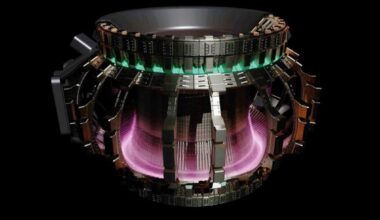
PPhysics Read More A Fusion Startup Lit Bulbs With Electricity Pulled Straight From PlasmaJuly 7, 2026 Close-up of Realta’s direct energy converter assembly prototype. Credit: Realta Fusion/UW-Madison A fusion company has made a few…
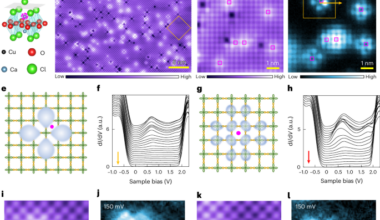
PPhysics Read More Visualization of the Zhang–Rice singlet, electronic molecules and Cooper pair formation in a cuprate superconductorJuly 7, 2026 Lee, P. A., Nagaosa, N. & Wen, X.-G. Doping a Mott insulator: physics of high-temperature superconductivity. Rev. Mod.…
PPhysics Read More Electro-optic comb-empowered measurement of the dynamic frequency of a laserJuly 7, 2026 Qiao, S. et al. Ultra-highly sensitive dual gases detection based on photoacoustic spectroscopy by exploiting a long-wave, high-power,…
PPhysics Read More Scientists may have finally solved the black hole information paradoxJuly 7, 2026 For decades, physicists have wrestled with one of the deepest puzzles in modern science: the “black hole information…
PPhysics Read More A physicist built a ‘mini-universe’ out of ultracold atoms and watched time being born inside it.July 7, 2026 For the first time, a physicist has experimentally watched time emerge from within an isolated quantum system —…
PPhysics Read More Physicists Just Achieved Superconductivity at Highest Temperature Yet – Under Normal PressureJuly 7, 2026 Superconductive materials could revolutionize electronics – if only they weren’t so fussy. Coaxing materials into this state, where…
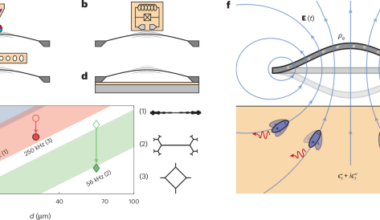
PPhysics Read More Non-contact friction in ultracoherent nanomechanical resonators near dielectric materialsJuly 7, 2026 NCF for an infinitesimally thin string We calculate the NCF damping coefficient for a one-dimensional tensioned string interacting…
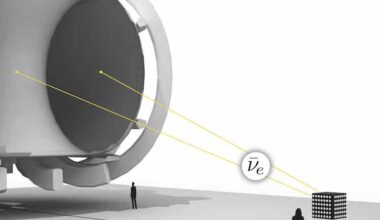
PPhysics Read More Antineutrino detectors could spot signs that a fusion reactor is producing weapons-grade plutonium – Physics WorldJuly 7, 2026 Antineutrino detectors could spot signs that a fusion reactor is producing weapons-grade plutonium – Physics World Skip to…
PPhysics Read More We tend to think of the universe as roughly uniform, with galaxies scattered in every direction — but the Boötes Void, discovered in 1981 during a redshift survey, is a vast cosmic underdensity up to 330 million light-years across, containing only a few dozen known galaxies where thousands might otherwise be expectedJuly 7, 2026 On the scale of the whole observable universe, matter is assumed to be spread out fairly evenly: enough…
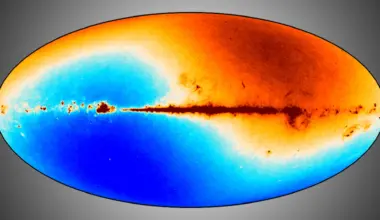
PPhysics Read More Scientists thought the universe was uniform. New evidence says otherwiseJuly 7, 2026 The shape of the universe is not something we often think about. But my colleagues and I have…
PPhysics Read More AI just supercharged the race to find room temperature superconductorsJuly 7, 2026 Machine learning is giving scientists a powerful new way to search for superconductors, materials that conduct electricity with…