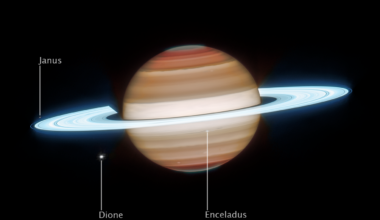
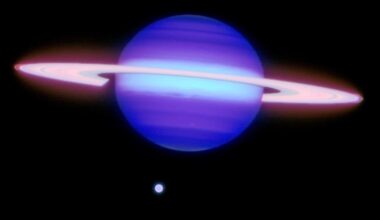
SSpace Read More Webb Captures Saturn in InfraredMarch 26, 2026 Saturn’s icy rings glow in this infrared view from NASA’s James Webb Space Telescope released on March 25,…
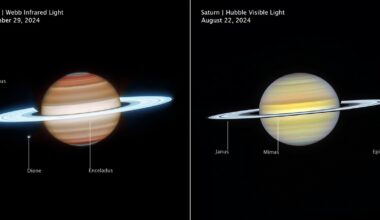
SSpace Read More NASA Webb, Hubble Share Most Comprehensive View of Saturn to DateMarch 25, 2026 NASA’s James Webb Space Telescope and Hubble Space Telescope have teamed up to capture new views of Saturn,…
SSpace Read More How to witness Venus and Saturn conjunction?March 9, 2026 Footage released by NASA on Wednesday reveals aurora ribbons shimmering above Earth, while a thin orange line of…
SScience Read More Stargazers urged to catch rare Venus-Saturn conjunction on Sunday nightMarch 8, 2026 Bangkok Planetarium is urging stargazers in Thailand to look towards the western horizon about half an hour after…
SScience Read More Listen to This Month’s ‘Planetary Parade’ With NASA’s ChandraFebruary 25, 2026 In late February, people in the Northern Hemisphere can look up for a special sight : Six planets…
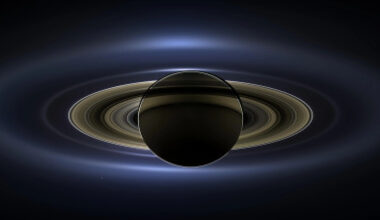
SSpace Read More Saturn’s Rings Came From a Two-Moon Collision About 100 Million Years Ago, Study SaysFebruary 13, 2026 Of the solar system’s planets, Saturn piques the human imagination with its signature rings and impressive moon count…
SScience Read More What’s in the sky this month? Jupiter continues to dominate the night; Mercury, Venus, and Saturn are visibleFebruary 2, 2026 Mercury, Venus, and Saturn put on an early-evening display in the west, while Jupiter dominates the rest of…
SSpace Read More A new rogue planet the size of Saturn has been detected about 10,000 light-years awayJanuary 4, 2026 An artist’s illustration showing a planet in space. (Image source: TheDigitalArtist – Pixabay) Astronomers have detected a new…
SScience Read More Saturn’s biggest moon might not have a giant ocean inside after allDecember 19, 2025 Share this Article You are free to share this article under the Attribution 4.0 International license. Careful reanalysis…
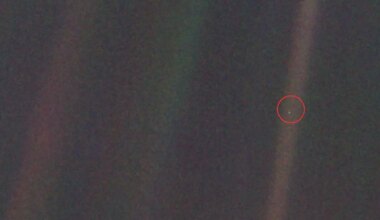
SSpace Read More How one image taken from 3.7 billion miles away proved Earth is a speck in spaceDecember 1, 2025 Voyager 1’s photographs included Neptune, Uranus, Saturn, Jupiter, and Venus. According to NASA’s website, ‘Mars was obscured by…
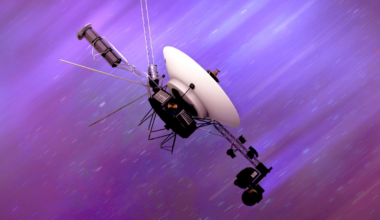
SSpace Read More Voyager 1 will be one light-day, 16 billion miles, from us next yearNovember 25, 2025 It takes a beam of light a single day to travel 16.1 billion miles, a distance known as…
SScience Read More Saturn: never-before-seen organic molecules discovered in Enceladus’ oceanNovember 22, 2025 New substances have been identified that would indicate ongoing chemical (or biochemical) activity in the ocean of Enceladus,…