

Netflix’s Top 10 Movies chart has been frighteningly relevant in recent weeks. While the animated mega-hit KPop Demon Hunters continues to sit near the top, the two most recent #1 spots have been occupied by movies about impending tragedy — or impending doom. The Perfect Neighbor, from director Geeta Gandbhir, is a documentary told almost entirely from the perspective of police body-cam footage and doorbell cameras. It tells the story of the killing of Ajike “AJ” Shantrell by her neighbor, Susan Lorincz, after a series of increasingly unhinged neighborhood disputes. The deeply disturbing film has been described by many as a horror movie — one made all the more frightening by the fact that it’s all true.
The Perfect Neighbor premiered at the 2025 Sundance Festival earlier this year before releasing for a limited theatrical release on October 10. The documentary landed on Netflix the following weekend and amassed 16.7 million views in its first three days on the streaming platform. It held the top spot for exactly one week before getting knocked off the top spot. While this intimate view of a neighborhood dispute is terrifying and unsettling, Netflix’s new top film revives the specter of nuclear war.
‘A House of Dynamite’ Is a Modern-Day Nuclear Thriller
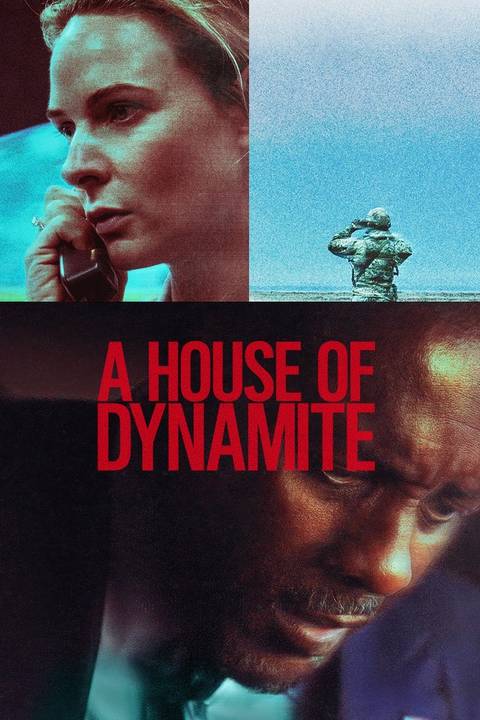
Kathryn Bigelow‘s A House of Dynamite follows the US government, including the president and his response team, as they grapple with a horrifying crisis: a nuclear missile, at first thought to be part of a routine North Korean ballistic missile test, apparently headed toward Chicago. The story plays out from multiple perspectives in a tense race-against-the-clock.
The film’s star-studded cast includes Idris Elba, Rebecca Ferguson, Gabriel Basso (the star of Netflix’s hit political thriller series The Night Agent), Jared Harris, Anthony Ramos and Jason Clarke (who appears to be in everything these days, with two concurrent TV shows streaming at the moment: Apple TV+’s The Last Frontier and Hulu’s Murdaugh: Death in the Family).
A House Of Dynamite revives a somewhat dormant sub-genre of the political thriller: nuclear war films, a genre historically dominated by Cold War thrillers. These films once captivated our collective imagination — and tapped into our collective fear — over a nuclear war with the Soviet Union.
Stanley Kubrick‘s Dr. Strangelove or: How I Learned to Stop Worrying and Love the Bomb pioneered the Cold War thriller as early as 1964, though it did so with satirical gusto. Matthew Broderick made a name for himself in the Oscar-nominated anti-nuke parable, WarGames nearly twenty years later. Films like Tony Scott‘s Crimson Tide or the classic Hunt for Red October helped define ’90s-era political thrillers. Still, long before the turn of the century, Hollywood was shifting away from nuclear Armageddon toward other threats, such as global terrorism and the dangers of encroaching surveillance technology to individual privacy and liberty. In the ’90s, we saw these themes play out in films like Harrison Ford‘s Air Force One and Will Smith‘s Enemy of the State.
After the fall of the Berlin Wall and the collapse of the Soviet Union, other societal anxieties emerged. Concern over climate change led to a resurgence in natural disaster films and climate apocalypse-themed movies. The 2004 climate-apocalypse thriller, The Day After Tomorrow — the title itself an homage to the 1983 nuclear disaster film, The Day After — kicked this trend into high gear (and was later hilariously parodied by South Park in the episode “The Day Before The Day After Tomorrow”). Adam McKay’s 2021 Netflix hit, Don’t Look Up, blended the satire of Kubrick’s Dr. Strangelove with rising climate change fatalism.
But the specter of the Cold War is not entirely dissipated, as the success of Christopher Nolan’s Academy Award-winning Oppenheimer, or HBO’s incredible limited series, Chernobyl, proved. Modern thrillers rarely position enemy global powers like Russia as the chief threat, but rather rogue states like Iran or terror cabals, and the consequences should bad actors — free from traditional state accountability — find themselves in possession of a nuclear bomb. A House of Dynamite plays into these fears and anxieties.
Kathryn Bigelow is No Stranger to Political Thrillers
Kathryn Bigelow has a long and storied career directing thrillers, from action thrillers like Point Break to police thrillers like Blue Steel (which is not just an iconic modeling pose from Zoolander). The director even tapped into the submarine thriller genre in 2002’s K-19: The Widowmaker.
It was Bigelow’s 2008 film, The Hurt Locker, however, that propelled her into the limelight as a director of serious, culturally relevant political thrillers. The film, starring Jeremy Renner and Anthony Mackie years before they’d go onto become major MCU stars, was a gritty, suspenseful portrayal of a bomb-disposal unit in Iraq. Bigelow became the first woman ever to win the Academy Award for Best Director for The Hurt Locker, which also won Best Picture in 2010, beating out films like Quentin Tarantino’s Inglourious Basterds and James Cameron’s Avatar.
Following the success of The Hurt Locker, Bigelow returned to the Middle East and the War on Terror with her 2012 film, Zero Dark Thirty about the hunt for Osama bin Laden. The film was controversial due to harrowing depictions of “enhanced interrogation techniques” but widely praised for both its accuracy and tension.
A House of Dynamite is not Bigelow’s best-reviewed film, with a 79% critic score on Rotten Tomatoes — significantly lower than The Hurt Locker’s 96% or Zero Dark Thirty’s 91%. Still, it’s faring much better with critics than K-19: Widowmaker (59%) or her worst-reviewed film, The Weight of Water (34%). Even Point Break scored lower, with a barely “Fresh” 69% Rotten Tomatoes score. If you’re looking for a tense political thriller to watch this weekend, you could certainly do worse.
A House of Dynamite is currently streaming on Netflix.
Release Date
October 3, 2025
Runtime
113 minutes
Director
Kathryn Bigelow
Writers
Noah Oppenheim
Producers
Brian Bell, Greg Shapiro