
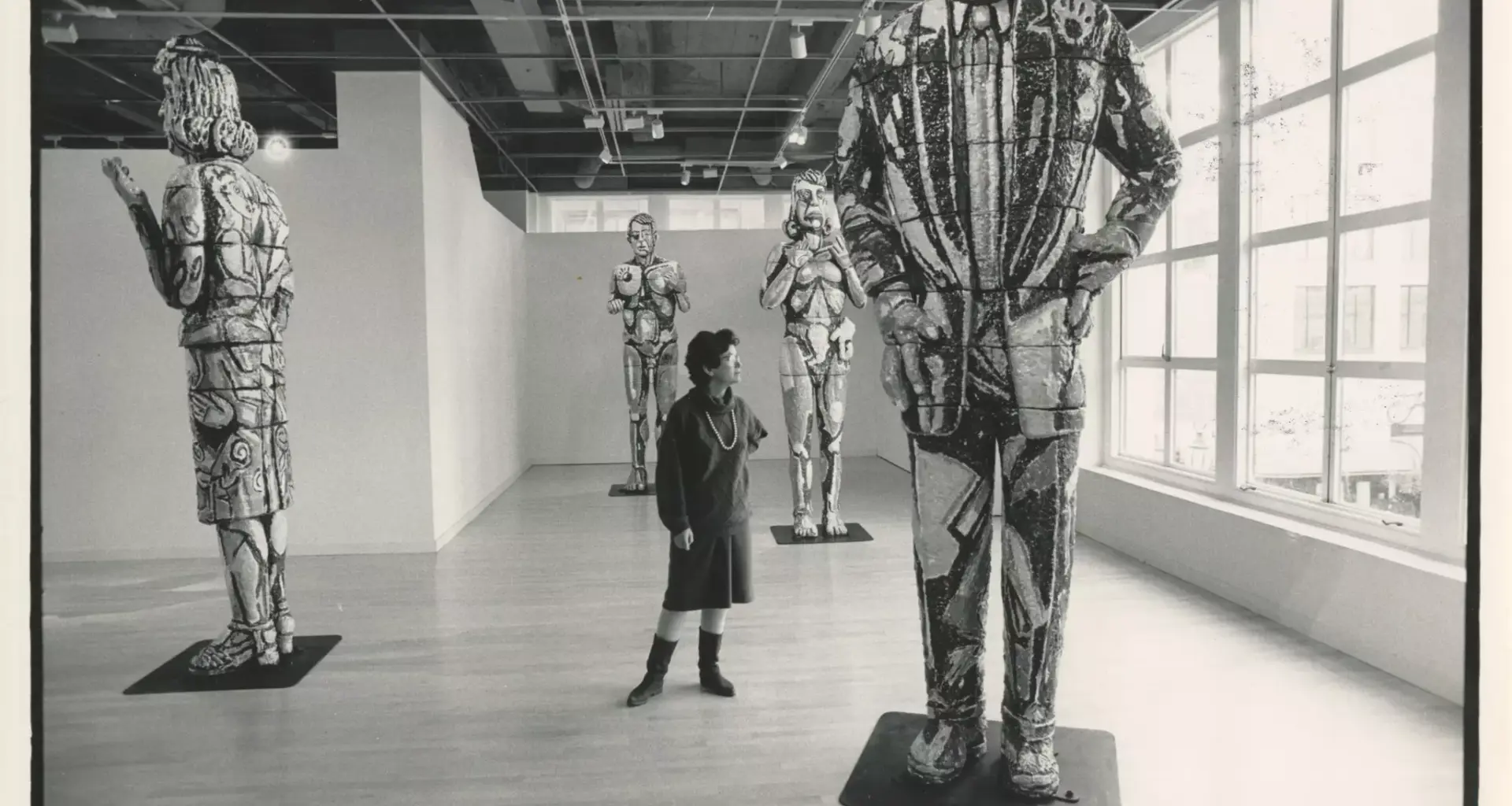
The Rena Bransten Gallery, a cornerstone of San Francisco’s contemporary art scene for five decades, is leaving the Minnesota Street Project, the complex of galleries in the Dogpatch, citing a drop in sales over the last year.
“It’s a funny, funny time, and it’s a miserable time,” director Trish Bransten told The Standard. “We’re moving out of our space, and we’re going to look for different kinds of collaborations, but this is definitely a consequence of not quite enough visitors or sales. I have to wonder: After 45 years, are there other models I need to explore?”
The gallery will adopt a nomadic model, presenting exhibitions in temporary and unconventional venues around the city.
The exit is yet another blow to San Francisco’s art scene, which, since July, has seen the closures of three galleries: KADIST, Gallery 16, and Altman Siegel, the latter of which was also at Minnesota Street Projects, the 9-year-old cluster of buildings owned by collectors and philanthropists Andy and Deborah Rappaport.
Bransten’s decision echoes what gallerist Claudia Altman Siegel told The Standard when she announced her closure last month: The local market has screeched to a halt, reflecting a global contraction for fine art. A generation of collectors who once buoyed San Francisco’s art scene has aged out, gallerists say, and the next generation has yet to step up. Simply put, few San Franciscans are buying art.
Unlike Altman Siegel, whose roster of artists will be without representation after the gallery closes this month, the Rena Bransten Gallery will continue to represent its high-profile artists, including filmmaker John Waters and Amalia Mesa-Bains.
 Rena Bransten Gallery has been in the Dogpatch since 2016. | Source: Photo courtesy of Rena Bransten Gallery
Rena Bransten, 92, founded the gallery in 1975 in a 3,400-square-foot space in Union Square, quickly establishing a reputation for her trailblazing representation of California ceramic artists. When a tech company offered the landlord triple the rent in 2015, the gallery was forced out of and settled on Market Street before finding a permanent home in the Dogpatch in 2016. Bransten and other gallery owners were drawn to Minnesota Street Projects for its promise of low-cost tenancy for galleries at a time when artists and dealers were struggling to keep up with the rising cost of doing business in the city.
Yet, nearly 10 years on, as the market continues to slow and rents rise, owners are grappling with the reality that the model of selling art in a traditional gallery may no longer be viable.
“I looked for a year and a half for a space to move to in the aftermath of the pandemic, but the prices never went down,” said Griff Williams, the former director of Gallery 16, after closing his gallery in SoMa. “With the demise of the [San Francisco] Art Institute, I think it’s left a real hole in the cultural community of the city.”
The nomadic model has become increasingly popular since the pandemic, with galleries opting for pop-ups that offer unique curation opportunities, collaborations, and greater economic flexibility.
“This new kind of space poses an alternative to the contemporary exhibition format, one that is more inclusive and accessible than its peers,” Jack Chase told Artnews (opens in new tab) of his mobile U-Haul gallery, which he parked outside of mega-galleries during New York Art Week this year. “The mobility of the gallery allows us to capitalize on the foot traffic of established galleries and institutions, as well as show work in unconventional areas.”
Last week, the Institute of Contemporary Art San Francisco — which left the Dogpatch last fall for free rent at an enormous downtown location called The Cube — announced that it would be leaving downtown to adopt a nomadic model.
If the ICA’s arrival in the Dogpatch in 2022 once seemed like a good omen for the Minnesota Street Project, its departure now feels like an equally powerful sign.
 Minnesota Street Project. | Source: Minnesota Street Project
Despite the exodus of Minnesota Street Project’s two most historic galleries, its founders, the Rappaports, remain bullish on the complex, where they say attendance is up for community events like First Saturdays and the Art Book Fair, and where leases remain in high demand.
“We’ve always had a lot of requests from younger galleries and more established galleries that are looking to relocate for space,” said Andy Rappaport. “Our view is that what’s going on is not an issue for the project specifically, but the gallery business.
“If the community doesn’t want to, or is unable to, buy work from San Francisco galleries, then it’s just going to get harder and harder for San Francisco galleries to survive,” he continued.
The final day at Minnesota Street Projects for both Rena Bransten Gallery and Altman Siegel will be Nov. 22.
Correction: An earlier version of this article misstated which artists are represented by the gallery.