
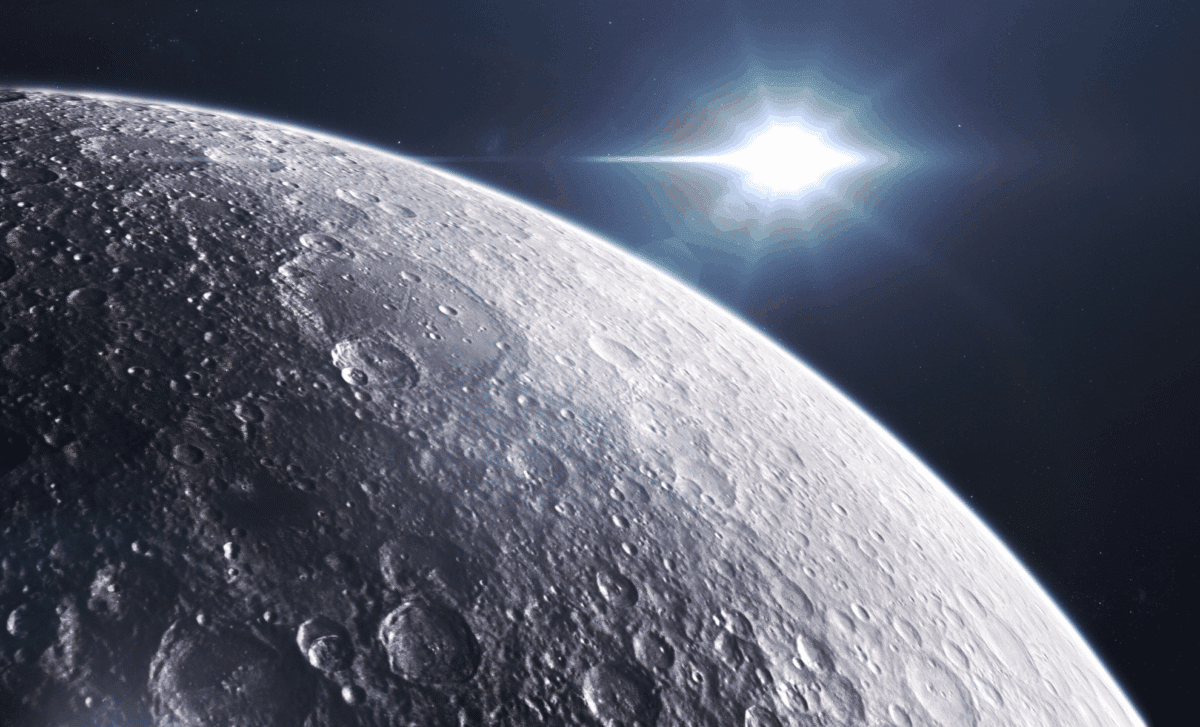
The moon’s dust cloud has baffled scientists for years, with its lopsided shape a particular mystery. A new study published in the Journal of Geophysical Research: Planets sheds light on the cause, suggesting that extreme temperature fluctuations between the moon’s day and night sides may be to blame. This intriguing explanation could change our understanding of lunar dust dynamics. Let’s dive into the findings that reveal how temperature and meteoroid impacts shape the cloud.
Understanding the Lopsided Dust Cloud Above the Moon
For years, astronomers and lunar scientists have been puzzled by an unusual phenomenon: a cloud of dust that seems to follow the moon through space. While the cloud itself is not visible to the naked eye, its lopsided nature has intrigued researchers. The dust cloud is created by tiny meteoroid impacts on the moon’s surface. These impacts lift lunar dust into space, but unlike other dust clouds in the solar system, this one has a distinct asymmetry — it’s denser on the moon’s daytime side. The cloud is even most concentrated near the “dawn terminator,” the dividing line between the sunlight and darkness on the moon’s surface.
This strange distribution of dust particles has remained a mystery until recently, when a groundbreaking study by a team of researchers led by Sébastien Verkercke from the Centre National D’Etudes Spatiales, France, proposed a new explanation. Their study, published in the Journal of Geophysical Research: Planets and reported by LiveScience, offers a compelling answer: extreme temperature differences between the moon’s day and night sides may play a crucial role in shaping the cloud. This discovery could alter how we think about lunar dust and its interactions with meteoroids.
The Science Behind Lunar Dust: A Delicate Dance of Temperature and Impact
The moon’s surface is constantly bombarded by meteoroids, small rocks and debris from space that collide with the lunar regolith, or surface dust. These impacts grind the surface, creating more dust particles. Without an atmosphere to burn up incoming meteoroids, like on Earth, the moon is exposed to several tons of these tiny space rocks each day. When these meteoroids strike, they lift small dust grains into the void, creating a cloud that extends hundreds of miles above the surface.
Yet, as scientists observed, the dust cloud wasn’t evenly distributed. It was consistently denser on the side of the moon facing the sun. Researchers initially suspected that the asymmetry might be due to specific meteoroid groups impacting the sunlit side more frequently. However, the significant temperature difference between the moon’s daytime and nighttime surface eventually drew attention. During the day, the moon’s surface heats up to over 260°F (127°C), while at night, it cools to a bone-chilling -300°F (-184°C). The temperature fluctuation can exceed 500°F (280°C), which is far more extreme than anything seen on Earth.
Verkercke and his team hypothesized that this enormous temperature difference could be influencing how the moon’s surface reacts to meteoroid impacts, leading to the lopsided dust cloud. To test this theory, they turned to computer simulations to model the behavior of dust ejected by meteoroid strikes at both extreme temperatures. The findings were remarkable: impacts on the warmer daytime surface produced more dust than those on the colder nighttime side.
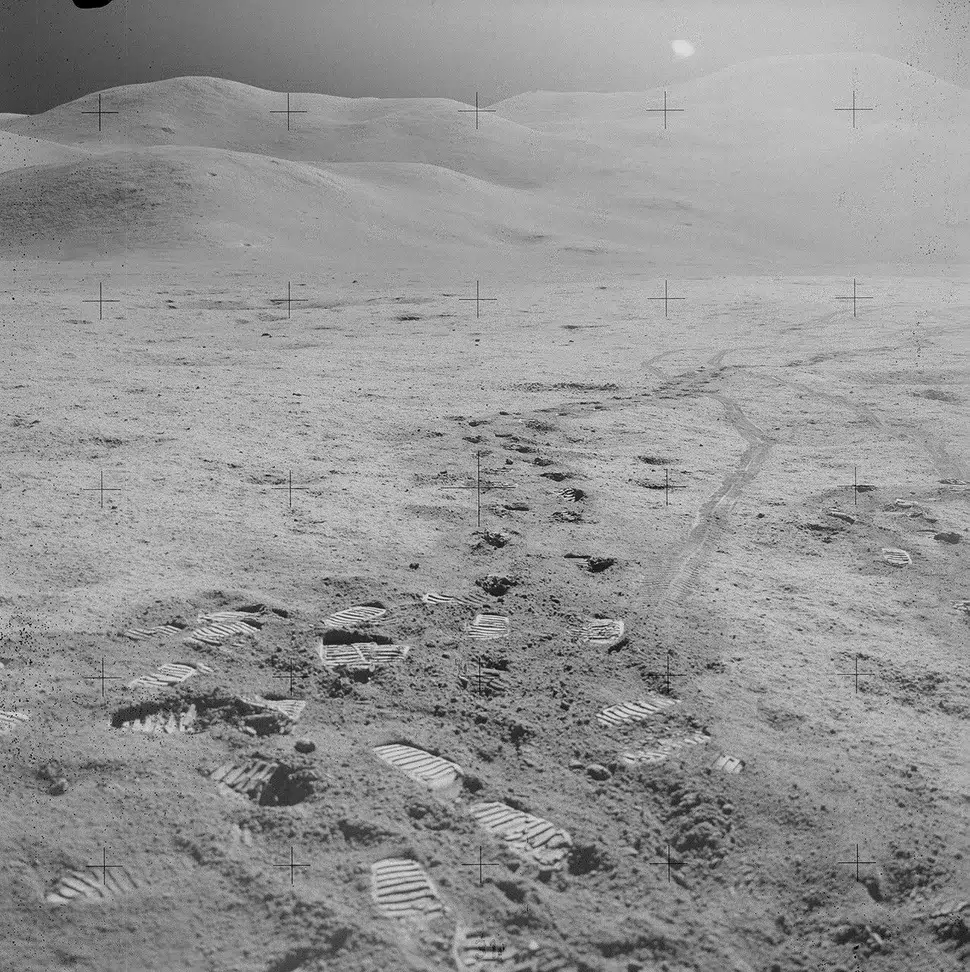 Most of the lunar surface is covered in regolith — a mixture of dust and tiny rocks. Meteoroids bombarding the moon lift some of the regolith, creating a cloud. (Image credit: NASA)
The Role of Temperature in Dust Ejection
The research team ran simulations to observe how dust particles behaved when meteoroids hit the moon’s surface under different temperature conditions. They found that the warmer daytime surface allowed for more dust to be ejected. According to Verkercke,
“The ejected dust grains are then individually tracked to monitor their distribution in space.”
This meant that the dust from daytime impacts reached higher altitudes, some even rising high enough to be detected by satellites orbiting the moon. This is in stark contrast to dust from nighttime impacts, which tended to remain closer to the surface due to the colder conditions.
The simulations also showed that the temperature affects how much dust is lifted. Meteoroids hitting the warmer surface produced a larger amount of dust that was lofted into space, compared to those striking the colder nighttime surface. Interestingly, the surface’s density also played a role in dust distribution. Meteoroids hitting “fluffier” surfaces, where dust is loosely packed, produced less dust, while impacts on more compact surfaces resulted in larger amounts of dust being ejected.