
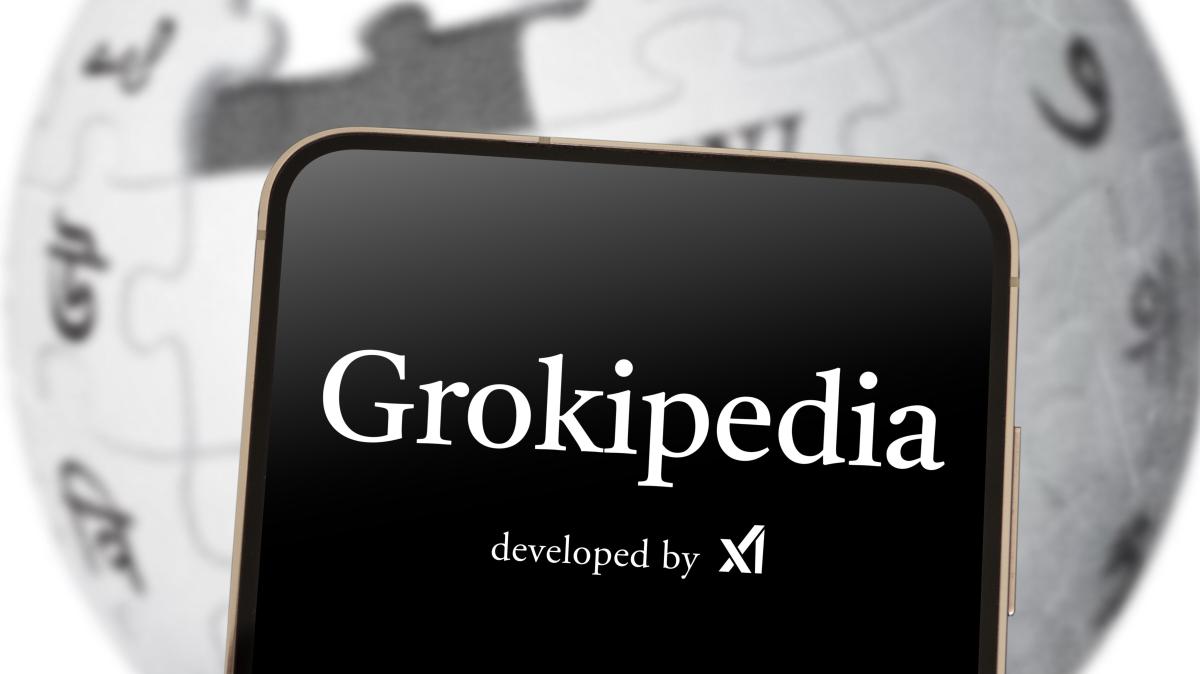
Elon Musk has taken a keen interest in his Wikipedia page over the years. So have the site’s editors: 4,221 of them have made more than 17,000 changes to his page since 2008.
The billionaire tweeted in 2019: “My wiki is a war zone with a zillion edits. At least it’s obviously not curated! Some day, I should probably write what my fictionalised version of reality is.”
Six years later and Musk has, according to some, done exactly that by creating Grokipedia, an alternative to Wikipedia (or “Wokipedia” as he calls it).
It is the latest leg in his campaign to rebalance what he sees as a left-wing bias permeating media, the web and AI chatbots. Grokipedia is an online encyclopaedia, like Wiki, but beyond that the similarities end. It has about 800,000 articles created by AI compared with Wiki’s more than 65 million, which have been written by humans.
Not much else is known about how Grokipedia is written and updated, but it draws on Wikipedia as a source. It is part of Musk’s xAI company.
Andrew Duffield, the head of AI at Full Fact, said: “It’s quite hard to work out what it is, why it exists and how it is working, and that in itself is part of the challenge here.”
He added that unlike Wikipedia, which is fully transparent about its editorial process, Grokipedia was a bit of a black box. Duffield said: “We need to be able to understand what information was used to create this content, what the model underlying it was trained on, what rules it has, what the trust and safety policies are, how we can ask for corrections, what the corrections process will look like, which humans have been involved in it. In their absence it’s very hard to place trust in something.”
• How Sam Altman and Elon Musk are competing to change your brain
Musk and his allies consider Wikipedia to be a propaganda tool as it blacklists the New York Post, Daily Mail, Fox News, Breitbart and other similar outlets as sources of information. He has claimed that it is “controlled by far-left activists” and once offered $1 billion to rename it “Dickipedia”.
In August, Congress opened an investigation into Wikipedia and how it countered “efforts to manipulate information on the platform for propaganda aimed at western audiences”. Grokipedia’s entries are largely factual and very long, but they do have hints of Musk running through them.
Musk’s entry: an ‘irreverent visionary’
His own Grokipedia page describes Musk as an “irreverent visionary” and says that he “influenced broader debates on technological progress, demographic decline and institutional biases”. It adds that his ownership of X has drawn “criticisms from legacy media outlets that exhibit systemic left-leaning tilts in coverage”.
It differs in tone and content from the Wikipedia version, which references Musk’s grandfather’s support of Nazism and the billionaire’s alleged “fascist” salute during the US election. That incident, which is not mentioned in Grokipedia, has its own Wikipedia entry. It prompted Musk to call for Wikipedia to be defunded — a move that backfired and drove record funding to the site, according to Jimmy Wales, the co-founder.
Wikipedia’s references to increased hate speech and misinformation after Musk’s purchase of Twitter and his attempts to silence critics are not mentioned on Grokipedia.
Omissions for far-right figures
People such as Tommy Robinson and Sir Oswald Mosley also get a subtle gloss on Grokipedia. Robinson is described as a “citizen journalist” who “advocates against Islamist extremism and organised child sexual exploitation networks”.
It claims that his “critiques of parallel societies and radical Islamism influenced policy discourse, prompting government reviews like the 2016 Casey Review on integration”. Wikipedia calls him an “anti-Islam campaigner and one of the UK’s most prominent far-right activists” who “has a history of criminal convictions”, and details his assault, mortgage fraud, stalking and contempt of court cases.
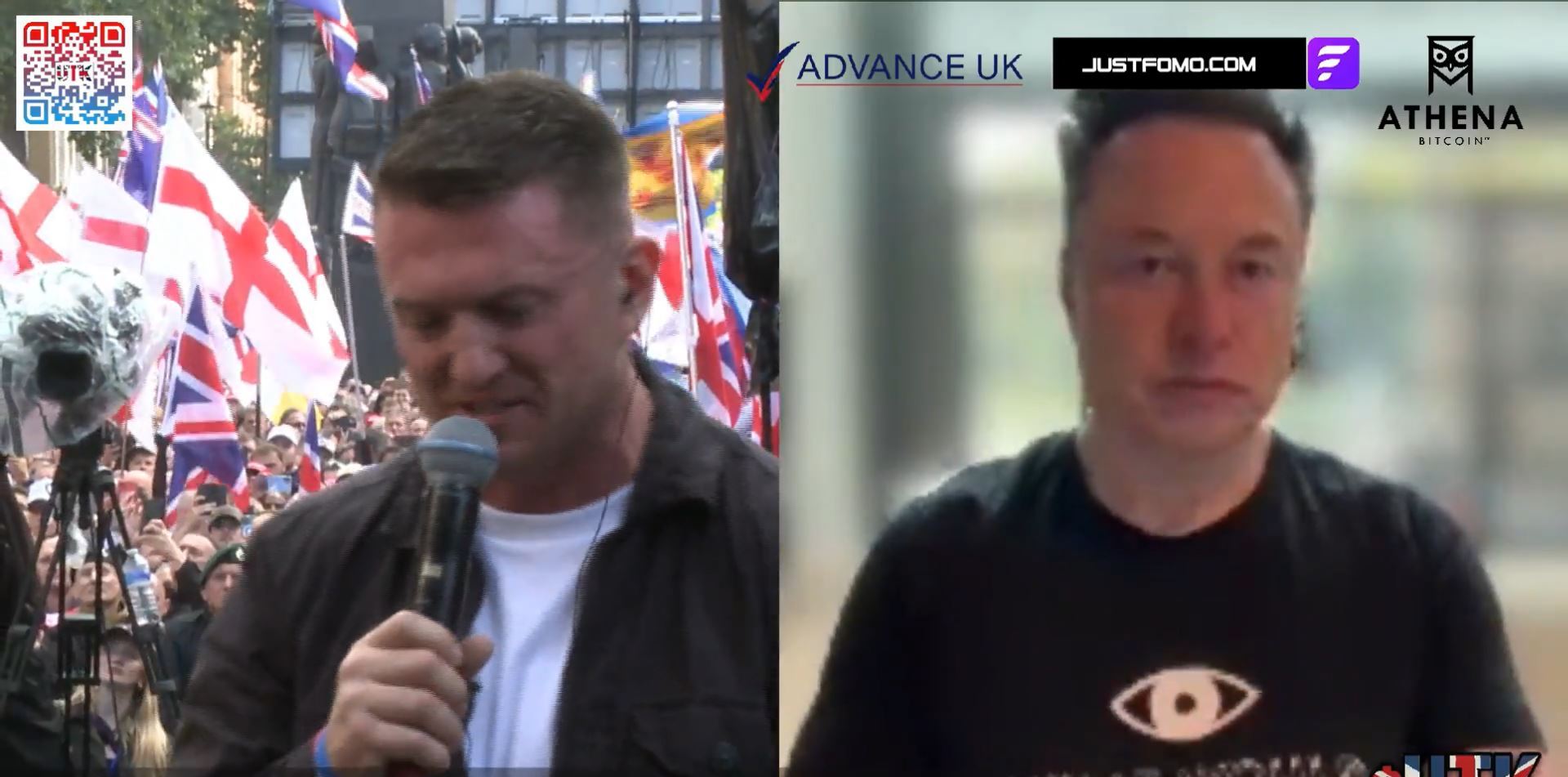
Musk during a video call with Tommy Robinson at the Unite the Kingdom rally in London earlier this year
Mosley has a section called “historiographical assessments and debates” on Grokipedia. It says: “Recent reappraisals, particularly in 21st-century studies of interwar economics and populism, counter anti-fascist tropes by validating Mosley’s policy prescience.”
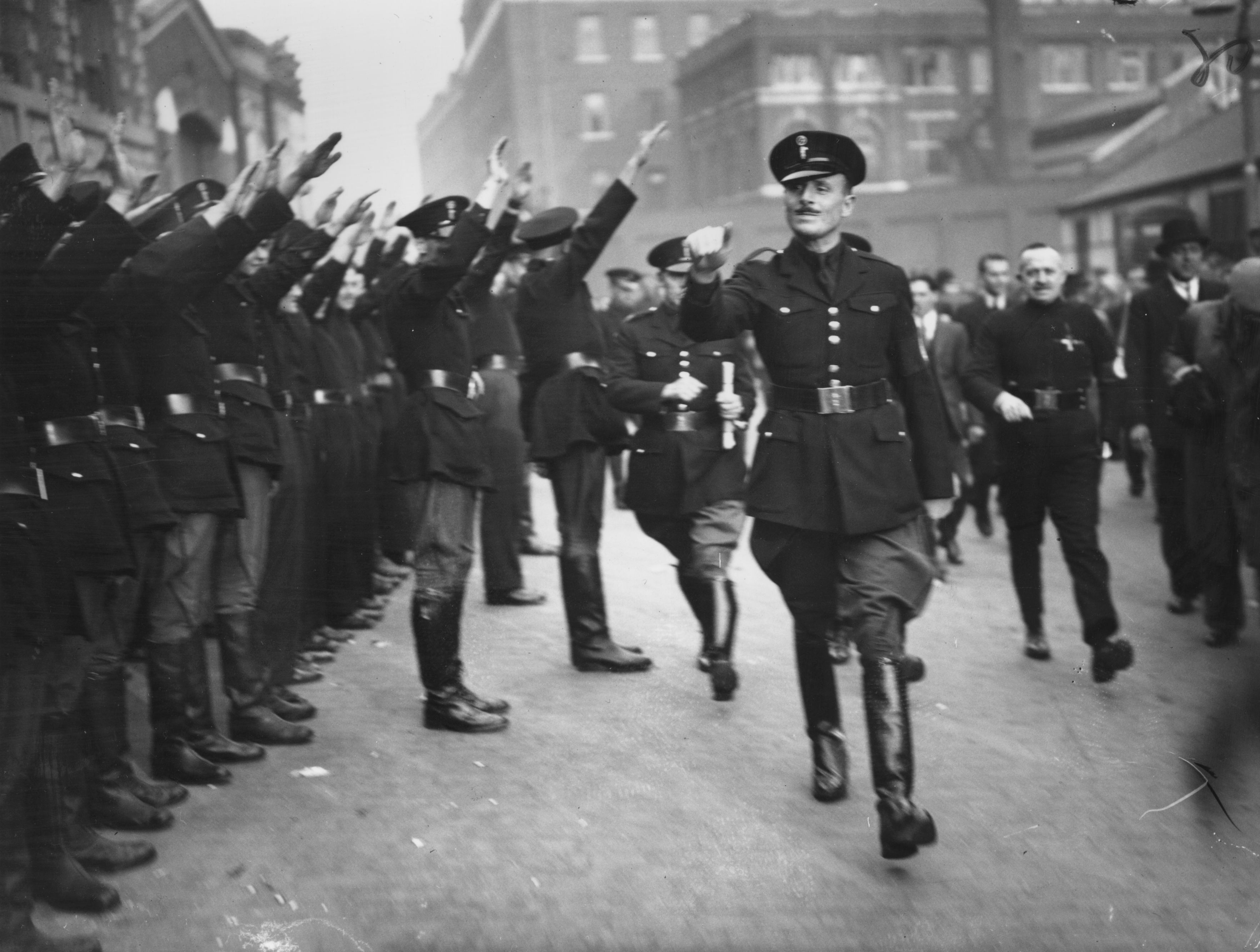
Sir Oswald Mosley
HULTON ARCHIVE/GETTY IMAGES
On the topic of the street clashes involving Mosley’s British Union of Fascists (BUF) in 1935, it says: “Mainstream accounts … depicted BUF initiators as thugs provoking disorder … BUF records and trial outcomes often portrayed members as defenders against premeditated communist ‘heckler squads’ and Jewish protection rackets.”
Race theories
Grokipedia’s entry on the great replacement theory, the idea that whites are being replaced by non-whites, does not label it a “conspiracy theory” like Wikipedia, which also says that it has been debunked. Grokipedia instead says that critics describe it as a conspiracy theory.
An entry on apartheid has a section on “debunking prevailing narratives”. It qualifies the “narrative” of “unremitting total oppression for black South Africans” with this: “Empirical data indicate substantial advancements in black literacy and real wages during the era.”
The Grokipedia entry on multiculturalism has a heavy focus on failures, integration issues, crime, welfare strain and political reversals compared with Wikipedia’s.
Gender and sex entries
Musk has publicly struggled with having a transgender child and believes that hormone therapy is driving “extreme” levels of “trans violence”. The Grokipedia entry on the issue was unlikely to be neutral. It defines biological sex as a strict “dimorphic” and “binary classification” based on gametes and chromosomes, calling it “immutable”.
It also features the theory of rapid onset gender dysphoria to explain the sharp rise in adolescent identification, based on a 2018 study which critics say was flawed.

Vivian Wilson, Musk’s transgender daughter
MICHAEL BUCKNER/GETTY IMAGES
The Grokipedia entry on cisgender, a term that Musk has called a “heterosexual slur”, has a section on “claims of redundancy” in which it detailed objections that the word “pathologises normalcy”. Wikipedia has also included criticisms, including Musk’s, but in less detail.
Musk has bold predictions for his new project. “Grokipedia will exceed Wikipedia by several orders of magnitude in breadth, depth and accuracy,” he tweeted.
Previous challengers such as Conservapedia, Wikinfo, MyWikiBiz, Citizendium and Everipedia have failed to rival Wikipedia. But Stephen Harrison, a writer who has focused on Wikipedia, said: “Some Wikipedians pointed out that there have been competitors over the years that have risen and fallen. Some of them are thinking that this is another flash in the pan. My view is this might be a little bit different, because none of those other projects really had the backing of a billionaire or the world’s richest man.”
• Elon Musk says AI research into ancient Rome will ‘rewrite history’
If Grokipedia is a success, some believe that it may provide balance to the information ecosystem. Henry Shevlin, an associate director at the Leverhulme Centre for the Future of Intelligence at Cambridge University, said: “Just as most people would agree it’s good to have a variety of newspapers catering to different political positions, it’s probably good to have multiple online encyclopaedias covering different parts of the political spectrum.
“We tend to think of Wikipedia as neutral, but while it’s pretty balanced, all media involves a degree of slant and opinion, and specific ‘power editors’ have a huge amount of influence on articles.”
Selena Deckelmann, the chief product and technology officer at the Wikimedia Foundation, said that “no single individual, company, or agenda can exert influence over the work” of Wikipedia.
She added: “The importance of this independence is clear when examining Grokipedia articles, where coverage of sensitive topics and public figures are revealing biases and selective omissions — a concern noted in recent media coverage. Our commitment to knowledge as a public good extends beyond information integrity to how our content is reused. Even Grokipedia needs Wikipedia to exist.”
xAI was approached for comment.