
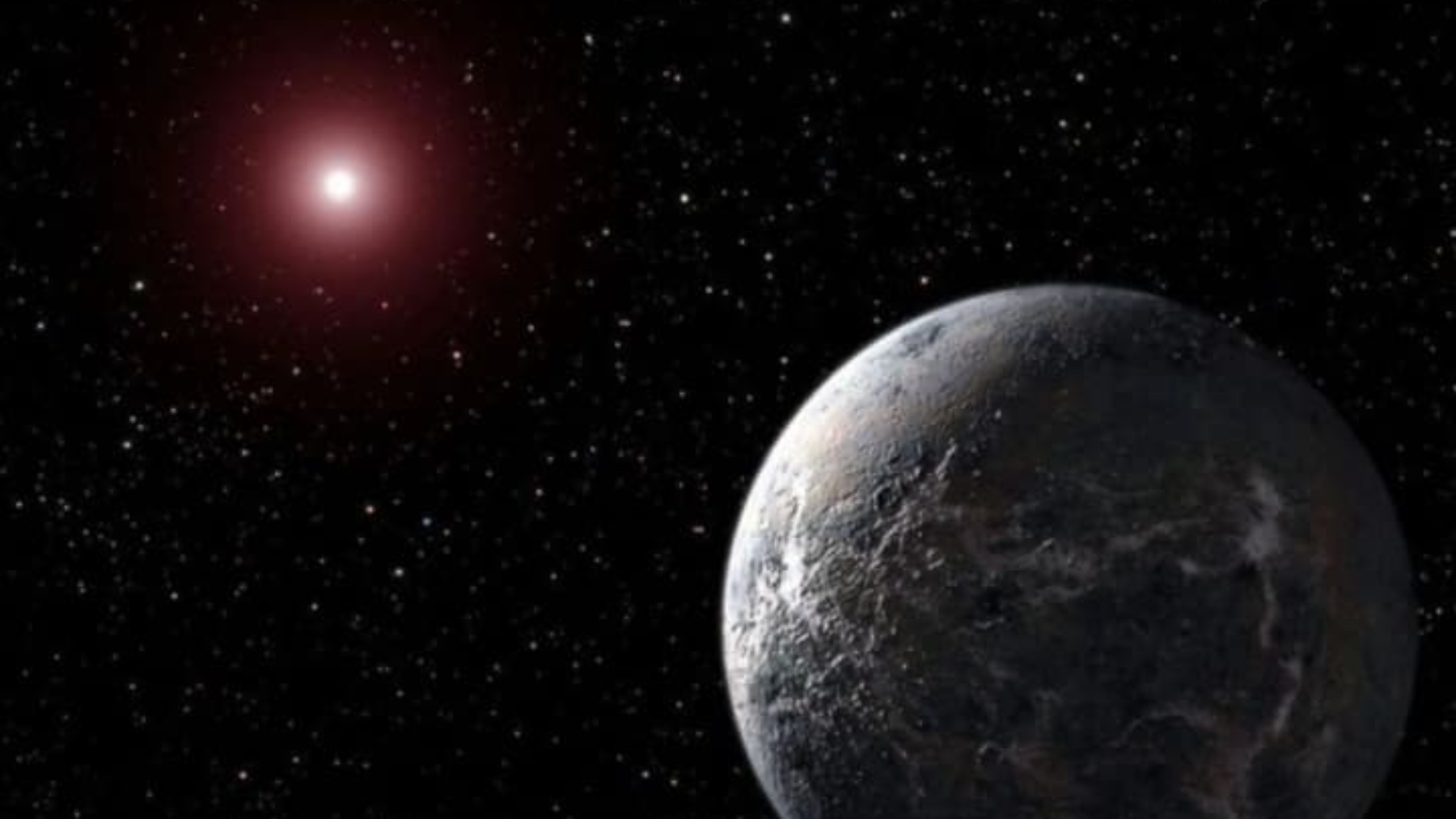
In the last couple of years, scientists have been trying to discover planets out of our solar system that can have similar conditions to Earth’s. This is important because it helps answer one of the most asked questions by humanity: is there life in another place of the universe?
Recently, a discovery caught astronomy and biology experts’ attention a lot and we are talking about a planet found slightly close to us and that it could have some features that make it so special. This planet is known as GJ 251c and its study has been of great interest because of the possibility of finding liquid water and, therefore, positive conditions for life. So, let’s learn more about this.
What was discovered?
Scientists announced they had found a planet called DJ 251c out of our solar system. This planet was described as a possible ‘’super-Earth’’, which means it’s bigger and heavier than our planet but not as big as gas planets like Jupiter.
The most important thing is that this planet is found inside what scientists call the ‘’habitable zone’’ of its star. This zone is also known as the “Goldilocks Zone,” because it’s not too hot, not too cold and there could be liquid water (something essential for life as we know it).
NASA alerts
NASA is paying a lot of attention to this discovery because this planet has some features that could make it a great example to look for life out of Earth. The main reason is its position inside the habitable zone.
It’s important to mention that the GJ 251c signals are not messages nor sounds; and they don’t represent attempts of communication. These signals are light and movement patterns of the planet around its star, which allow scientists to detect it and know it’s in a favorable zone for water to exist.
How it was discovered
The finding was possible thanks to 20 years of observation by using a tool called Habitable Zone Planet Finder, which was developed by Penn State. This tool analyzes further stars’ light and it can notice if there are planets around it observing small light movements.
However, this is not an easy job. The star that GJ 251 c orbits is a red dwarf, and red dwarfs often have strong magnetic activity. This magnetic activity can create “noise” in the light data, making it harder to detect planets. To solve this problem, scientists used advanced computer models to separate the real planetary signals from the interference caused by the star.
Importance of this planet
This planet is slightly near us in comparison to others that had been found, this one is 18 light years away. Thanks to this closeness, scientists believe that in the next decade it will be possible to obtain direct images of the planet and study its atmosphere. This is key because the atmosphere can show:
If there is water.
If there are gases like oxygen or methane.
If there are chemical signs that could be linked to life.
What’s more, soon there will be available new powerful telescopes that could allow scientists to examine this planet in much greater detail than ever before.
Basically
In the coming years, scientists hope to study the planet’s atmosphere and surface conditions more closely. If they find signs of biological activity, it could become one of the most significant discoveries in human history.
This planet might help us finally answer the question: Are we alone in the universe? Isn’t it incredible that scientists are getting closer to answering such important questions about life? We’ll see how this develops in the near future.