
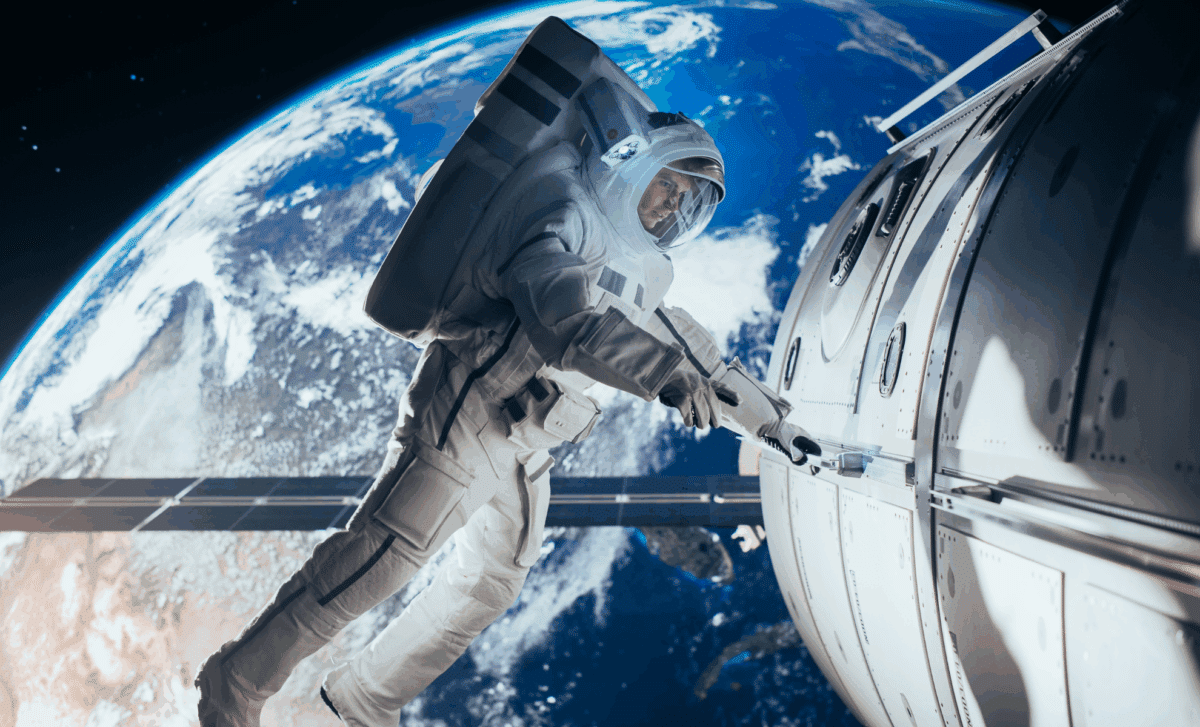
Three astronauts aboard China’s Tiangong space station were recently forced to delay their return to Earth after suspected debris damage. This incident, while safely contained, adds to a growing list of close calls in human spaceflight. The absence of a global space rescue infrastructure is now raising red flags across the industry. A growing chorus of experts believes the time for discussion is over — and action is overdue.
A Silent Warning From Orbit
The recent Shenzhou-20 incident highlights how little room for error exists in crewed space missions. On November 5, what should have been a routine return of three Chinese astronauts — Chen Dong, Chen Zhongrui, and Wang Jie — was abruptly postponed. The official reason: a suspected impact from space debris, according to the China Manned Space Agency (CMSA).
In a statement on November 11, the CMSA sought to calm concerns, writing:
“Following the postponement of the Shenzhou-20 manned spacecraft return mission, the project team, adhering to the principles of ‘life first, safety first,’ immediately activated emergency plans and measures,” adding that “All work is progressing steadily and orderly according to plan.”
But this muted official tone contrasts sharply with growing concern from outside observers. Darren McKnight, orbital debris specialist at LeoLabs, questions the lack of detail:
“I wonder out loud why they would not be more forthcoming about specifics of the event.” He warns that this lack of transparency isn’t unique: “I know of several mission-degrading events happening with commercial satellites over the last couple of decades.”
As reported by Space.com, this incident marks the second time in less than two years that a human spaceflight mission has faced unexpected complications that could have turned critical without the fallback of a nearby space station. Experts say the time has come to treat space rescues not as a theoretical need — but as a practical, global priority.
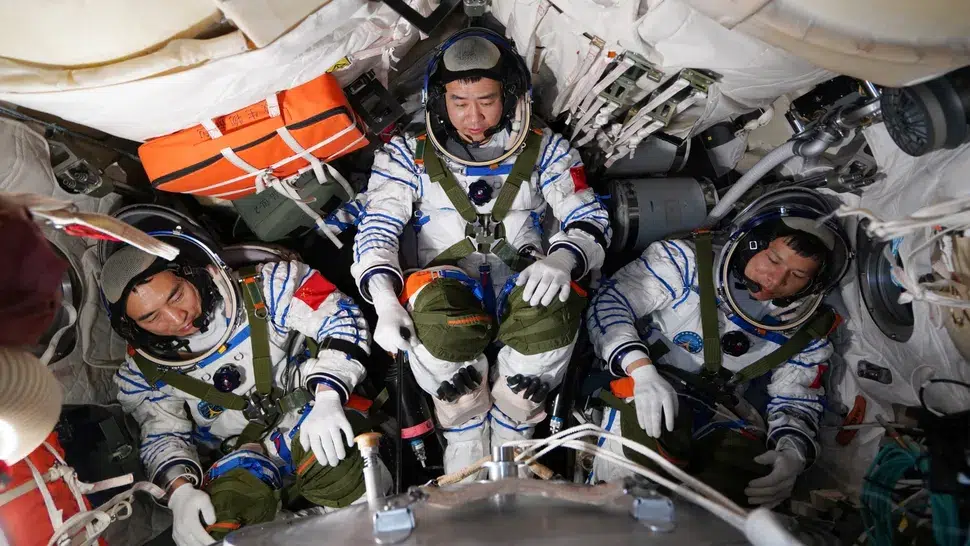 Shenzhou-20 crew is seen in a pre-launch image. (Image credit: China Manned Space Agency)
The Starliner Setback And The Illusion Of Safety
The Shenzhou-20 delay wasn’t the first wake-up call. In 2024, NASA’s Boeing Starliner faced serious technical issues during its crewed test flight to the International Space Station. Despite a successful arrival at the ISS, the capsule suffered multiple propulsion system helium leaks and thruster failures that could have prevented its safe return. In response, astronauts Butch Wilmore and Suni Williams were reassigned to return later aboard a SpaceX Crew Dragon, while the Starliner returned empty.
The fact that both crews were able to wait safely aboard a space station is what experts call “lucky.” Jan Osburg, senior engineer at the RAND Corporation, emphasized the real risk:
“Both incidents have occurred during missions to a space station, where the station can act as a safe haven until a rescue plan can be put in place.”
But Osburg warns that many future missions won’t be so fortunate: “Especially on the commercial side there are ‘free-flyer’ missions where docking with a station is typically not an option, and rescue has to happen quickly due to limited on-board supplies in those capsules.”
From free-flyer tourism flights to private space labs in development, the number of missions lacking nearby shelter is growing — and with it, the need for serious rescue infrastructure.
Rethinking Rescue: From Sci-Fi Fantasy To Practical Framework
Until recently, “space rescue” seemed like a niche concept better suited for movie scripts than mission planning. But today, the increasing complexity and frequency of human space missions demand more. Experts say a basic rescue framework is both technically feasible and surprisingly affordable.
“One of the points I’ve been trying to make,” Osburg explains, “is that creating an initial space rescue capability does not have to be expensive or involve setting up a new government agency or the like. It could be done with a few million dollars per year, which is ‘in the noise’ for human spaceflight costs.”
His vision includes standardizing docking systems, communications protocols, and a network of pre-planned operational procedures — much like the maritime industry evolved over the past century. Osburg believes a small, independent nonprofit could manage the initiative: working with space agencies, commercial operators, and international partners to coordinate responses and advocate preparedness.
While China’s choice to delay landing shows a cautious approach, experts like McKnight remain uneasy. “The lack of transparency of these events makes it difficult to model the future,” he says, adding that without detailed incident reporting, progress on global safety standards is hampered.
A Closing Window
Both the Starliner episode and Shenzhou-20 delay offer the same sobering insight: contingency planning works — but only when there’s a station nearby. Next time, there might not be.
As Osburg puts it plainly:
“But whatever the way forward, hopefully something is set up soon, before the next incident happens.”
Each incident, however minor in outcome, adds urgency to a question the space industry can no longer afford to ignore: who do we call when something goes wrong — and we’re not already docked to safety?