
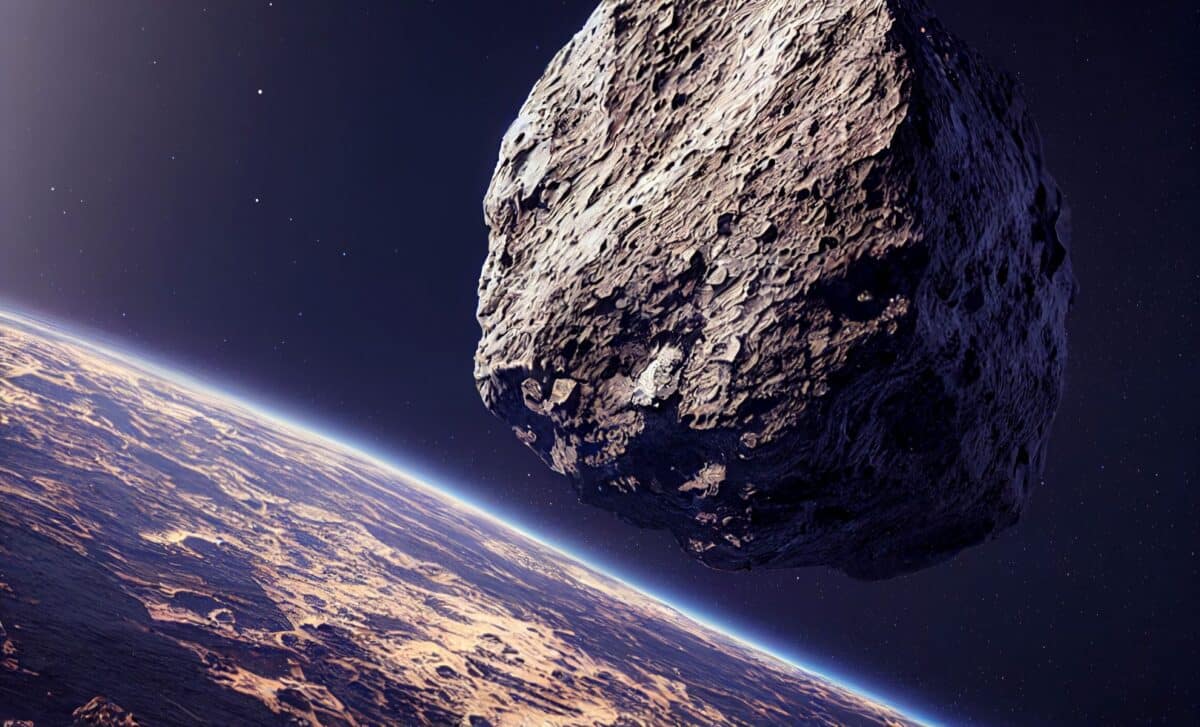
In the late 1960s, a group of graduate students at MIT took on an extraordinary challenge: figuring out how to stop an asteroid from slamming into Earth. The result? Project Icarus. A detailed, surprisingly feasible plan involving hydrogen bombs, Saturn V rockets, and a lot of math. Led by professor Paul Sandorff, the course asked students to imagine a worst-case scenario: an asteroid named Icarus is on a collision course with Earth, and impact is just over a year away. What can be done?
A Real Threat With A Real Deadline
The asteroid at the center of this assignment wasn’t fictional. Discovered in 1949 by astronomer Walter Baade, Icarus had an orbit that swung dangerously close to both the Sun and Earth. By the mid-1960s, scientists like Robert Richardson had calculated that a minor change in its path could bring it crashing into Earth in 1968.
Physicist Stuart Thomas Butler didn’t downplay the threat. He warned that Icarus “could reduce any of the world’s major cities to rubble in a flash.” This wasn’t some sci-fi scenario. In a decade marked by fear of nuclear war, the idea of planetary devastation felt eerily plausible.
The New York Times described a spike in “nervous telephone calls” from citizens worried about an asteroid apocalypse. Even if astronomers reassured the public that the 1968 flyby posed no danger, the bigger issue remained: no one had a plan in place if an impact did ever become imminent.
Student Engineers Take On Armageddon
In January 1967, with just 70 weeks until Icarus’s closest approach, Paul Sandorff gave his students the assignment: devise a realistic plan to stop the asteroid. The twist? They could only use existing technology.
Some students were skeptical. A few joked about building a massive trampoline. But once they dug into the math and physics, that attitude changed fast. Sandorff made it clear: Icarus would strike the mid-Atlantic on June 19, 1968, unleashing a blast equivalent to 500 billion tons of TNT. A tsunami would follow, killing millions.
Motivated by this sobering scenario, the students formed small teams to focus on different technical challenges—propulsion, payload, guidance, and so on. As they soon realized, nothing could be solved in isolation. Every decision affected the rest. It became a masterclass in real-time systems engineering.
The Nuclear Option
One of their first conclusions: if you detect an asteroid early, when it’s far from the Sun, it’s far easier to divert. A small nudge at the right time can mean a total course shift later. But Icarus was already too close, moving at over 100,000 km/h.
They considered using a hydrogen bomb to blow it apart. But that raised concerns: what if the explosion simply shattered Icarus into deadly fragments, still headed for Earth?
Instead, they proposed a controlled solution: launch six Saturn V rockets, each carrying a 100-megaton hydrogen bomb. The first would detonate 100 feet from the asteroid, vaporizing part of its surface and pushing it off-course. The rest would act as backups or target any remaining fragments. They estimated a 71% chance of success, with a cost of less than 1% of the U.S. GDP.
Years Later, Their Plan Became Policy
It wasn’t until 1989, when an undetected asteroid flew uncomfortably close to Earth, that governments took notice again. Then, in 1994, the Shoemaker-Levy 9 comet struck Jupiter, leaving massive impact scars. The threat was suddenly very real.
By the late 1990s, NASA had officially made planetary defense part of its core mission—finally putting into practice ideas first developed by MIT students in 1967, a classroom assignment later featured in publications like National Geographic and originally documented through MIT’s own archives. Today, over a million asteroids have been tracked. None are currently on a collision course with Earth.