
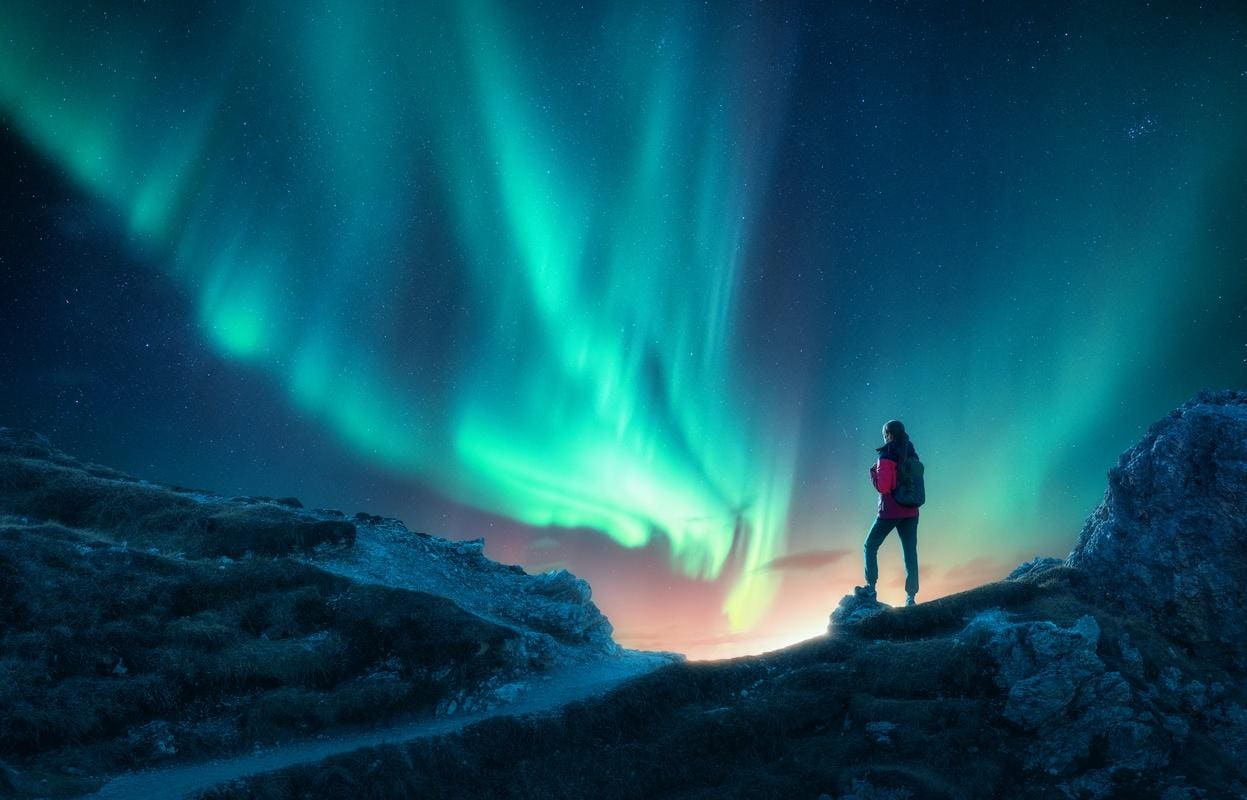
The top reason travelers miss the Northern Lights is a lack of flexibility, according to Langeland.
getty
The “solar maximum” that comes to an end in early 2026 is giving travelers the chance to see some of the brightest Northern Lights in recent years. And the pressure to spot the phenomenon is even greater since it won’t return at this intensity for another 11 years.
Thea Langeland, Adventure Designer at Norrøna Adventure, makes it her mission to maximize travelers’ odds of seeing the aurora. Here are some of her top tips to avoid the biggest mistakes that mean missing the Northern Lights.
Travelers who stake everything on one night often miss the Northern Lights
The top reason travelers miss the Northern Lights is a lack of flexibility, according to Langeland. “If the sky is cloudy, you simply cannot see the aurora, even if the solar forecast is excellent,” she says.
She strongly recommends being flexible, not only to be able to drive to different locations where the weather might be clearer, but also regarding the overall duration of the trip. “The key is to build in extra days and not stake everything on a single night,” she says.
Langeland also emphasized that if you say inside and look out of your window from a city hotel, your chances of seeing the lights are very slim.
“The best chance comes from going to a place with zero light pollution. Conditions can change quickly, so a solid layer of clouds can suddenly part to reveal a “weather hole,” allowing the Northern Lights to dance through,” she explains.
How to maximize your chances of seeing the Northern Lights on a short trip
Although flexibility greatly increases your odds of seeing the aurora, not everyone has the budget or free time for lengthy vacations. To boost your chances in a short timeframe, Langeland says travelers need to focus on darkness, location, and clear skies–and, of course, the right time of year, September through March.
Northern Norway, including Tromsø, the Lofoten Islands, Alta, and Svalbard, is a top destination for aurora viewing.
getty
The ideal trip length for catching the celestial phenomenon is 4 to 7 nights, Langeland says, depending on what you like to do in the daytime as well. You combine your trip with ski touring or join a ski expedition, and then also Northern Light hunting in the evenings.
Planning for at least 4 nights allows you to ride out cloudy days and increases your chances of overlapping with a strong solar event. This also gives you plenty of time to fill your day with other activities, such as ski touring, snowmobiling, fishing, whale watching, or learning more about Norwegian culture and the Sami people.
Experts always pack these objects when out chasing the aurora
When it comes to what to bring with you, Langeland says travelers most often forget enough warm clothing. “Since you need a clear sky and zero light pollution, chasing the Northern Lights means being exposed to cold temperatures for long periods,” she says.
Gloves and a hat are essential, and Langeland also packs a thermos if she’s going to be out for a while. She also never heads out without a power bank because the cold drains phone batteries quickly.
Northern Lights tourist traps to avoid
The biggest tourist trap is trying to see the Northern Lights from a major capital city without moving away from the light pollution, according to Langeland. While a sighting can happen, the city lights make it much harder.
“One other trap for seekers, in my opinion, is booking a spot on a large, crowded bus, driving for many hours round-trip, and staking everything on a single, one-off tour,” she adds.
Instead, top spots in Iceland include Þingvellir National Park, Jökulsárlón Glacier Lagoon, and the remote Westfjords. Sweden’s Abisko National Park and Kiruna are renowned for clear skies and reliable activity, particularly from November to March.
Finnish Lapland offers remote wilderness settings perfect for sighting, plus unique winter activities such as reindeer sledging or staying in glass igloos. Northern Norway, including Tromsø, the Lofoten Islands, Alta, and Svalbard, is a top destination for aurora viewing.