
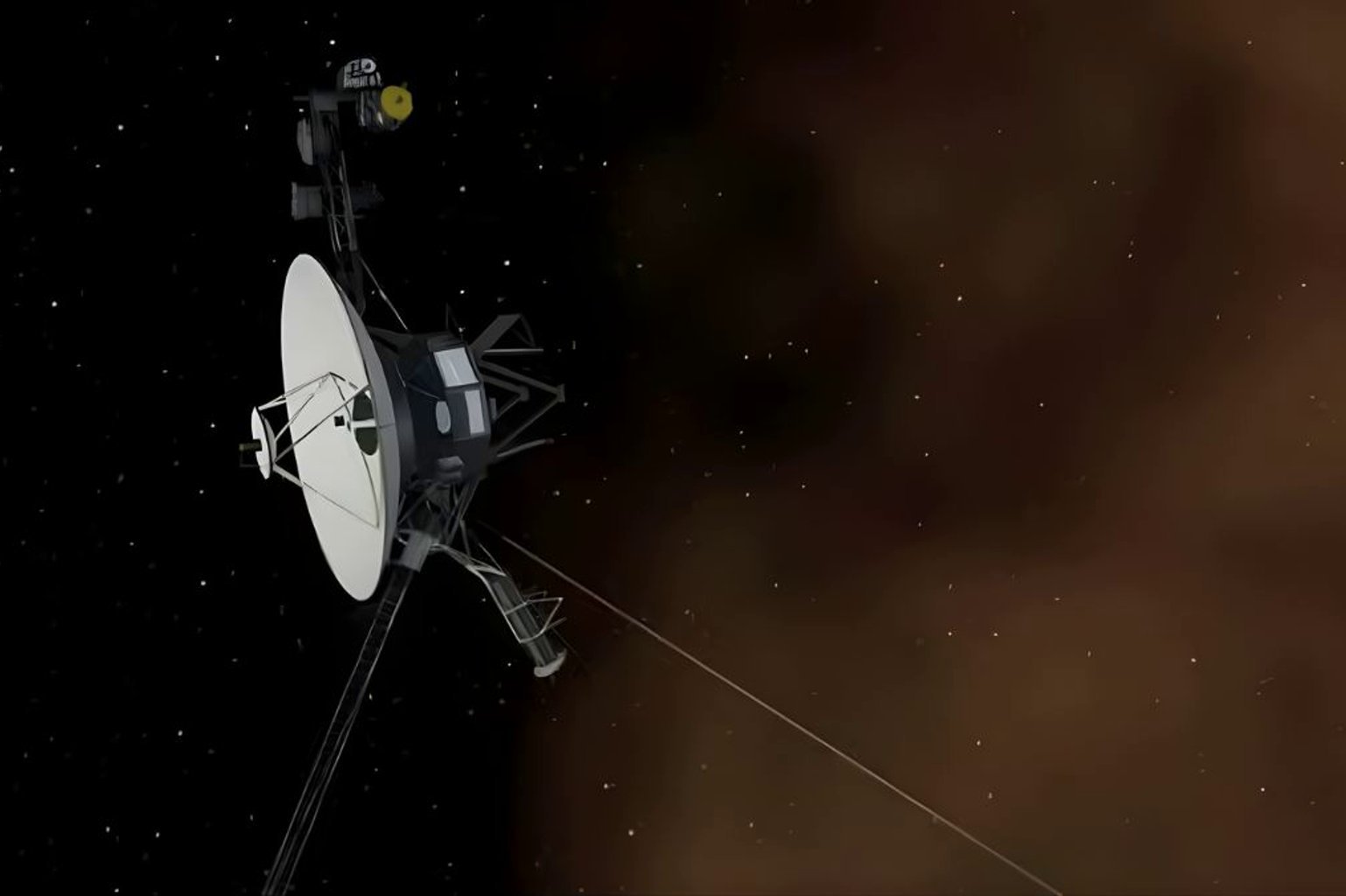
What if a piece of space history suddenly woke up to remind us it’s still out there? In 2024, NASA was taken aback when a satellite launched in 1964 seemingly sent a mysterious signal after decades of silence. This startling moment shines a light on the unexpected ways retired technology can still impact modern science and space exploration.
As a senior web editor specializing in space news and science communication, I aim to unpack this story with the detail and authority it deserves.
How a forgotten satellite caught NASA’s attention
On June 13, 2024, researchers at the Australian Square Kilometre Array Pathfinder (ASKAP radio telescope) detected what appeared to be a fast radio burst (FRB) signal—a brief, intense flash of radio waves usually originating from distant galaxies billions of light-years away. However, this signal was unusually close, coming from only around 2,800 miles (4,500 kilometers) above Earth.
Intrigued, scientists traced the signal’s source to Relay 2, a NASA communication satellite launched in 1964 and officially deactivated in 1967. Despite being considered “space junk” for over 50 years, Relay 2 unexpectedly emitted what looked like a cosmic signal, puzzling astronomers worldwide.
What is a fast radio burst, and why is this strange?
Typically, fast radio bursts are linked to cataclysmic events like colliding neutron stars or black holes in distant galaxies. Their origins are usually beyond our solar system, making an FRB originating from Earth’s orbit highly unusual.
According to Dr. Lisa Nguyen’s 2024 paper published by the NASA Astrophysics Division, FRBs “are one of the most powerful and mysterious phenomena in astronomy,” rarely expected to be generated by human-made objects.
This anomaly challenges traditional assumptions about the sources of radio emissions and highlights how even human-made satellites can create signals that mimic cosmic events.
Why did Relay 2 suddenly send a signal?
Despite its long dormancy, scientists suggest two main explanations for Relay 2’s unusual signal: either an electrostatic discharge on its surface or a micrometeorite impact causing a brief burst.
The prevailing theory favors the electrostatic discharge, where static electricity builds up on the satellite’s spacecraft surfaces and suddenly releases, much like a tiny lightning bolt. This would explain the brief, sharp nature of the signal without requiring a significant physical event.
In fact, similar electrostatic discharges have been noted on past satellite missions, reinforcing the idea that these “dead” satellites aren’t entirely inactive but can react to environmental conditions in unpredictable ways.
The lasting legacy of Relay 2 and satellite space junk
Relay 2 was part of NASA’s early efforts to pioneer communication satellites. Though its mission lasted just a few years, the technology it helped develop laid foundations for today’s satellite internet, GPS, and weather forecasting systems.
Since going inactive over 50 years ago, Relay 2 has remained in orbit, joining thousands of other pieces of space debris circling Earth. While once overlooked, the impact of such debris is gaining increasing attention in the scientific community.
For instance, a 2023 report by the NASA Orbital Debris Program Office highlighted that space junk poses serious risks—not only for collision hazards but also for complicating scientific observations by producing misleading signals like the one observed from Relay 2.
This event underscores the importance of tracking and managing retired satellites to prevent future confusion and maintain the integrity of space research.
What does this mean for the future of space monitoring?
This unexpected signal serves as a reminder that even “dead” satellites can influence modern space operations. Agencies worldwide are now dedicating more resources to monitoring old satellites and debris, aiming to better understand and mitigate their influence.
The encounter with Relay 2 also opens new avenues for research into how electrostatic discharges and small impacts affect aging spacecraft—information crucial to designing more resilient satellites in the future.
As space becomes more crowded, learning from these moments helps ensure ongoing communication, weather tracking, and scientific discovery remain reliable.
“Space has a long memory,” Dr. Nguyen noted, “and even objects considered defunct can still surprise us. This discovery urges the scientific community to broaden its perspective on both natural and artificial celestial phenomena.”
What’s your take on this cosmic blast from the past? Have you ever wondered how much of our space environment is shaped by relics like Relay 2? Share your thoughts, questions, or experiences in the comments below!