
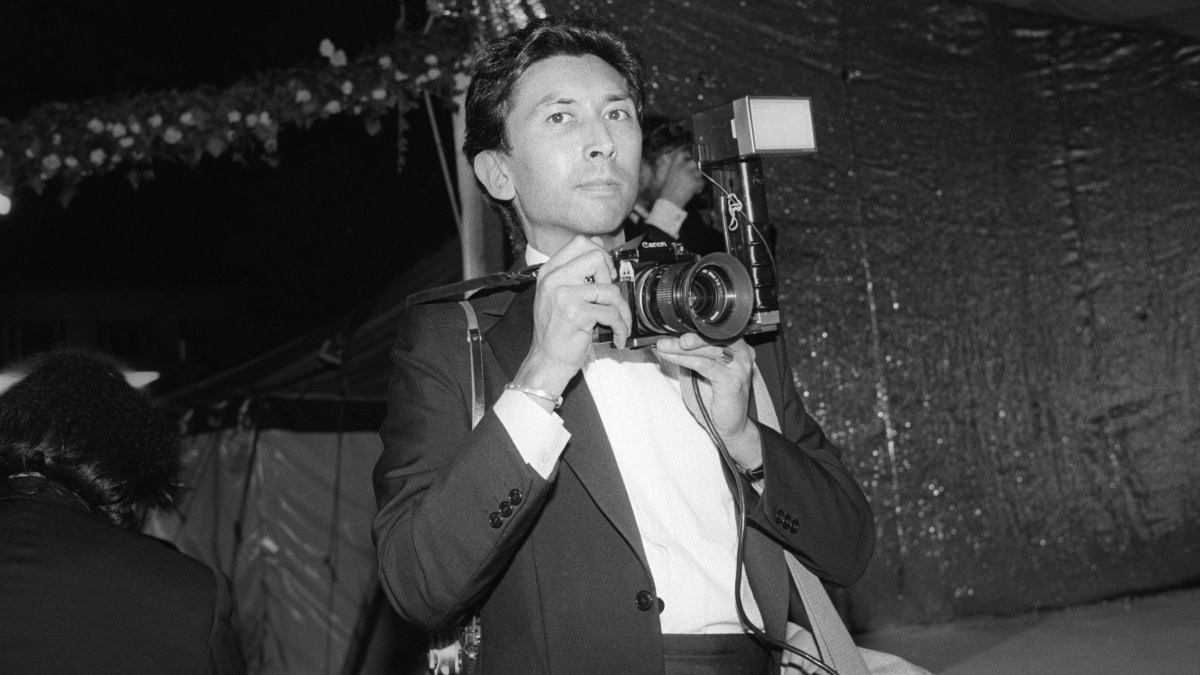
As the son of a Burmese mother, Chris Steele-Perkins grew up in 1950s England feeling like a perennial outsider. “It was a white Anglo-Saxon country and being a brown, oriental-looking child I did not feel properly English even though I had an English father,” he recalled.
The sense of being a stranger in a strange land never quite left him and shaped both his curiosity and his eye as a photographer. Although he travelled the world with his camera taking memorable photographs in Africa, the Middle East, South America and Japan, he was equally fascinated by England and its multitude of tribes and subcultures. Much of his finest work chronicled the rituals, conventions and eccentricities of the English at work and play.
“Because I did not quite fit in early, I feel it’s always been a place I’ve looked at from the outside,” he said. “It’s an odd place with odd people, which continues to intrigue me, whether I’m dealing with the lord of a manor, a 105-year-old lady or some guy with a funny haircut who’s threatening to punch me.”
He captured them all with his camera and his 2009 book England, My England created a remarkable national portrait across creed and class, from his celebrated portraits of bequiffed Teddy boys to an upper-crust couple picnicking in their finery on the lawn at Glyndebourne, and from a fairground boxing booth to a grouse shooting party. Taken over a span of 40 years the selection depicted, as he put it, “all the absurdity, violence, family, homelessness, humour, loneliness, identity and the grotesque” that goes to make up English life.

His portraits of Teddy boys in the 1970s became some of his most recognised works
CHRIS STEELE-PERKINS/MAGNUM PHOTOS

Blackpool beach, 1982
CHRIS STEELE-PERKINS/MAGNUM PHOTOS
At a time when immigration was coming to dominate the political agenda, he subsequently tracked the changing face of modern Britain in his 2019 book The New Londoners. The project grew out of a post-Brexit commission from the Victoria and Albert Museum to photograph the capital’s immigrant communities and he ended up photographing 165 families from as many countries. The powerful and often moving portraits were all shot in the families’ own homes and represented “a plea for tolerance and a way of looking at migration which is a bit less hysterical than the paranoia about waves of refugees”.
Whether he was a photojournalist or a documentarian is perhaps an arcane distinction. If the former take instant pictures that send urgent messages which demand immediate attention, documentarians might take a longer perspective, creating images that linger and raise questions about the lives and stories depicted rather than providing instant answers.
Steele-Perkins was an equally shrewd operator in both styles, although much of his work often lent towards the latter with long-term projects that took a deep dive into their subject. The New Londoners was one such example and his collection Fading Light was another, inspired by a newspaper story that suggested there were more than 10,000 people aged over 100 in Britain and which set him on a mission to photograph as many of the nation’s centenarians as he could.
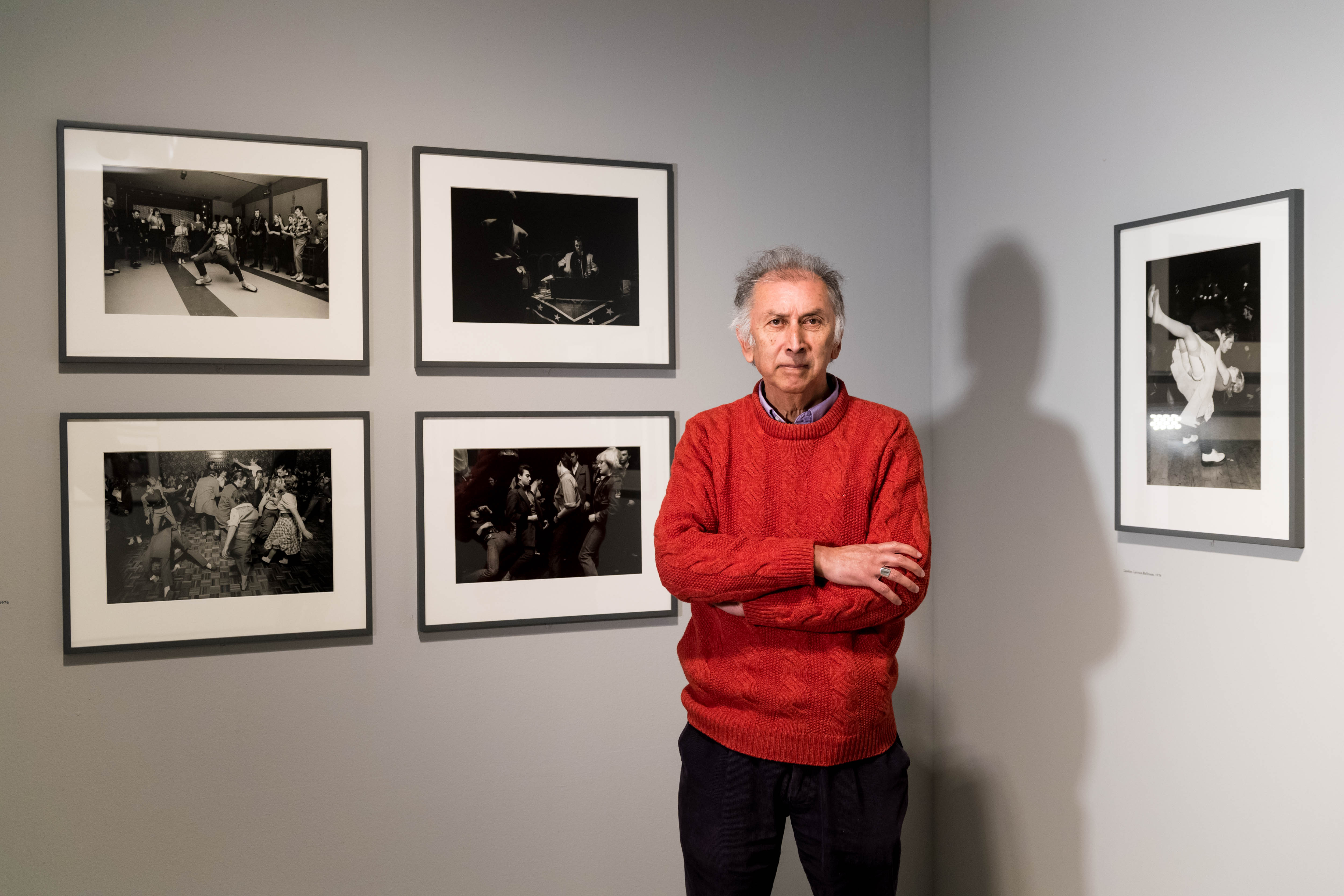
Steele-Perkins in 2018. He continued to work throughout his life
IAN GAVAN/GETTY IMAGES/THE BARBICAN
Celebrity portraiture was not his thing, with an image of Margaret Thatcher at a Conservative Party conference in the 1980s a rare exception. Rather his subject matter was “without meaning to sound pretentious, the human condition and how people live”.
Some of his projects took years before he was satisfied that he had covered his subject from every angle. His 2001 book Afghanistan was the result of numerous trips over four years and featured bearded Taliban with Kalashnikovs alongside ordinary Afghan people captured in their moments of joy, leisure, boredom, hope and mundanity.
His Tokyo Love Hello, published in 2007, was an even lengthier undertaking and featured photos taken during visits with his Japanese wife spanning a decade but sequenced as if they were a single 24-hour cycle from night, through day and back into night. The selection of the pictures came down to the same criteria he always used “the most revealing, the most striking, and the most entertaining”. He is survived by Miyako Yamada, whom he married in 1999, and by his sons Cedric and Cameron from his first marriage.
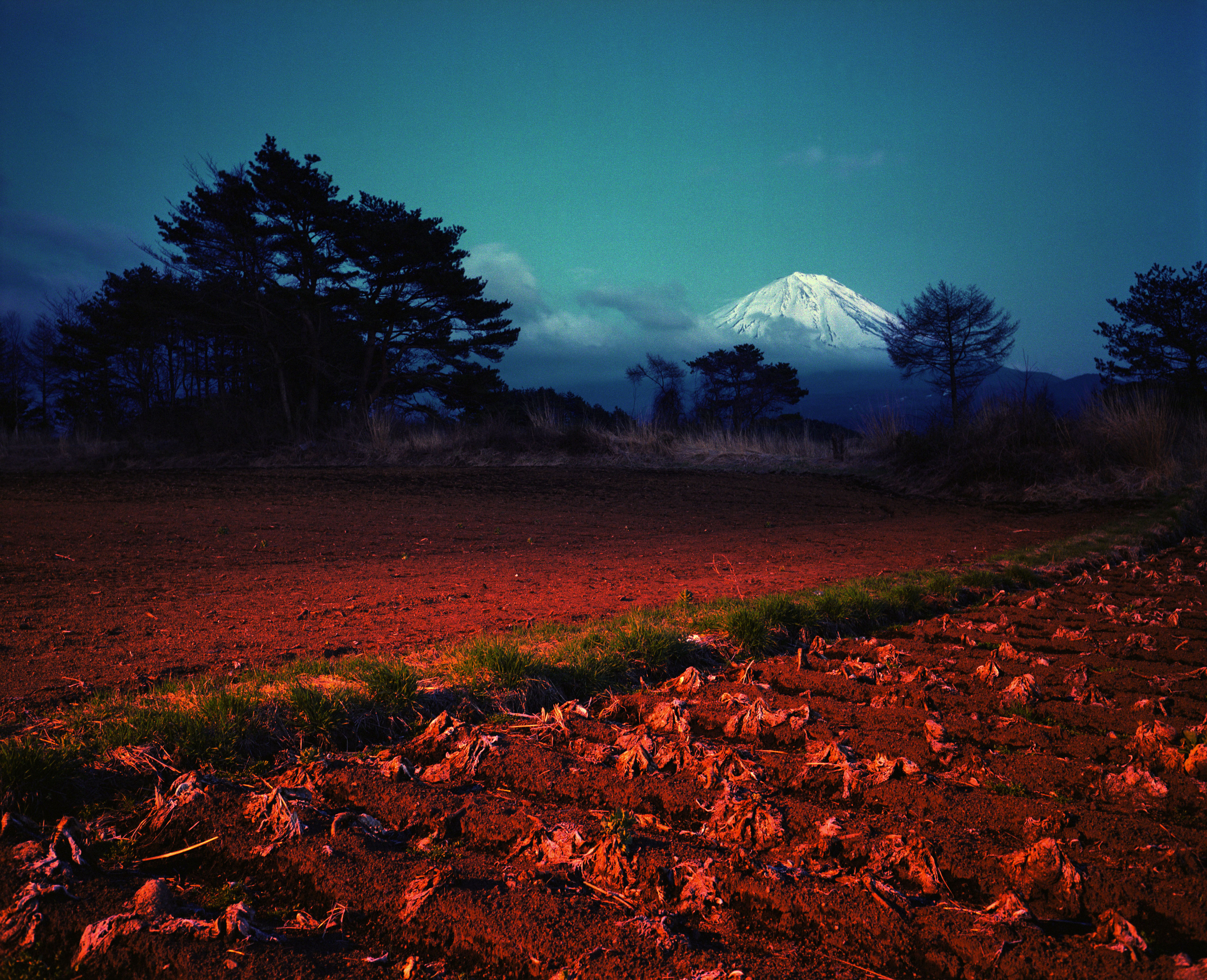
Steele-Perkins was a regular visitor to Japan with his second wife. This image is from 2000
CHRIS STEELE-PERKINS/MAGNUM PHOTOS
Christopher Horace Steele-Perkins was born in 1947 in Yangon, Burma. After his parents separated when he was two, his father returned to Britain, bringing his son with him. Educated at Christ’s Hospital, West Sussex, he spent a year studying chemistry at the University of York before dropping out and moving to Canada.
On his return to Britain, he read psychology at Newcastle University, where he cut his teeth as a photographer on the student newspaper. “It turned out to be a good training ground,” he said, “because you’d do a football match, and then a rock concert, and then a portrait, and then you’d do something else. It was real situations with real deadlines, which meant there were real outcomes.” On graduating in 1970, he realised “that was the route I wanted to follow rather than be a not-very-good-psychologist”.
Working as a freelancer, he did a little teaching, took a trip to Bangladesh to take pictures for an aid charity and in the mid-1970s joined the Exit collective, where he worked on a project funded by the Calouste Gulbenkian Foundation to document inner-city poverty in Glasgow, London, Middlesbrough, Newcastle and Belfast. He joined the Magnum agency in 1979 and that same year published his first solo book, The Teds, which has come to be regarded as a classic.
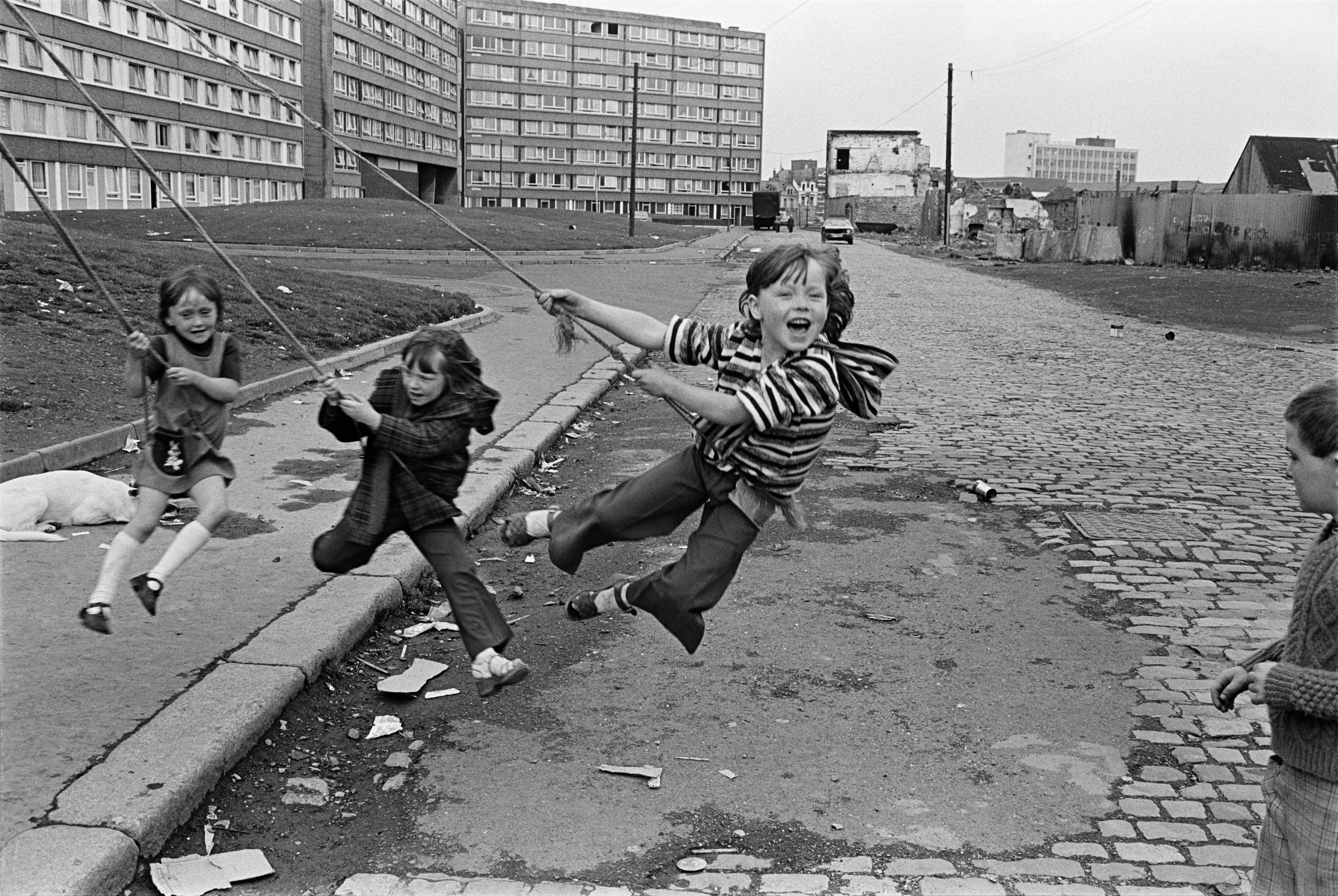
Children in west Belfast, 1978
CHRIS STEELE-PERKINS/MAGNUM PHOTOS
There followed a dozen further books, a format that he found more satisfying than working for newspapers and magazines. “It was great to have a 12-page spread in the Sunday Times Magazine, but you get a whiskey ad in the middle of it and a Land Rover ad at its end,” he said. “A book offers a cause and the most satisfying way of producing a body of work.”
The biggest-selling print in his portfolio was a picture of dancers in a reggae club in Wolverhampton, taken in 1978 after The Sunday Times sent him and the writer Gordon Burn to the town to do a story on the tenth anniversary of Enoch Powell’s infamous “Rivers of Blood” speech. “It was a tiny place, made even smaller by the sound system and the place was packed out,” he recalled. “People have complained that I cropped the dancers’ feet off in this photograph, but I couldn’t get any further back.” As a result he didn’t like the picture at the time, “but it’s grown on me, and it seems to have caught the popular imagination”.
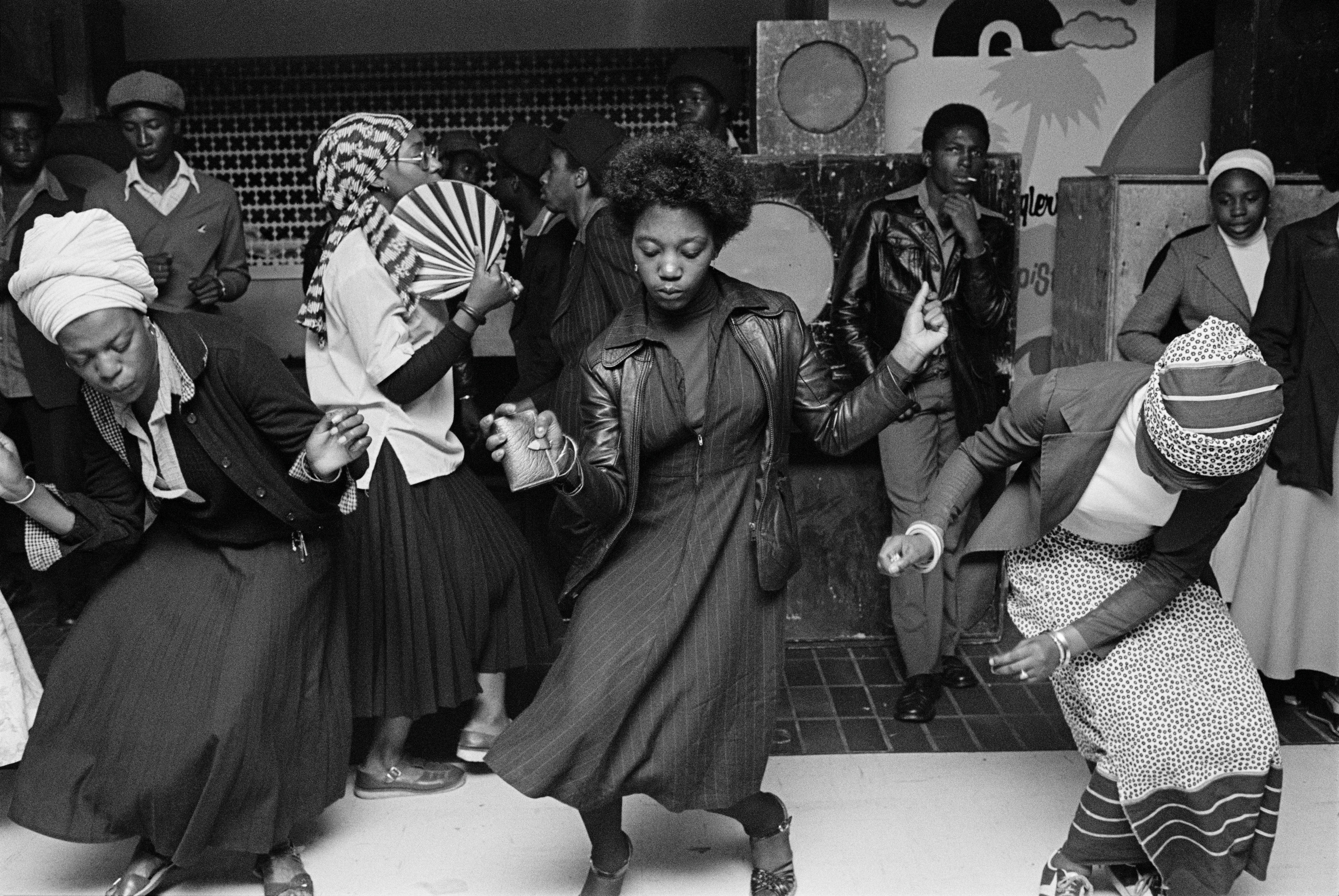
A reggae club in Wolverhampton, 1978
CHRIS STEELE-PERKINS/MAGNUM PHOTOS
His photography won multiple awards, including the Tom Hopkinson prize for British Photojournalism (1988), the Robert Capa Gold Medal (1989) and the Royal Photographic Society’s Terence Donovan award (2008). He also served for several years as the president of Magnum.
“Making serious efforts to find out more about the world you live in seems a pretty good idea, and photography gives you a fantastic way of doing that,” he said. “Hopefully the person who comes to my exhibition or buys a book will go on the same journey.”
Chris Steele-Perkins, photographer, was born on July 28, 1947. He died in his sleep on September 8, 2025, aged 78