
A San Francisco developer of power grid sensors is aiming to break into Britain after raising $55 million (£42 million) from a group of blue-chip investors including Al Gore’s London firm Generation Investment Management and the US tech giant Tiger Global.
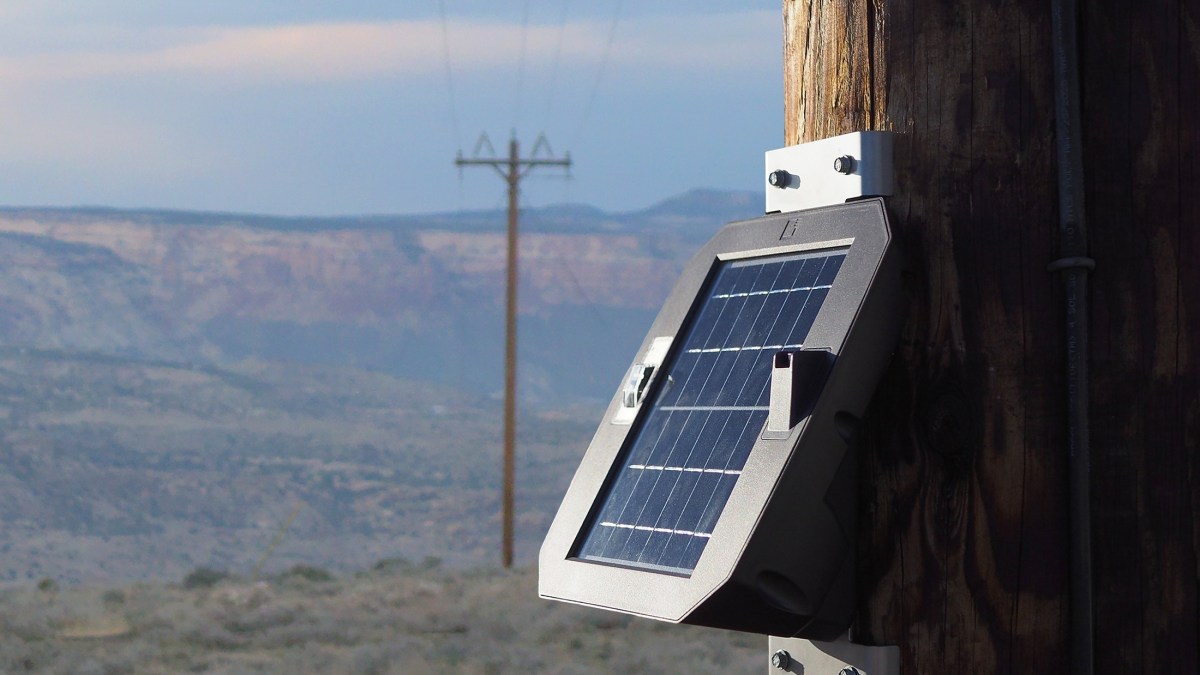
Gridware, a five-year-old start-up, makes hyper-sensitive sensors for pylons that allow utilities to pinpoint faults and fix issues before they become highly damaging.
After establishing itself in America — Gridware’s sensors are deployed across tens of thousands of miles of the country’s electric grid — it has set its sights on Britain at a critical time. Energy regulator Ofgem has fast-tracked a mammoth £80 billion network upgrade after decades of underinvestment.

Chestnut Street in San Francisco: Gridware’s sensors have been deployed on thousands of poles and pylons in the US
ALAMY
Gridware, which is also backed by Sequoia Capital, whose successful past bets include YouTube and Apple, cut its teeth in its home state of California with PG&E. The state’s largest utility filed for bankruptcy in 2019 to settle billions of dollars in claims stemming from wildfires caused by faulty equipment but it has gone three years without causing a major wildfire thanks to a host of measures, including installing thousands of Gridware’s sensors.
• Millions face power cuts as Californian wildfires spread
About the size of a book, the company’s kit attaches to power poles and includes a vibrometer, microphone and other equipment designed to sense anomalies. The upshot is fewer failures, because maintenance crews have a clearer sense of the health of the network, as well as shorter recovery times, as faults are easier to find.
Generation Investment Management was co-founded by Gore, the environmental campaigner and former US vice-president, and investment banker David Blood, and manages more than $30 billion in assets. It recently led the $55 million financing round to fund Gridware’s international expansion.
Tim Barat, chief executive of Gridware, is expected to meet with the bosses of several of Britain’s biggest utilities next month. He said: “Historically, it’s been really hard to drive down costs in operations, but that is what we are doing. In some cases we have been able to reduce outages by 70 per cent, whether that means preventing failures in advance or getting the lights back on faster after a storm.”
The UK’s grid improvement programme includes upgrading 2,700 miles of overhead lines and 2,200 miles of new distribution circuits.
Jonathan Brearley, Ofgem’s chief executive, said the programme was critical to handle the huge increase in renewable sources, as well as soaring demand from data centres driven by the artificial intelligence boom. He said earlier this year: “The sooner we build the network we need and invest to strengthen our resilience, the lower the cost for billpayers will be in the future.”
• Household energy bills will rise to pay for network upgrades
Ofgem has promised that while the “great grid upgrade” will be expensive, some of the costs will be offset by more efficient operations and fewer faults. Energy executives have warned, however, that household bills will rise by anything between 5 per cent and 20 per cent to pay for the programme.
Centrica boss Chris O’Shea said in a recent speech: “Ofgem proposes significant upfront investment, leading to higher network charges. This raises major concerns about affordability for consumers and businesses — particularly SMEs [small and medium-sized enterprises], the backbone of our economy.”
Last week, the UK government chose Wylfa on Anglesey to be the site of the country’s first small modular reactor, a scaled-down nuclear power station to be built by Rolls-Royce.