
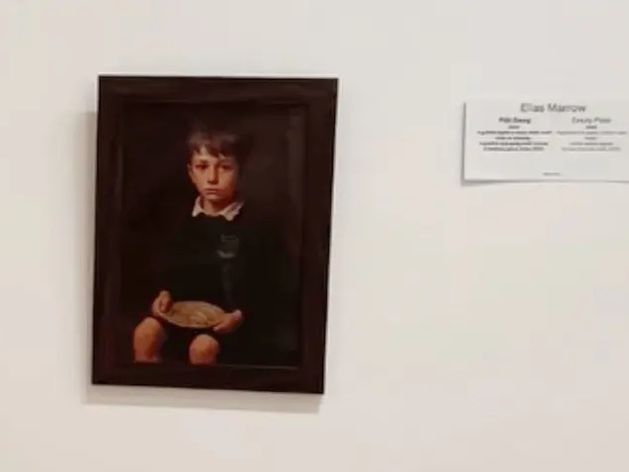
“An item was placed without permission on a gallery wall,” a spokesperson for the National Museum Cardiff said. “We were alerted to this and have removed the item in question”
The confused visitor alerted employees at the renowned National Museum Cardiff in Wales to the artificially intelligent design.
When they asked “why such a poor quality AI piece was hanging there without being labelled as AI”, staff admitted they had no idea about the piece or when it arrived.
The digital print had been showcased at the museum by the secretive guerrilla artist Elias Marrow, who said the work was viewed by a “few hundred people” before it was removed, the BBC reports
“An item was placed without permission on a gallery wall,” a spokesperson for the National Museum Cardiff said. “We were alerted to this and have removed the item in question.”
The AI-generated masterpiece depicts a young boy in a school uniform who sitting down with a book under his arm and an empty plate on his lap.
Rendered in the style of a historical oil painting, Marrow had reportedly sketched out the image before rendering it with AI and making prints.
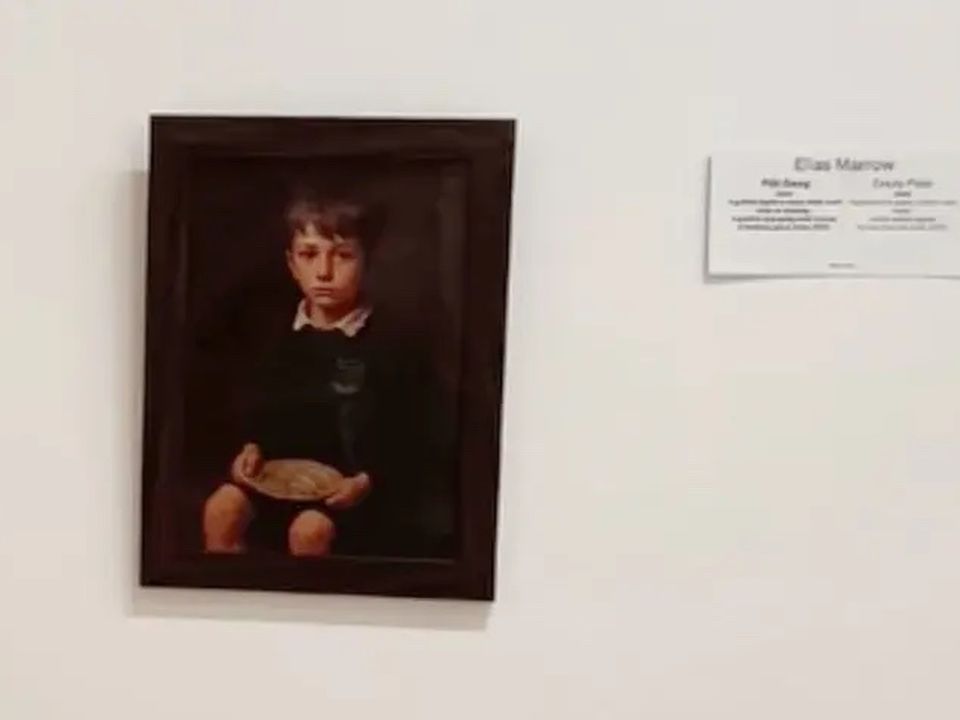
The AI-generated ‘Empty Plate’ was viewed by a “few hundred people” before it was removed
News in 90 Seconds – Wednesday, November 12
To complete the effect, a piece of paper tacked on the wall next to the print identifying it as ‘Empty Plate’ by the artist Elias Marrow.
In keeping with typical museum standards, it then listed the medium and lender: “Digital print on paper, custom made frame. Limited edition, signed. On loan from the Artist, 2025.”
The unauthorised artwork was displayed in the museum’s contemporary art gallery for several hours before sharp-eyed visitors brought it to the attention of staff.
One tourist from Ireland said they initially wondered “why such a poor quality AI piece was hanging there without being labelled as AI.” But when the guest approached the staff, they said “they had no idea about the piece or when it arrived.”
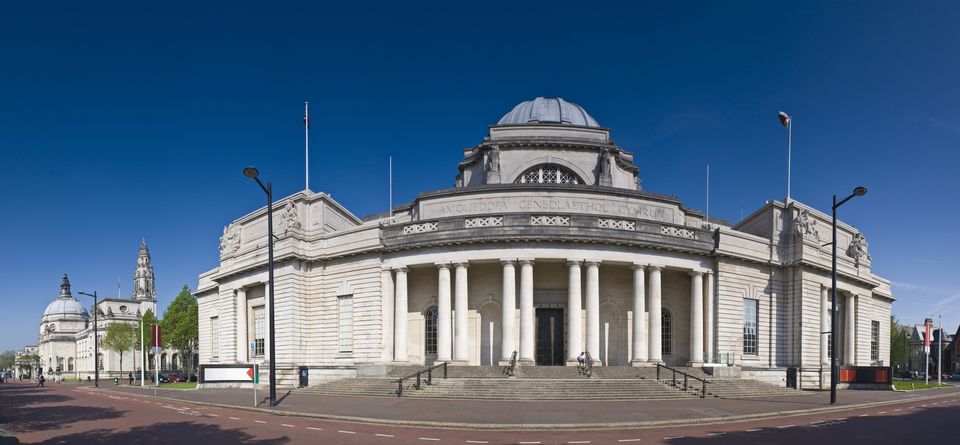
National Museum Cardiff in Wales
The cheeky exhibition proved a triumph for Marrow, who claimed the aim of the exercise was to illustrate “how public institutions decide what’s worth showing, and what happens when something outside that system appears within it.”
The prankster said the use of AI in the artwork represented the “natural evolution of artistic tools,” declaring, “AI is here to stay. To gatekeep its capability would be against the beliefs I hold dear about art.”
In July, the artist placed “unsanctioned” works at two UK museums, including a painted brick in Tate Modern’s Turbine Hall in London and a placard at the Bristol Museum and Art Gallery.
Marrow claims that his “work isn’t about disruption,” but “about participation without permission”.
Further information about the work, which is meant to “represent the state of Wales in 2025,” can be found on the artist’s website.
Marrow wrote of the AI-generated picture: “The plate is empty. The book is closed. His uniform bears the insignia of an institution long since erased.
It is unclear whether he waits to be fed, punished, or simply forgotten.” A Welsh phrase follows, which translates to: “In hunger, he tries to learn; in poverty, he tries to live; in Wales, he calls it home.”
The BBC referred to a recent report that found a quarter of Welsh children live in poverty.
Marrow is a conceptual artist whose practice “interrogates permanence, authorship, and the transactional myth of meaning,” according to his website.
He does not make art, his statement said, but instead “interferes with it.”
Last year, an aspiring artist who installed one of his own paintings at the Munich museum where he worked was fired
Danai Emmanouilidis, a student in the Germany city of Bonn, snuck her painting into the Bundeskunsthalle in 2023, sticking it to the wall with double-sided tape.
Emmanouilidis later sold the work for €3,696 at Van Ham auction.
In 1976, conceptual artist Dove Bradshaw attached a homemade label near a fire hose in the Metropolitan Museum of Art in New York, claiming it as her work and calling it, appropriately, Fire Extinguisher.
In 2007, the Met acquired the label as an artwork for its permanent collection.