
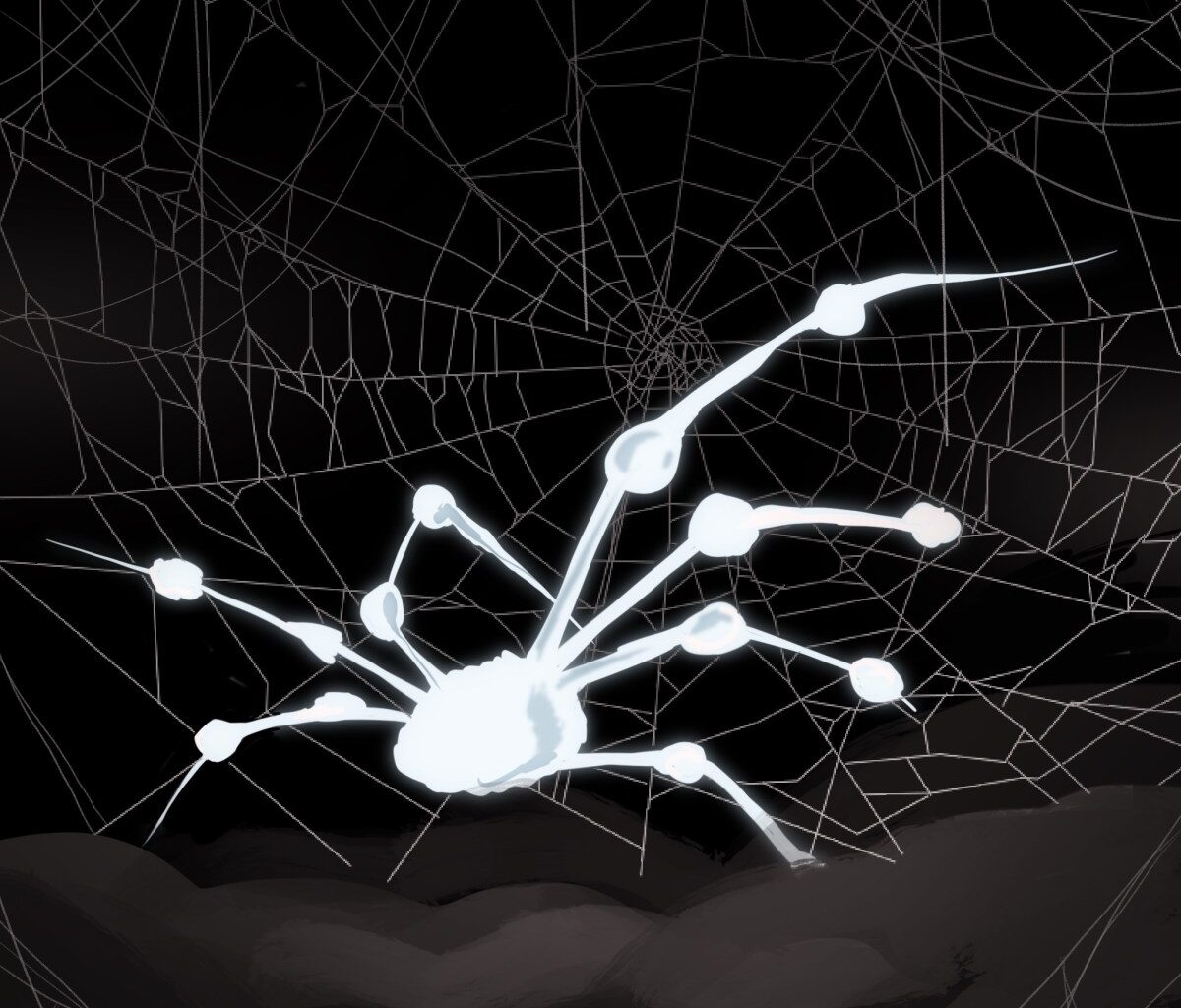
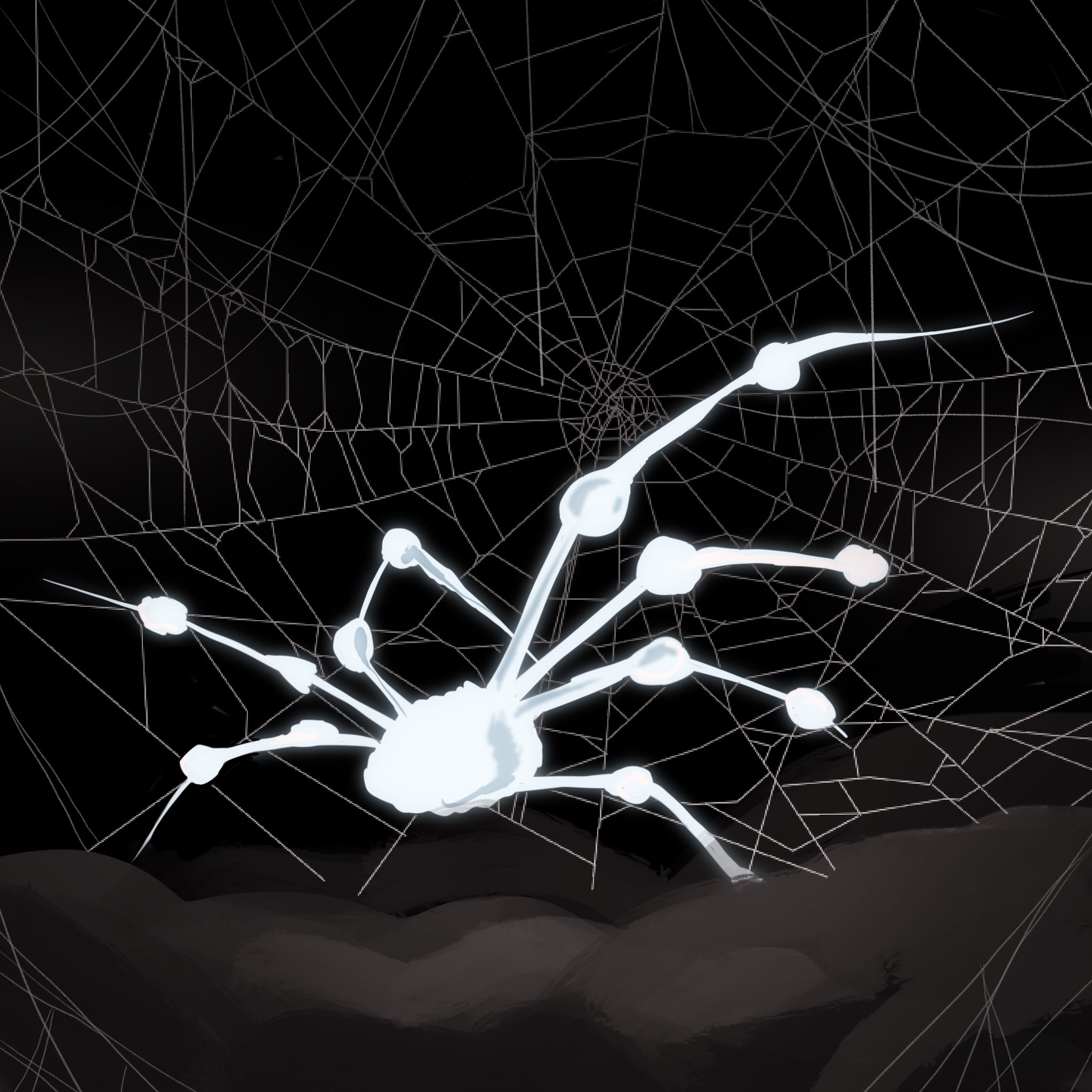
 Researchers have just discovered the world’s largest spider web, spanning over 1,140 square feet and home to over 110,000 spiders. Jenna El-Attar/ Guest Artist
Researchers have just discovered the world’s largest spider web — and no, it’s not in Doherty. Located in Sulfur Cave along the Albania-Greece border, the web spans over 1,140 square feet and is home to over 110,000 spiders — including two species that were previously believed to be hostile to each other.
First discovered in 2022, scientists believe that the cave formed over a millennium as sulfide-rich water gradually filtered through — and eventually dissolved — carbonate rock.
Rather than relying on organic material washing into the cave from the surface, sulfidic cave ecosystems are entirely dependent on chemoautotrophic bacteria. These bacteria oxidize hydrogen sulfide — a colorless and toxic gas — to create energy, serving as the basis of the cave’s food web.
Furthermore, sulfidic caves are characterized by low oxygen flow, acidic pH levels, and hydrogen sulfide toxicity. Most life forms cannot withstand such hostile conditions, leading to a population primarily composed of endemic species adapted to survive in extreme environments. Yet, against all expectations, researchers found a massive, cooperative spider colony — a structure unlike anything previously recorded.
In an effort to further understand this complex ecosystem, researchers at the University of Transylvania manually collected spider specimens from the cave and taxonomically identified each species. They determined that five species were present — two associated with the colony (T. domestica and P. vagans) and three non-colony-associated (M. merianae, L. magnesiae, and K. eremita).
It wouldn’t be unusual to find T. domestica and P. vagans — common household spiders — in the corners and crevices of your basement or attic. Both species are preadapted for dark, stagnant environments. Still, researchers were surprised to find them nearly 160 feet from the cave’s entrance — an area completely devoid of sunlight.
Researchers accounted for this discrepancy through DNA barcoding. Each species had its DNA sampled, sequenced, and compared to publicly available databases. L. magnesiae was excluded from this analysis due to a lack of available information. T. domestica and P. vagans were found to be genetically uniform, carrying a haplotype (a group of genetic markers typically inherited from one parent) that differed slightly from spiders of the same species found above ground. This indicates that the spiders likely originated from a single founding group that later became isolated from the external world. The other two species showed high genetic diversity, a characteristic of a mobile population that moves freely between the ground and surface.
Furthermore, this discovery marks one of the first recorded instances of T. domestica and P. vagans living together. Spiders are territorial — when in close proximity to each other, the larger one will often end up eating its smaller counterpart. The two species’ peaceful coexistence can be attributed to a variety of factors.
First, scientists observed a large swarm of adult chironomid flies in the cave. The presence of an abundant, continuous food source means that the two species do not have to compete for a meal. Moreover, spiders suffer from notoriously bad eyesight, leading some scientists to conclude that the two species may be entirely unaware of the other’s existence.
Scientific interest in spider sociality can be traced back decades. One species, the Anelosimus eximius, notably creates large communal webs that house thousands of spiders. Together, these “social spiders” raise young and capture prey more effectively than their solitary counterparts.
However, it is important to recognize the interactions between T. Domestica and P. vagans are more cooperative than collaborative. Researchers also noted that T. domestica, with a population of over 69,000, acted as the primary “architect” of the colony, building and repairing the massive web. In contrast, the 42,000 P. vagans interacted with the web, but played no role in its construction. Still, this structure resembles a dynamic that has only been observed in a fraction of the 50,000 known spider species.
The discovery of this web presents new questions about the genetic and morphological underpinnings of interspecies interactions. More than anything, though, it serves as a potent reminder that even the most familiar of species can surprise us. Nature has a tendency to scorn the rigid, man-made classifications of behavior and biology. So if even the most socially volatile species can venture into new territory and forge mutual connections, perhaps there is hope for the average Carnegie Mellon student.