
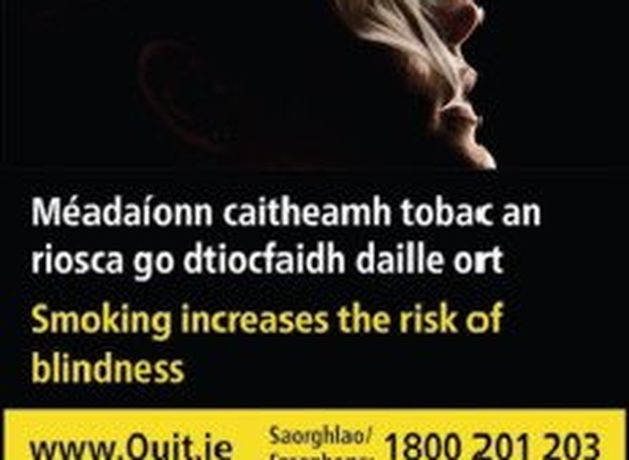
The findings have raised concern among public health experts about the unintended consequences of EU-mandated picture warnings designed to reduce smoking rates.
The research, led by a team at the Technological University of the Shannon (TUS), examined reactions to one image of a woman exhaling cigarette smoke. It revealed that despite the intended purpose, to deter use, some of those surveyed reported positive emotional responses.
The study, which surveyed 607 people in Ireland, asked individuals to describe their response to one of 14 EU warning images, which was viewed as open to interpretation. Over half (54pc) reacted negatively to the image, using words such as “death”, “anxiety”, “stress” and “self-harm”.
In contrast, 22pc of respondents reported the image evoked feelings of relaxation, calm and peacefulness.
Overall, just over a quarter, or 28pc of respondents, found the image appealing in some way.
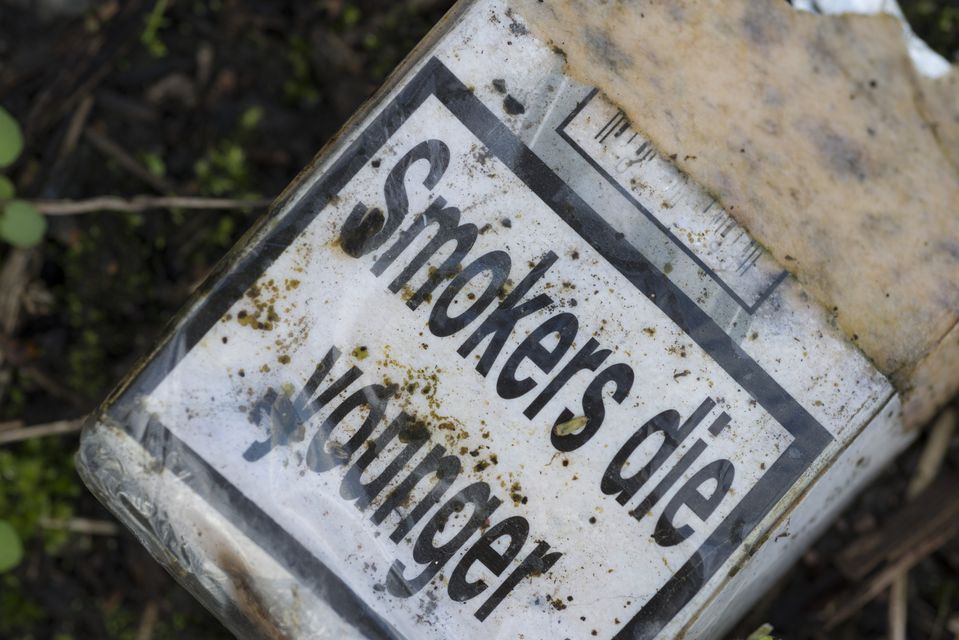
Stark warnings appear on cigarette packets by law. Photo: Getty
Among these, 40 described the image as “stylish,” “cool” or “classy” while others felt it made smoking appear attractive or enjoyable. In the study, published in The BMJ, eight people labelled the image “seductive” or “sexy”.
The research team – including Alwalid Ali of the University of Limerick and Ben Houghton and Jennifer Moran Stritch of TUS – said the findings highlight the need for careful design and review of tobacco warning images to ensure they do not unintentionally glamorise smoking.
“There is strong evidence that combined text and graphic warnings are an effective part of tobacco control measures,” the authors noted. “Like many countries, Ireland’s smoking rate has declined significantly in recent years.”
The authors acknowledged limitations in the study, including the absence of accompanying warning text and the predominantly student sample.
Nearly three-quarters of participants were non-smokers, but positive interpretations were reported across all demographic groups.
They recommend future warning images undergo pilot testing to assess the potential for unintended positive associations before being approved.
Under EU law, tobacco packaging must display combined text and pictorial warnings covering at least 65pc of the pack’s main surfaces. These warnings are designed to inform consumers about the dangers of smoking and deter tobacco use.
The same research team recently highlighted separate concerns around Ireland’s tobacco-control system, after finding just 1pc of reported breaches of tobacco legislation resulted in convictions. Their analysis of 10 years of enforcement data showed more than 23,000 recorded violations between 2014 and 2023, yet just 267 prosecutions were successful.