
Quick Read
Two National Guard members were critically injured in a targeted shooting near the White House, investigated as a terrorist attack.Suspect Rahmanullah Lakanwal, an Afghan national who worked with the CIA, faces assault charges and remains hospitalized.President Trump called for a review of all Afghan nationals admitted under Operation Allies Welcome.NBC’s live broadcast of the 99th Macy’s Thanksgiving Day Parade was plagued by video and audio glitches, frustrating viewers.Federal court ruled the National Guard’s deployment in D.C. illegal, pending appeal.NBC News at the Center: National Guard Shooting and Thanksgiving Parade Under Fire
Thanksgiving Day 2025 was anything but routine for NBC. While millions tuned in for the festive Macy’s Thanksgiving Day Parade, the network was also grappling with the responsibility of reporting a violent, high-profile attack just blocks from the White House. The day’s events unfolded across two distinctly different American stages, but each drew scrutiny—one for the gravity of its breaking news, the other for technical failures that frustrated viewers nationwide.
Critical Incident: Targeted Attack Near the White House
On November 26, two West Virginia National Guard members, Sarah Beckstrom (20) and Andrew Wolfe (24), were ambushed and critically injured in what authorities are investigating as a terrorist attack near Washington D.C.’s 17th and I Streets. The suspect, identified as Rahmanullah Lakanwal, a 29-year-old Afghan national who had previously worked with a CIA-backed unit in Kandahar, was also shot and remains hospitalized under heavy guard. The attack was described by Jeanine Pirro, United States Attorney for the District of Columbia, as a “brazen, targeted ambush” that left both soldiers fighting for their lives.
Lakanwal faces three counts of assault with intent to kill while armed, and one count of possession of a firearm during a violent crime. Officials revealed he had driven from Washington State with the explicit intent to carry out the attack, raising immediate questions about security, vetting, and the risks faced by resettled Afghan allies.
President Donald Trump, in a late-night address, labeled the shooting “an act of terror” and called for a sweeping re-examination of every Afghan national admitted to the U.S. under the Biden-era “Operation Allies Welcome.” The CIA confirmed Lakanwal’s prior cooperation with U.S. forces, which had initially justified his resettlement in 2021 following the chaotic withdrawal from Afghanistan. Yet, the incident reignited debates about radicalization and the long-term integration of wartime allies.
Law enforcement, including FBI agents, worked through Thanksgiving, treating the investigation as a possible act of terrorism. The Afghan resettlement nonprofit AfghanEvac urged Americans not to generalize the violent act, emphasizing that it should not be used to vilify an entire community of former U.S. allies.
National Guard Deployment: Legal and Political Controversy
The attack occurred against a backdrop of ongoing legal and political debates about the National Guard’s presence in Washington. Some 2,100 troops have been stationed in the capital since August, part of a campaign to curb violent crime. However, a recent federal court ruling deemed the military’s takeover of local policing illegal, with the order temporarily on hold pending appeal. Mayor Muriel Bowser welcomed the ruling, seeking to end the deployment, while the federal government faces a December 11 deadline to respond.
The deployment itself has become a flashpoint, reflecting tensions between federal authority and local governance, as well as broader anxieties about safety and civil-military relations in major U.S. cities.
Macy’s Thanksgiving Day Parade: Technical Woes Overshadow Festivities
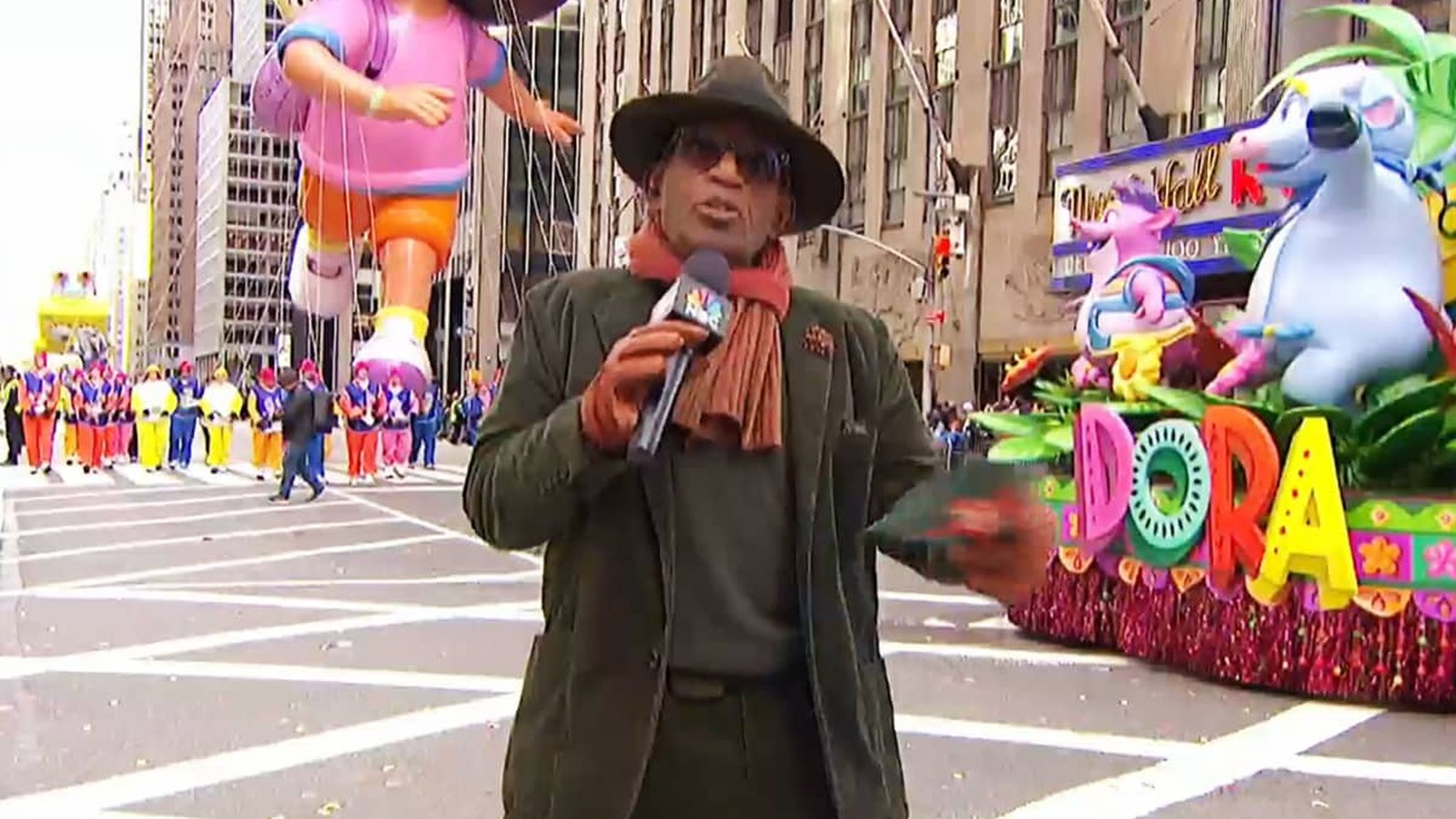
As NBC sought to deliver joy and spectacle through its live broadcast of the 99th annual Macy’s Thanksgiving Day Parade, viewers at home encountered a different reality. The parade, featuring 34 balloons—including new additions like Buzz Lightyear and Mario—28 floats, and performances from stars such as Cynthia Erivo, Ciara, and the cast of “KPop Demon Hunters,” was marred by widespread technical problems.
Social media erupted with complaints: “grainy and blurry” video quality, “lagging and choppy” feeds, and unsynchronized audio plagued the live coverage across NBC, Peacock, and YouTube TV. “Anyone else’s Peacock lagging and choppy?” one user posted on X, while another tweeted, “@nbc didn’t realize we were streaming from 2010. The quality is so grainy and blurry.”
Hosts Savannah Guthrie, Hoda Kotb, and Al Roker (marking his 30th year reporting the parade) maintained professionalism, but the technical glitches proved persistent. Performances—including Erivo’s opening “Feeling Good” and Ciara’s new songs—struggled to shine through the broadcast’s issues, leading some to declare the parade “basically unwatchable.”
Despite these setbacks, the parade’s creative director, Brendan Kennedy, highlighted the debut of new floats, while the world-famous Rockettes and other acts did their best to uphold tradition. Meanwhile, cold, wintry weather in New York City added to the day’s challenges, as a Canadian cold front brought temperatures well below seasonal averages.
NBC’s Role: Balancing Breaking News and Live Entertainment
For NBC, Thanksgiving 2025 was a stark reminder of the complexities of modern broadcast journalism. The network’s coverage of the D.C. attack demanded rapid, factual reporting and careful navigation of sensitive political and social debates. At the same time, its marquee entertainment event was undermined by technical failings, drawing public ire and highlighting the risks inherent in live, multi-platform broadcasting.
In both cases, NBC’s position as a national news and cultural institution came under scrutiny. How does a network balance the urgent need for factual, responsible news with the expectations of flawless entertainment? When disaster and celebration collide, the challenge is not only technical, but also ethical and editorial.
NBC’s Thanksgiving coverage laid bare the dual pressures facing major broadcasters today: delivering timely, sensitive reporting on traumatic events while maintaining the seamless spectacle audiences expect. The juxtaposition of a terrorist attack and a beloved parade, complicated by technical failures, underscores the need for both rigorous news standards and continual investment in broadcast technology—reminding us that even the nation’s most trusted networks are vulnerable to the unpredictable demands of live media.