
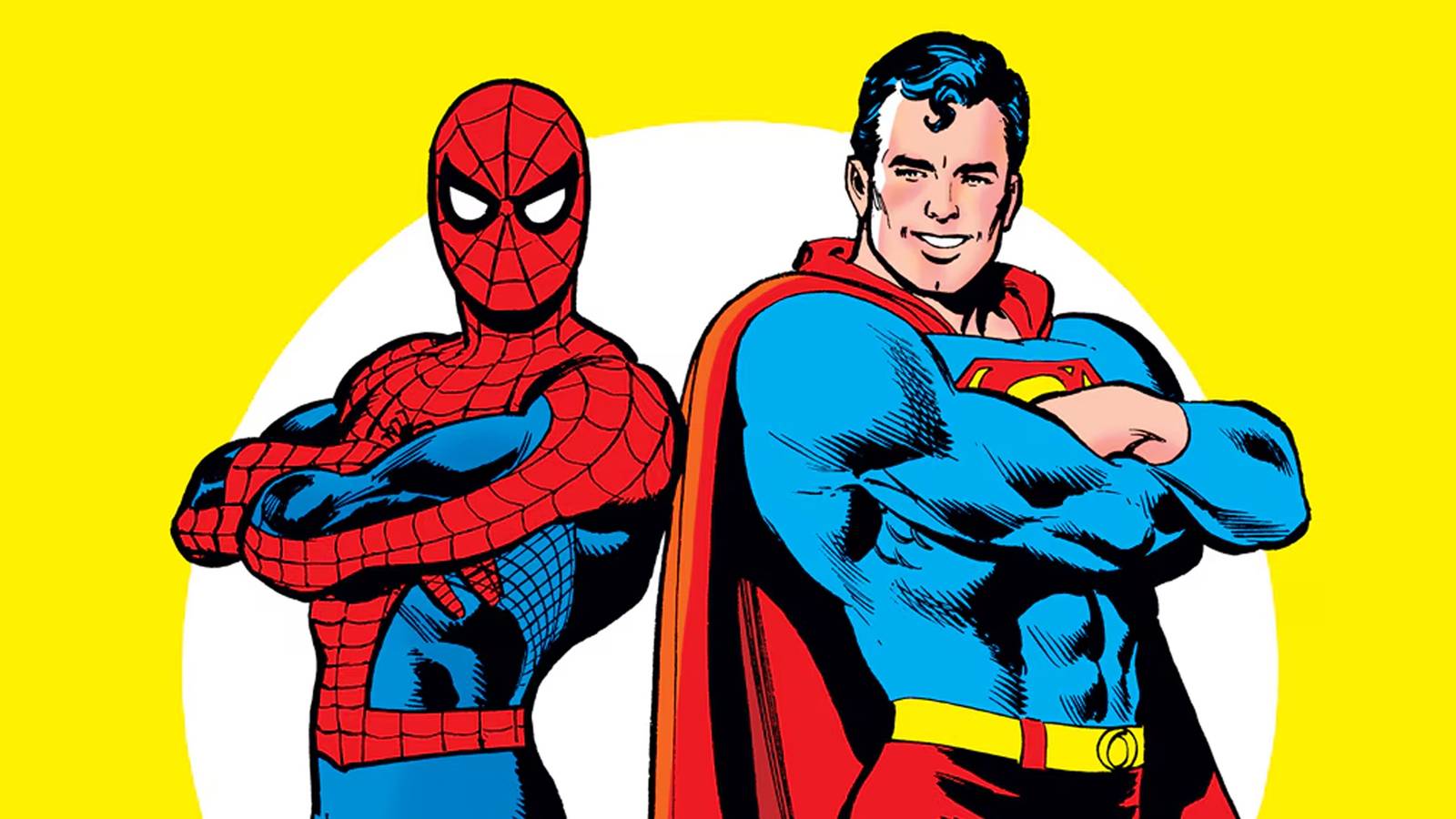
2025 has been a great year for fans of Marvel and DC‘s most popular characters, as they have crossed over again for the first time in years. Stories in Marvel’s Deadpool/Batman #1 and DC’s Batman/Deadpool #1 met, and in some cases merged, some of today’s most popular characters. Of course, it’s far from the first time that fans have seen the Big Two join forces to tell often incredible, though sometimes forgettable, intercompany crossover stories.
Fans have learned that even more crossovers are coming when DC releases Superman/Spider-Man #1 in March of 2026, with Marvel’s Spider-Man/Superman #1 following the next month to celebrate the 50th anniversary of their first meeting. That makes it a great time to take a look back at the Big Two’s crossovers over the decades, from the original meetings in the ’70s to the oversaturated team-ups of the ’90s until fans finally got what everyone had been waiting for in the 2000s.
Marvel and DC First Officially Crossed Over in the 1970s and ’80s
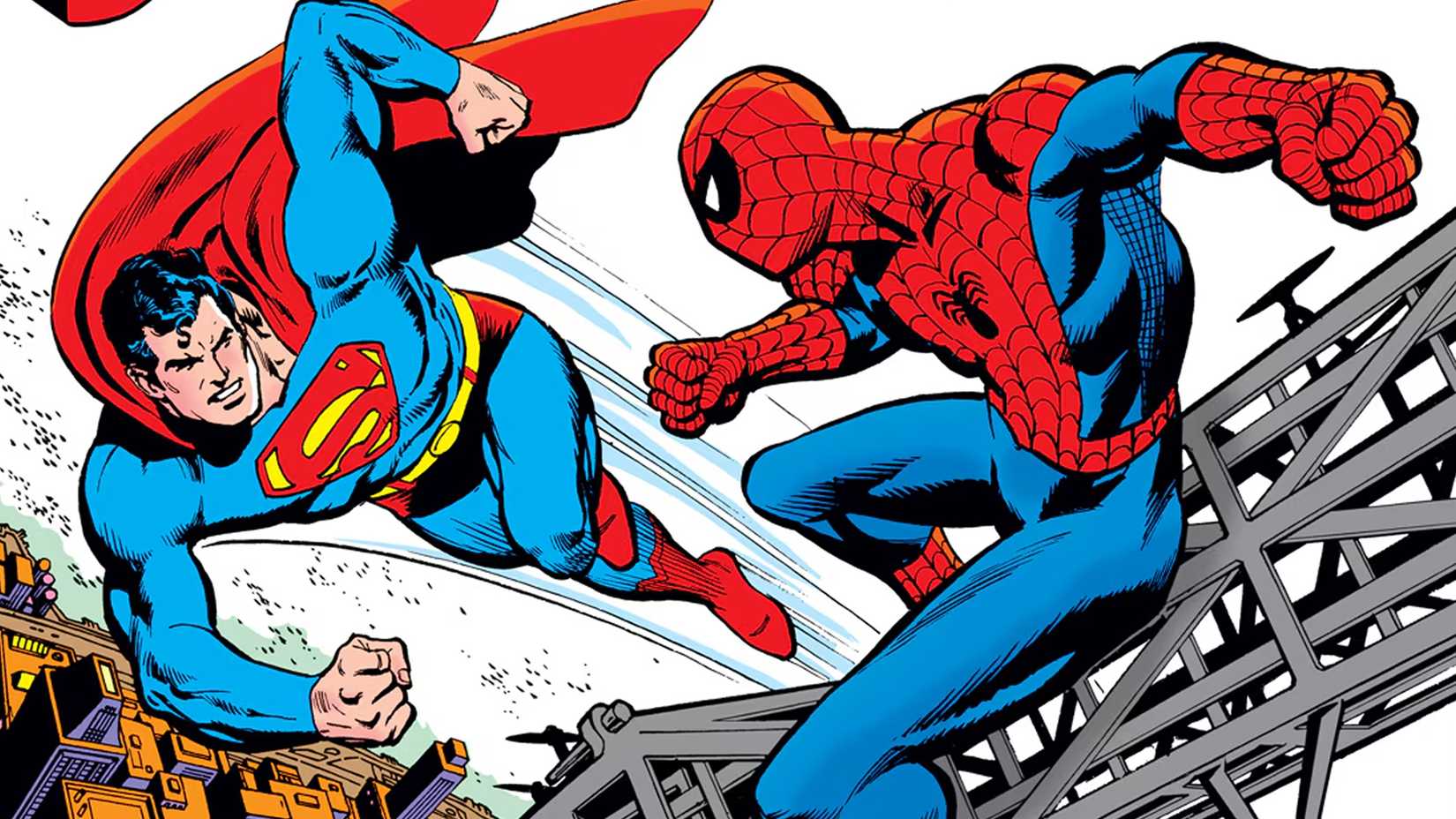
Image via Marvel / DC Comics
The 50th anniversary of the release of Superman vs. The Amazing Spider-Man: The Battle of the Century by Gerry Conway, Ross Andru and Dick Giordano (with some uncredited assistance from legends like Neal Adams and John Romita Sr.) is definitely a moment to celebrate. It was the first time the two comic companies had officially crossed over. There had been unofficial nods and subtle inclusions here and there over the years, but never an officially released comic story.
While the cover and title of the larger Treasury Edition suggested that Superman and Spider-Man would have the biggest fight ever, they quickly team up instead to stop the combined forces of Lex Luthor and Doctor Doom. The 1981 sequel, Superman and Spider-Man by Jim Shooter, Marv Wolfman and John Buscema, would feature a similar villainous duo, though Lex Luthor was replaced with Parasite. However, it also included interesting matchups between Superman and Hulk as well as Spider-Man and Wonder Woman.
Superman vs. The Amazing Spider-Man also serves as the first appearance of what became known as “Crossover Earth,” an out-of-continuity reality where the characters from each comic publisher exist together, without the need for a reality-crossing narrative device or, really, any explanation whatsoever. These characters operate as if they had just never crossed paths before, which is a bit easier to accept given Marvel’s use of real cities and DC’s use of fictional cities.
1981 saw the release of Batman vs. The Incredible Hulk, which was also set in the non-canonical Crossover Earth. Batman even managed to defeat the Hulk in battle after Bruce Banner’s transformation was triggered by an attack from the Joker. While it was an epic story from Len Wein and Jose Luis Garcia Lopez, it was somewhat overshadowed by the 1982 release of The Uncanny X-Men and the New Teen Titans by Chris Claremont and Walt Simonson.
The Big Two’s most popular superhero teams at the time came together to face their respective universes’ most powerful beings: Darkseid and Dark Phoenix. It was an emotional and adventurous crossover that stuck with fans long after its end. There were even plans for a sequel that were ultimately scrapped when another major crossover fizzled out as well.
It stuck with fans so much partially because it was one of the last official crossovers of the decade, leaving fans to wait until the ’90s for more intercompany crossovers. Of course, fans could never have guessed how the crossover would evolve in a decade known for its oversaturation of the market.
The Crossovers Exploded and Evolved in the ’90s
Fans got more crossovers in the ’90s than they ever could have asked for, though it was a very different comic landscape at the time. New heroes like Jean-Paul Valley had briefly taken on the mantle of the Dark Knight, leading to wildly different crossover one-shots in 1994.
Dennis O’Neil and Barry Kitson’s Batman/Punisher pitted Frank Castle against an equally violent Jean-Paul Valley to take on Jigsaw and Joker, while Bruce Wayne’s version fought against and worked with Castle to stop a gang war led by the same villains in Punisher/Batman by Chuck Dixon and John Romita Jr. While both took place on Crossover Earth, the first crossover received a unique in-continuity mention by Jean-Paul Valley in the ongoing series.
Fans finally saw the long-awaited team-up of Spider-Man and Batman in 1996 from J.M. DeMatteis and Mark Bagley. The two heroes bonded over their tragic origins and united to stop a truly frightening combo of the Joker and Carnage that threatened to destroy Gotham City. This was followed in 1995 with John Byrne’s epic cosmic matchup as the World Devourer targeted Apokolips in Darkseid vs. Galactus: The Hunger, which also featured Silver Surfer, Orion and other New Gods from Jack Kirby’s Fourth World.
The Sentinel of the Spaceways’ cosmic crossovers continued in 1996 with Ron Marz and Darryl Banks’ Green Lantern/Silver Surfer one-shot. Like Batman, the mantle had been passed in the ’90s, so Norrin Radd teamed up with Kyle Rayner, along with the new GL’s corrupted predecessor Hal Jordan/Parallax, to face a deadly collection of villains in Cyborg Superman, Thanos, and Terrax.
This one-shot differentiates itself from earlier stories as these heroes are specifically from different universes and literally crossed over. That, along with a comment from Parallax in a mainstream storyline, makes this story potentially canonical and sets the stage for one of the ’90s biggest comic events.
DC vs. Marvel Changed Everything and Created the Amalgam Universe
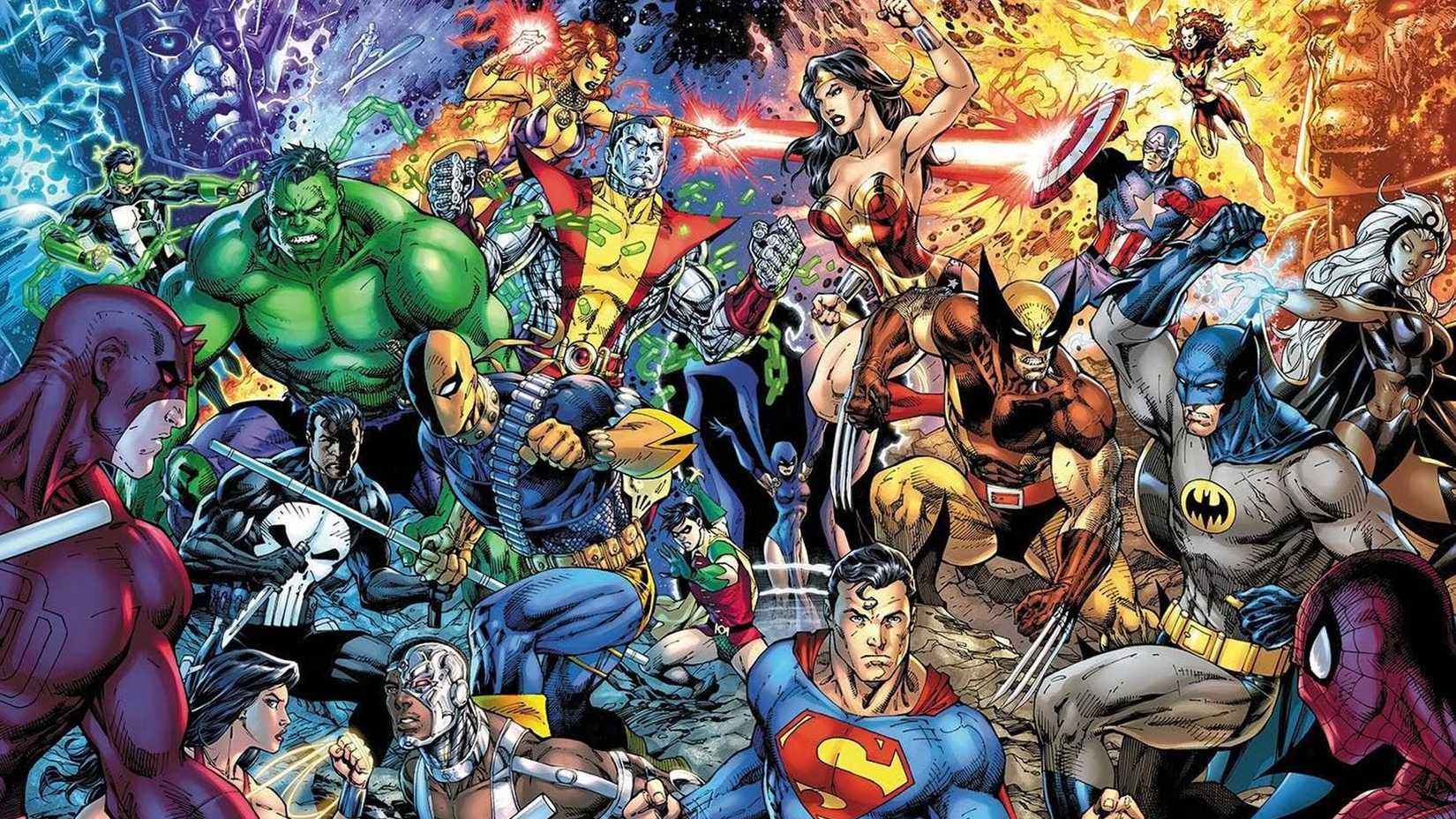
Image via Marvel / DC Comics
While most previous team-ups had existed on the not-quite-official Crossover Earth, everything changed in 1996. The Big Two joined together creatively for a semi-canonical story that pitted the separate universes against each other as a whole. This was tied to a larger ongoing battle between two cosmic brothers who each created the respective Marvel and DC universes. To settle their ongoing feud over who was better, the brothers decided to unite the universes so that their greatest champions could fight each other for survival.
Of course, DC vs. Marvel (with two issues released as Marvel vs. DC) by Ron Marz, Peter David, Dan Jurgens and Claudio Castellini came with a unique twist that put it on every comic fan’s radar in the ’90s. Readers were actually able to vote on the winners of each matchup, with a few other contests being decided by the creators. The event was a huge success, and the Brothers ultimately decided that they were equals and should unite their universes together.
The easiest way to do that would seem to be just to create an official Crossover Earth, but the Brothers instead decided to completely merge themselves and their creations together, creating a new Amalgam universe. Popular heroes like Batman and Wolverine were merged to create Dark Claw, Superman and Captain America became Super-Soldier, Storm and Wonder Woman became Amazon, and so on. It was another successful storyline that later returned with a second round of one-shots and merged characters after the universes were ultimately separated in the event’s finale.
A follow-up series called All Access in 1996 served as a sequel to the event that followed the new multiversal hero Access, who carried some of the cosmic brother’s powers. “The Man Who Walks Between Universes” would return for another mini-series in 1997 called Unlimited Access that revisited the Amalgam universe.
The crossover-filled decade marched on in 1997 with the release of George Pérez and Ron Lim’s Silver Surfer/Superman in a tale that continued to keep the universes separate. However, a unique agreement between Mister Mxyzptlk and Impossible Man saw them cross over to challenge the titular heroes of each other’s world by impersonating their greatest villains.
1997’s Batman/Captain America by John Byrne marked the return to the Crossover Earth premise, though it also set the stories in the characters’ early beginnings to face a short-lived partnership between Joker and the Red Skull. 1997 also saw Batman & Spider-Man reunite in a one-shot by J.M. DeMatteis and Graham Nolan to face the combined threats of Kingpin and Ra’s al Ghul.
The Man of Steel would finish off the decade with two iconic Marvel/DC crossovers, both released in 1999. Superman/Fantastic Four by Dan Jurgens and Art Thibert revealed that the true cause of Krypton’s destruction was actually Galactus. Superman sought out the Fantastic Four’s help to stop Cyborg Superman from manipulating Galactus and saving Earth from the same fate as Krypton.
Roger Stern and Steve Rude then brought fans the iconic battle they had been waiting for with The Incredible Hulk vs. Superman, which technically served as a sequel to their past encounter in 1982’s Superman and Spider-Man. However, given the retcons and reboots that happened since, this meeting of the pair is remembered as their first encounter and finally delivered on the long-debated matchup.
Fans Finally Saw a Long-Awaited Team-up Crossover in the 2000s
The new millennium saw another long-awaited team-up in 2000s Batman/Daredevil by Alan Grant and Eduardo Barreto. The Dark Knight and the Devil of Hell’s Kitchen (again on Crossover Earth) team up in Gotham City after Catwoman steals some of Kingpin’s criminal plans for the Scarecrow. However, the one-shot was another one overshadowed by the later release in 2000 of a highly anticipated crossover.
Plans for JLA/Avengers had started not long after the release of Superman vs. The Amazing Spider-Man. Gerry Conway and George Pérez were the original creative team when talks started for the crossover in 1979, though it was ultimately derailed by issues among the editors. The ambitious crossover would have featured Kang and Epoch in a time-traveling story, though it was finally canceled in 1983.
Finally, in 2003, Kurt Busiek and George Pérez’s JLA/Avengers (with two issues released as Avengers/JLA) miniseries finally united each universe’s premiere superhero team in a new story. They were again in separate universes that started merging due to the manipulations of the powerful Krona.
The mini-series saw Avengers members join the League and vice-versa as they sought out powerful items from Marvel and DC’s history and faced countless villains to try and restore their universes. It’s a story that more than paid off fans for the over 20-year-long wait.
Marvel and DC Reunited in 2025 For a New Series of Team-Ups
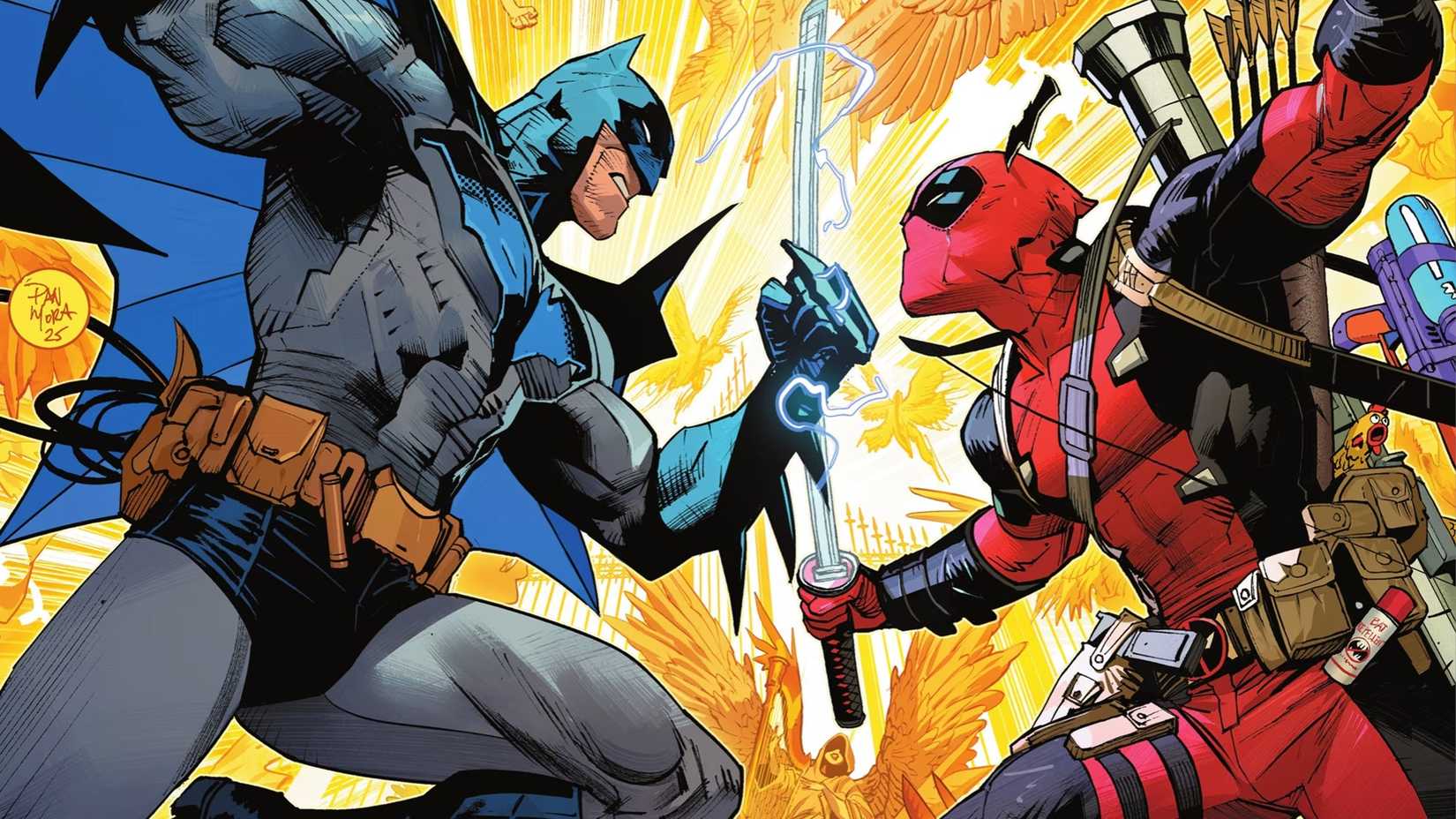
Image via DC
As previously mentioned, fans had to wait quite a while in between official crossovers between Marvel and DC after JLA/Avengers rocked everyone’s world. However, fans were surprised in 2025 with the announcement and release of Deadpool/Batman #1 by Zeb Wells and Greg Capullo. It would be followed by Batman/Deadpool #1 by Grant Morrison and Dan Mora, which utilized Crossover Earth and its variants in the storyline, while also featuring the respective Marvel and DC worlds of Earth-616 and Earth-0.
Each issue also featured several other crossover storylines from superstar creative teams. Deadpool/Batman also featured team-ups between Wonder Woman and Captain America (by Chip Zdarsky and Terry & Rachel Dodson), Krypto the Superdog and Jeff the Land Shark (by Kelly Thompson and Gurihuru), Daredevil and Green Arrow (by Kevin Smith and Adam Kubert), Rocket Raccoon and the Green Lantern Corps (by Al Ewing and Dike Ruan), Batman and Wolverine (by Frank Miller), and even introduced a new amalgamated character named Logo that merged Wolverine and Lobo (by Ryan North and Ryan Stegman).
This issue was then followed by special online releases from both Marvel and DC that continued building the new wave of crossovers. The Flash/Fantastic Four DC Go comic by Jeremy Adams and Adrian Gutierrez was released on DC Universe Infinite. At the same time, the Thor/Shazam! Infinity Comic by Al Ewing and Jethro Morales was released on Marvel Unlimited.
Batman/Deadpool also featured additional team-ups that followed the main story. These stories starred John Constantine and Doctor Strange (by Scott Snyder, James Tynion IV, Joshua Williamson and Hayden Sherman), Nightwing and Laura Kinney/Wolverine (by Tom Taylor and Bruno Redondo), Harley Quinn and Hulk (by Mariko Tamaki and Amanda Conner), and finally, Ms. Marvel and Static (by G. Willow Wilson and Denys Cowan).
Additional stories haven’t been announced yet for the upcoming releases of Superman/Spider-Man #1 and Spider-Man/Superman #1. Yet given the success of the recent Batman/Deadpool crossover, it stands to reason that fans will have even more to look forward to in the long and ongoing history of DC and Marvel’s intercompany crossovers.
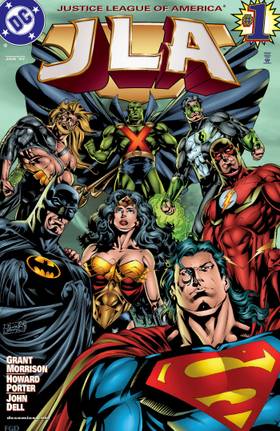
The Justice League, including Superman, Batman, Wonder Woman, Flash, Green Lantern, Aquaman and Martian Manhunter, pose together on the Justice League of America Vol. 1 comic cover.
Created by
Malcolm Wheeler-Nicholson
DC Comics follow the adventures of iconic superheroes such as Superman, Wonder Woman, Batman, and more.