
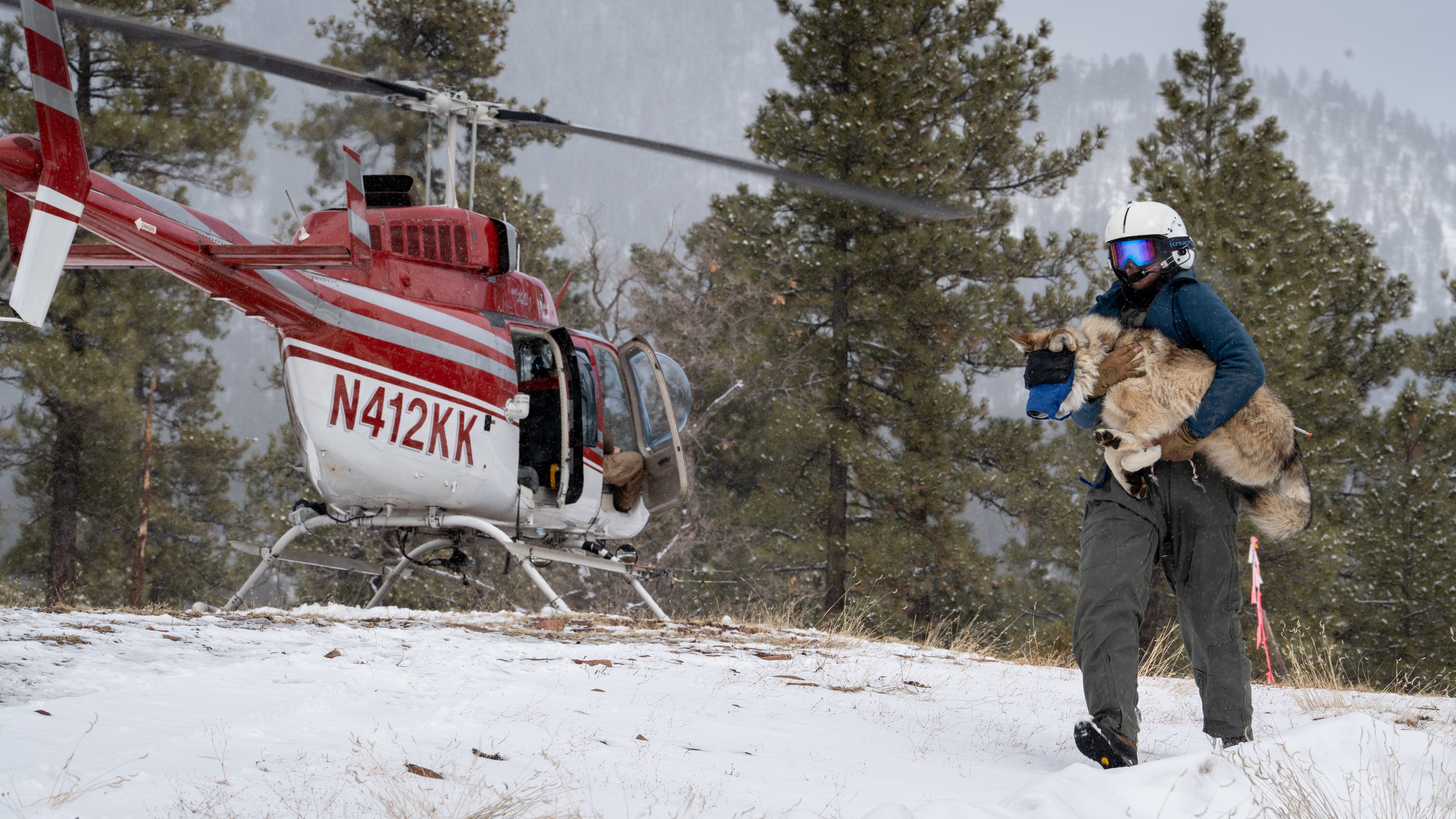

Mexican gray wolf annual count in Arizona
Brady McGee, U.S. Fish and Wildlife Service Mexican wolf recovery coordinator, talks about the annual wolf count on Jan. 26, 2024, near Alpine, Arizona.
Arizona Republic
An endangered Mexican gray wolf named Taylor has repeatedly traveled north of a designated recovery area in New Mexico.Some advocates say the wolves’ movements indicate a need to expand their territory, arguing that rising temperatures force the wolves to venture north.Debate continues over the management plan, balancing wolf recovery with human conflicts like the loss of livestock.
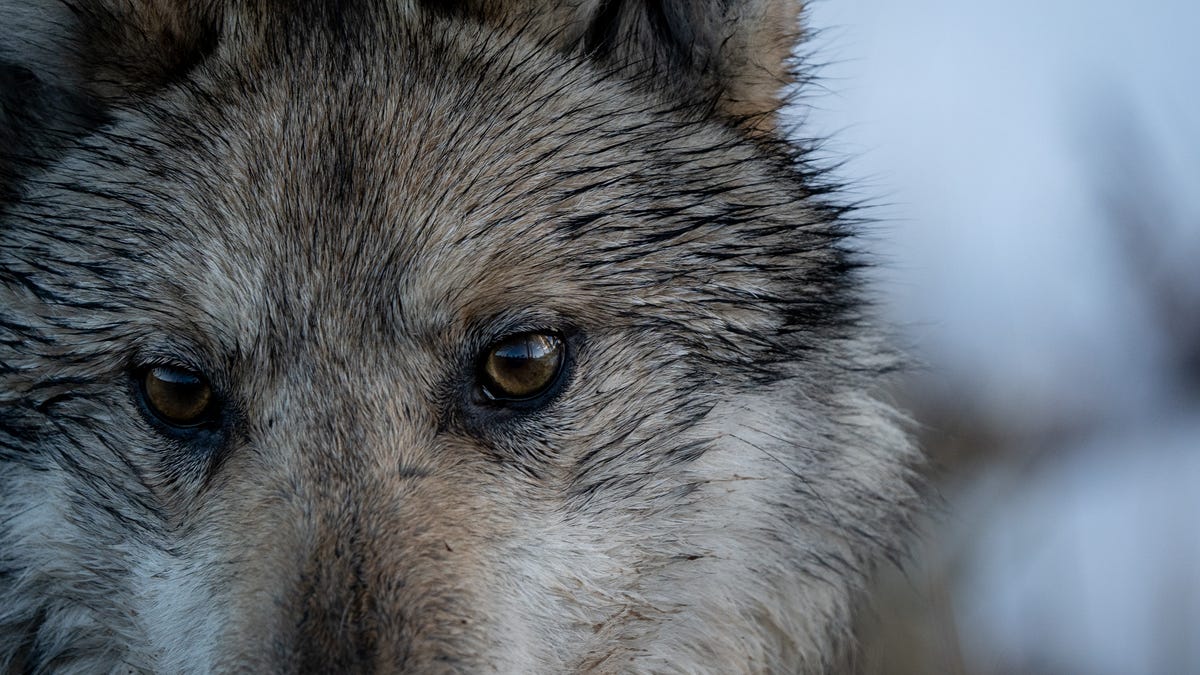
Taylor is a runaway of the state. He’s only 2 and a half. He has brown eyes. He travels light and on all fours. Now, for the third time this year, he’s walked over 200 miles north across rocky plateaus, desert scrub and an east-west interstate.
Taylor is an endangered Mexican gray wolf, also known as wolf M3065, and he’s become something of a problem child for the U.S. Fish and Wildlife Service. Tasked with keeping him in a designated 98-million-acre area south of Interstate 40, straddling Arizona and New Mexico, officials have moved him back to the Mexican Wolf Experimental Population Area each time he’s wandered off.
Still on the loose, he’s famous for his determination — even his name is an homage to the place he keeps returning to: Mount Taylor in New Mexico. But he’s not the only wolf who has made the journey to the mountain. Others have made similar moves north in Arizona.
Government agencies maintain that the I-40 boundary protects the species and gives them the best chance of breeding in what they consider the wolves’ historic range. Still, the northbound forays and southbound removals trouble some animal advocates and wildlife biologists who wonder what their movements are telling us about how the population, or the landscape, is changing. They say it’s time to reconsider the lines that were drawn years ago.
”Our dispersing wolves are looking to find their own territory in a place to call their own,” said Claire Musser, the executive director of the Grand Canyon Wolf Recovery Project. “This is an opportunity to learn from them. They’re showing us the ideal habitat is north of I-40.”
Desperate to go north, the young wolf is now unknowingly embroiled in an ongoing debate and an age-old tension between wolves and the people who try to manage them.
Wildlife agencies manage population, genetic diversity
The Experimental Wolf Population Area is a swath of land that spans much of Arizona and New Mexico’s southern territories, and it’s part of an effort to re-establish the wolves’ population. Before settlers moved west, Mexican gray wolves roamed the high desert in abundance. But by 1970, almost none existed in the wild, a consequence of hunting and extermination.
Six years later, they were officially designated as endangered under the new Endangered Species Act, and recovery efforts began. Since then, their numbers have risen to 286, as of 2024, and have been on a steady incline for the past nine years. But biologists say their genetic diversity is waning, which could threaten the subspecies in the long run.
Today, all Mexican gray wolves are descendants from seven who were corralled in the 1970s and 80s and used to establish a captive breeding program that helped save them from extinction. That means biologists are working with a limited amount of genetic material.
In 2011, Mexico wildlife officials released five wolves south of the border in the Sonoran desert, hoping to establish a separate population that would help vary the gene pool. The Fish and Wildlife Service also still uses a captive breeding program to increase genetic diversity.
Darren Vaughan, the communications director for the New Mexico Game and Fish Department, said that one of the agency’s goals is to help maintain the genetic uniqueness of the wolves, who are the most distinct of all the North American gray wolves, while still fostering genetic diversity among the subspecies. The experimental area facilitates that, he said.
But some wonder if allowing the wolves to move to higher latitudes and mingle with other northern gray wolf populations might be a better solution to their long-term survival. In the past, subspecies of the North American gray wolf intermixed where their ranges overlapped, according to Greta Anderson, the deputy director of the environmental nonprofit Western Watersheds.
”The agencies say they don’t want the Mexican gray wolves and the Colorado wolves to meet because they think of that as genetic swamping,” Musser said. “But we would say that is genetic recovery.” Genetic swamping refers to the idea that too much inter-breeding jeopardizes the genetic integrity of a subspecies.
If wolves’ historic range reached northern Arizona and New Mexico, many advocates believe, then they would’ve naturally cross-bred with other subspecies, bringing new genes into the mix.
“Now, Mexican gray wolves are isolated on the landscape, so they’re not able to get that influx from outside,” Anderson said.
To the south, the wolves are limited, too. The Mexico population in 2022 was just 35 wolves, not quite enough to be contributing to a broader dispersal tendency, Anderson said. Border wall construction in Arizona and New Mexico could also impede their movement and limit gene flow, as conservationists have been warning, for all kinds of wildlife.
Advocates say wolf plan ignores climate change
Three weeks ago, officials brought Taylor back to the Gila National Forest after one of his escapades, but like a man with a plan, he turned right around.
Nobody is quite sure what he’s looking for. Maybe elk, a little space, a mate. Ella and Anubis, two other roaming wolves, did the same, trekking to northern New Mexico and the Grand Canyon region on mysterious quests.
This is the time of year when wolves start to break off from their packs to look for mates, Anderson said. February is the start of the mating season. But Vaughan said New Mexico Game and Fish doesn’t know of any other Mexican gray wolves in the Mount Taylor area right now.
Whether or not the wolves’ historic range encompassed the places they keep traveling to, animal advocates believe there might be something to learn from their movements.
“The idea of historical range doesn’t account for the anthropogenic disturbances that we have today,” Musser said.
Anderson thinks the current management plan is outdated and doesn’t consider the growing threat of climate change, which is driving many species north. The wolves, who prefer an arid climate, might increasingly prefer northern areas as annual average temperatures increase.
“The wolves themselves are saying ‘here’s where we want to be,’” she said.
Still a long road to recovery
But the experimental area serves another purpose. It helps manage the way wolves and people interact. In 2022, Anubis rose to local fame for traveling to northern Arizona from New Mexico. Before officials could relocate him he was illegally shot and killed near Flagstaff. Ella, who ventured to Mount Taylor like M3065, was found dead in March. Her death is still under investigation.
Even in wolf territory, tension between them and their human neighbors can cause problems. Ongoing troubles amongst wolves, ranchers and their cattle in Cochise County this summer resulted in the relocation of a pack from southern Arizona to captivity in New Mexico. At least five wolf attacks on cattle occurred in the area this year before the pack was moved, according to the Arizona Game and Fish Department.
Arizona Rep. Paul Gosar cited the economic loss ranchers who fall victim to depredation face when he proposed a bill to delist Mexican gray wolves from the Endangered Species List earlier this year. Before being downlisted under the ESA, the Mexican wolf population would need to reach 320 and the genetic diversity from the captive populations would need to be incorporated in the wild, according to the Fish and Wildlife Service. While the wolves have made big gains, they aren’t close enough to that milestone.
Unaware of the drama surrounding his species, for now, Taylor remains free to roam the grassy slopes of the dormant volcano with which he shares his name.
In a statement to The Arizona Republic on Wednesday, New Mexico wildlife officials said they are continuing to work with the Fish and Wildlife Service to monitor Taylor’s movements. They haven’t shared any plans for his relocation yet.
Sarah Henry covers environmental issues for The Arizona Republic and azcentral. Send tips or questions to sarah.henry@arizonarepublic.com.
Environmental coverage on azcentral.com and in The Arizona Republic is supported by a grant from the Nina Mason Pulliam Charitable Trust.
Follow The Republic environmental reporting team at environment.azcentral.com and @azcenvironment on Facebook and Instagram.