
People shuffle in, some regulars and known by their first name, others with hats pulled low, gloves tight, their belongings tucked under their arms.
Some head straight for the canteen-style room, huddling together for warmth, while others linger in front of the mirrors, combing hair or freshening up after a long night outside.
Questions fly at staff about mental health supports, medical appointments, or a hot meal. In every corner, the pulse of daily life underlines a simple truth: this place is more than a service, it’s a lifeline – especially in the colder months.
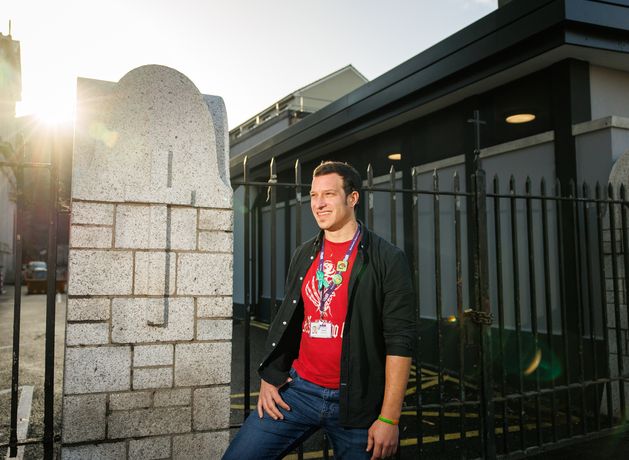
David Newell, a project worker at Merchants Quay Ireland who has been there for over three years, guides visitors through the centre with an easy familiarity.
“Every day is different,” he said, giving me a whistle-stop tour of the centre, which saw 81,878 meals provided in 2024 to clients. This number is on track to be higher in 2025.
As a project worker, Mr Newell carries out multiple roles in the centre. He might be monitoring the bathroom or shower area, he might be working in crisis contacts, answering queries about housing or social welfare, or working on the needle exchange.
He stressed the importance of the showers, which are used by dozens of people throughout their opening hours.
“In terms of having a warm place to go, to the showers are huge,” Mr Newell said.
“I think people don’t often realise the importance of having a hot shower and what it can do for you. It can just be amazing. Even in the summertime, just to feel fresh, to feel clean, to put on clean socks and underwear, makes you feel better, improves your mental health.
“You feel better about yourself in the wintertime. It’s one thing to sit by the radiator, but to get in a real hot shower and just soak in that for a little while, that’s sometimes really the only way to get warm.”
In 2024, Merchants Quay supported over 14,086 clients through its Riverbank drop-in, providing 4,027 showers.
Of those supported, 887 were over 55, highlighting the growing presence of older people experiencing homelessness.
The showers, the hot food, that space to just sit… it makes a huge difference
“The need gets stronger in the winter,” Mr Newell said.
“It’s one thing in the summer, you can sit in a park with your friends, have a beer, but when it’s lashing rain and bitterly cold, all you want is warmth. The showers, the hot food, that space to just sit… it makes a huge difference.”
The centre is not just a place to eat and wash. Downstairs, a medically supervised injecting facility offers a clean, supervised environment for people who use drugs, reducing health risks associated with intravenous use.
“We’ve got seven bays here,” Mr Newell said. “We monitor for overdoses, provide clean equipment and give advice on safe injecting practices. It’s about keeping people alive and safe.”
Across the centre, clients can access health services, from nurses and dentists to mental health support, as well as advice on housing and social welfare benefits.
For Mr Newell, creating trust is at the heart of the work and building relationships with the clients that come through the door.
“It’s for them to come through the door and think to themselves, ‘Oh this person knows me and we can have a bit of craic together’,” he said.
“Sometimes people can have the experience of services where they go in and it’s just a case of, what do you need? Which is not a great experience.
“I think interacting with our clients in all the different roles we play here at the centre gives you a chance to talk to them in very different settings and build up a bit of rapport with them, so we can see what we might want to do for them down the line so that’s something I really like about being a project worker.”
.png)
The Riverbank Centre at Merchants Quay, Dublin.
Mr Newell himself is from Denver in the United States and moved over to Ireland to study, saying that his parents helped start a coffee shop for homeless people where he lived, and it is work he loves doing.
One recent story illustrates the impact of their work.
A man in his mid-40s had been living in a tent for two years after losing access to his family home.
His parents had a council house and when they died, he lost access.
It was only through coming to the Riverbank centre and engaging with staff that he learnt about emergency accommodation and thankfully, he was able to get housed very recently.
The man was also coughing a lot and had a chest infection for two weeks, but the nurses were able to give him some antibiotics.
“He just didn’t know what to do,” Mr Newell said. “We helped him navigate the housing system, get his documents in order, and now he’s in emergency accommodation.”
At Riverbank, the atmosphere balances care with structure. During meal times, staff ensure everyone gets fed while maintaining discretion.
In the showers, clients can enjoy a moment of privacy and dignity.
In the health promotion rooms, nurses, dentists, and counsellors see people for everything from abscesses to addiction support.
And in the dual diagnosis team, staff help clients address overlapping mental health and substance use issues.
You see a lot of generosity between people here
“There’s no one story for the people who come through here. Some have fallen on hard times and need a leg up and we can do that and they’re off again and on their way” Mr Newell said.
“Others have been homeless for years and there are reasons behind that and it doesn’t just go away.”
And yet, even amid hardship, moments of humanity shine through.
“I think sometimes people think it’s all gloom and despair – and there is a lot of that there – but there’s a lot of happiness too, you see a lot of generosity between people here,” he added.
“I’ve seen it so often someone has two cigarettes left and they give one to their friend, that’s it, that’s all they have, but they know their friend really wants one too.
“You can see some really great examples of humanity here, even in the midst of desperation, which is great because, as much as it can be a hard job, it keeps you coming back.”
He says his favourite part of his job is the “human connection”.
“I really enjoy getting to know the people. I think when you feel marginalised, you can feel very invisible, you know, especially this time of year, like Christmas, highlights that a lot,” Mr Newell said.
“You see people tapping around Henry Street or Grafton Street and there are decorations up everywhere, people are out for drinks with their friends and having fun.
“You just have to think about the other side of that when you’re sitting there in the midst of it and nobody looks at you and people can cross the street to go by you and it can be tough.
“So for me I just love getting to know people that come in here, have a coffee with them.
“One of the guys here is an amazing artist, he carries around his art supplies, so I’ll sit down and talk to him, but yeah, just letting people know we’re here for them in our limited capacity.”