
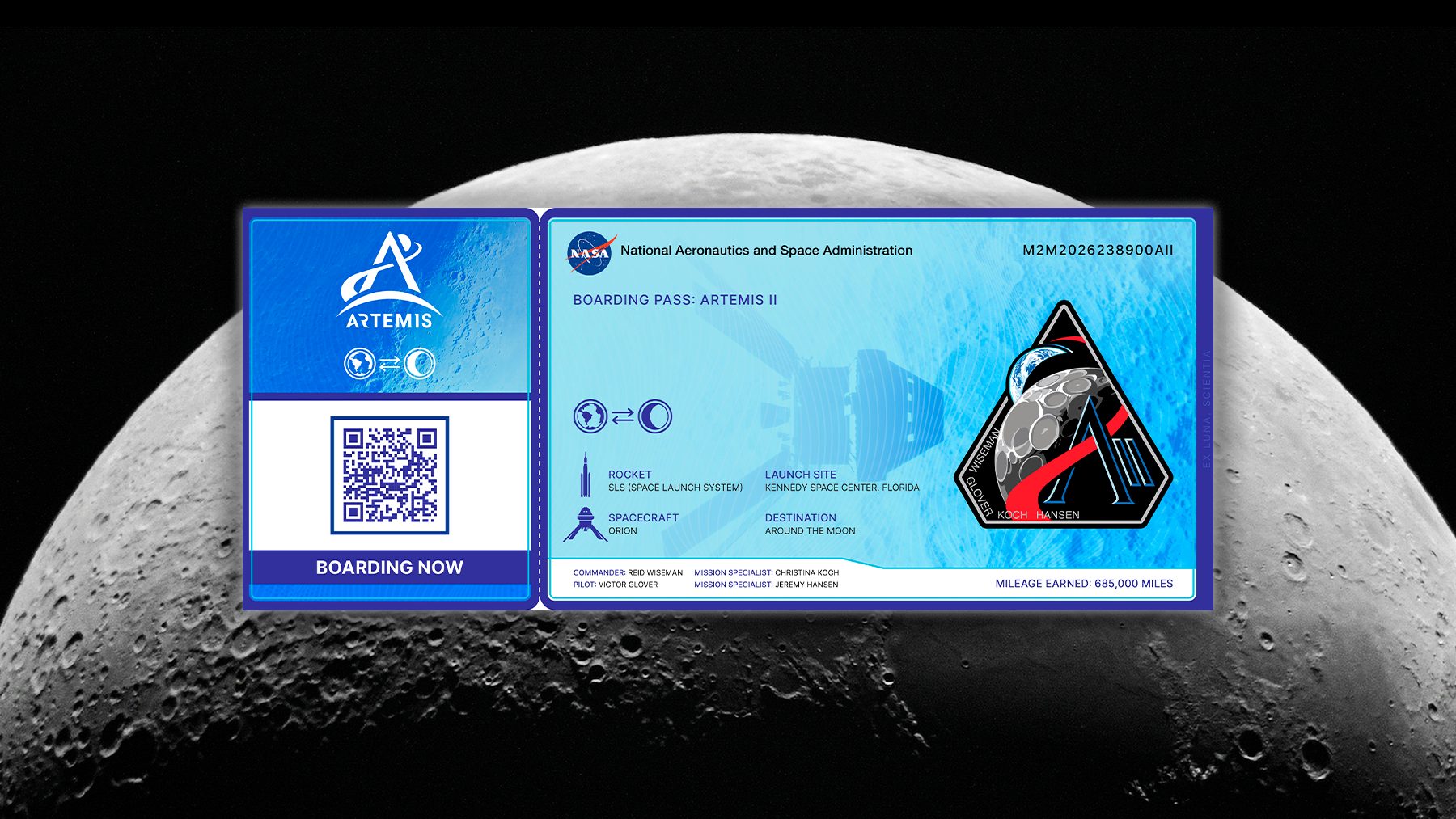
History is a crucial part of our human experience, and in 1969, NASA proved that to be true. Through the Apollo 11 mission, man was able to walk on the moon for the very first time. However, the agency has not revisited the lunar surface for over half a century, until now. In their new mission, NASA is planning an exciting campaign that could put you in the history books.
NASA’s new journey to the moon invites the general public
For many years, NASA has often embarked on explorations that signified scientific progress and achievements. However, in this mission, NASA is choosing to introduce something much more significant. Instead of watching NASA revisit the moon from the ground, they are offering a historic opportunity for everyone.
The next mission is called the Artemis mission, and it is an ambitious mission to build civilization on Mars. Unlike the Apollo mission, this is offering everyone a chance to enter space and experience humanity’s journey to the moon in person. The Artemis mission stands as a tribute to the past and a forerunner for future lunar explorations.
The Artemis mission doesn’t aim to recreate the Apollo mission. Instead, it stands to represent a different era and goal for space exploration. Most importantly, the idea to board the general public signifies a crucial goal in the Artemis mission. Anyone interested in this lunar exploration could simply submit their details on NASA’s website.
Inside NASA’s upcoming Artemis mission
The Artemis mission is one of NASA’s most ambitious programs in years. The agency is planning a 3-part mission: Artemis I, II, and III. Artemis I was the first in this series, and through it, the agency was able to complete a 25-day testing exploration to set center stage for Artemis II and III.
The Artemis II mission is the most recent and yet complex one. It would be a 10-day flight, but unlike the first, this would be a crewed flight mission. The goal for this mission is to test the spacecraft and other hardware components that would aid NASA in its final journey to the Moon and, eventually, the Martian surface for Artemis III, like an unprecedented milestone since Apollo 11, changing the narrative.
NASA plans to use this journey to honor the legacy of the Apollo mission and push man’s limit beyond the lunar surface. The spacecraft is set for launch in 2026. However, the Artemis mission marks the beginning of a new era of space exploration.
Inviting the public sets the stage for global participation
Recently, NASA has observed a decline in the general public’s involvement in space missions. This may have been the inspiration for inviting the general public. However, following the anticipation for this event, the general public has been at the forefront of monitoring similar flybys and explorations in deep space.
How the Artemis mission affects future lunar explorations
For decades, the Moon has represented the limits of man’s exploration in space. However, with the Artemis mission, man could have found a turning point. NASA plans to build orbital stations and technologies that would make the moon a long-term base for future explorations in space.
The idea of inviting and accommodating the general public serves as a historical gesture. It also serves as a reminder of how far lunar exploration has come since the Apollo mission. It is important to note that this invite isn’t limited to a country or people, but is completely open for global participation.
The deadline for anyone interested in registering remains January 21, 2026. After that, the Artemis II mission would begin its final preparations towards official launch. By involving the general public, the journey to the Moon no longer becomes a scientific feat. Rather, it becomes a historical moment and an achievement for all of humanity, just like this groundbreaking discovery of an invisible new Moon.