
Blue Origin is gearing up for its NS-37 flight, which will rocket six passengers to suborbital space and back.
One traveler on board that mission, which does not yet have a set launch date, is Michaela “Michi” Benthaus. Her voyage carries special significance: She is on a trajectory to become the first wheelchair user in space.
You may like
Paving the way
Currently, Benthaus is at the TUM School of Engineering and Design in Munich, Germany and is a young graduate trainee at the European Space Agency (ESA).
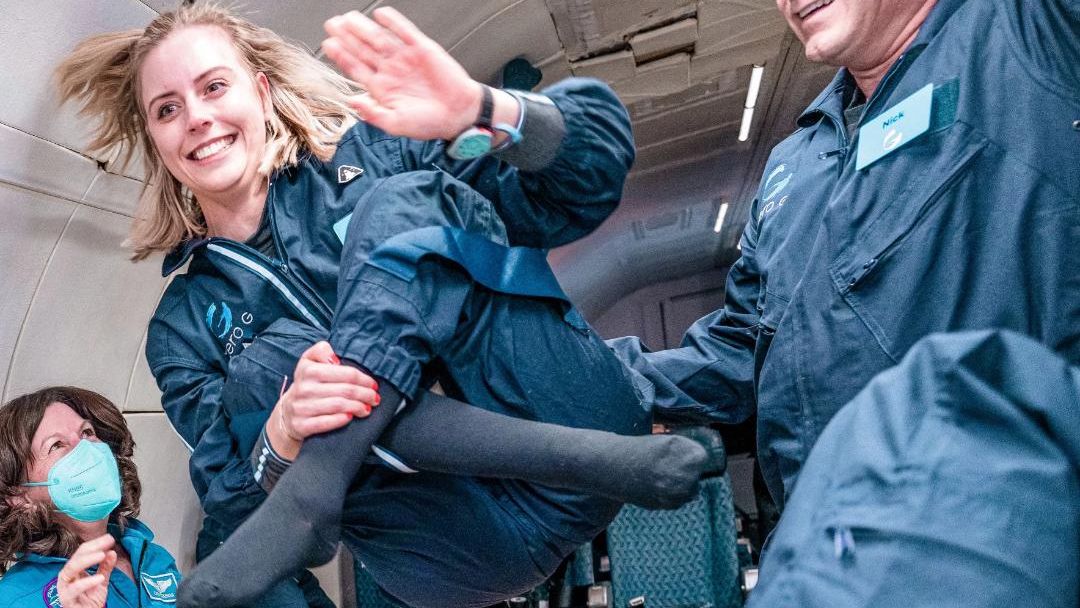
AstroAccess is a project of SciAccess, Inc., dedicated “to promoting disability inclusion in human space exploration by paving the way for disabled astronauts.”
Founded in 2021, AstroAccess has conducted five microgravity missions in which disabled scientists, veterans, students, athletes and artists perform demonstrations onboard parabolic flights with the Zero Gravity Corporation — the first step in a progression toward flying a diverse range of people to space.
The message from AstroAccess: “If we can make space accessible, we can make any space accessible.”

The six passengers on Blue Origin’s upcoming NS-37 suborbital spaceflight. (Image credit: Blue Origin)Historical context
Former NASA official Alan Ladwig considers the upcoming suborbital launch of Benthaus as “a historical flight.” He is the author of “See You in Orbit? Our Dream Of Spaceflight” (To Orbit Productions, 2019).
Ladwig’s career at NASA began in 1981, when he joined as a program manager for the Shuttle Student Involvement Project. He later played a significant role in the Space Flight Participant Program, which was designed to allow civilians, including teachers and journalists, to experience space travel.
You may like
“First, some historical context,” Ladwig told Space.com. In June 1984, the space shuttle program’s STS-41D mission experienced an abort at T-4 seconds. The six astronauts safely egressed, but it was a moment of high anxiety, he said.
“In 1985, a National Finalist for the Journalist in Space Program was a paraplegic,” Ladwig said. “Citing the STS-41D incident, an astronaut complained to me that it would be highly dangerous if this person would have been selected. If getting out of the [shuttle] orbiter needed to be done quickly, how was he supposed to exit safely with a paraplegic? At this point, safely flying a civilian was controversial, much less a person with a disability.”
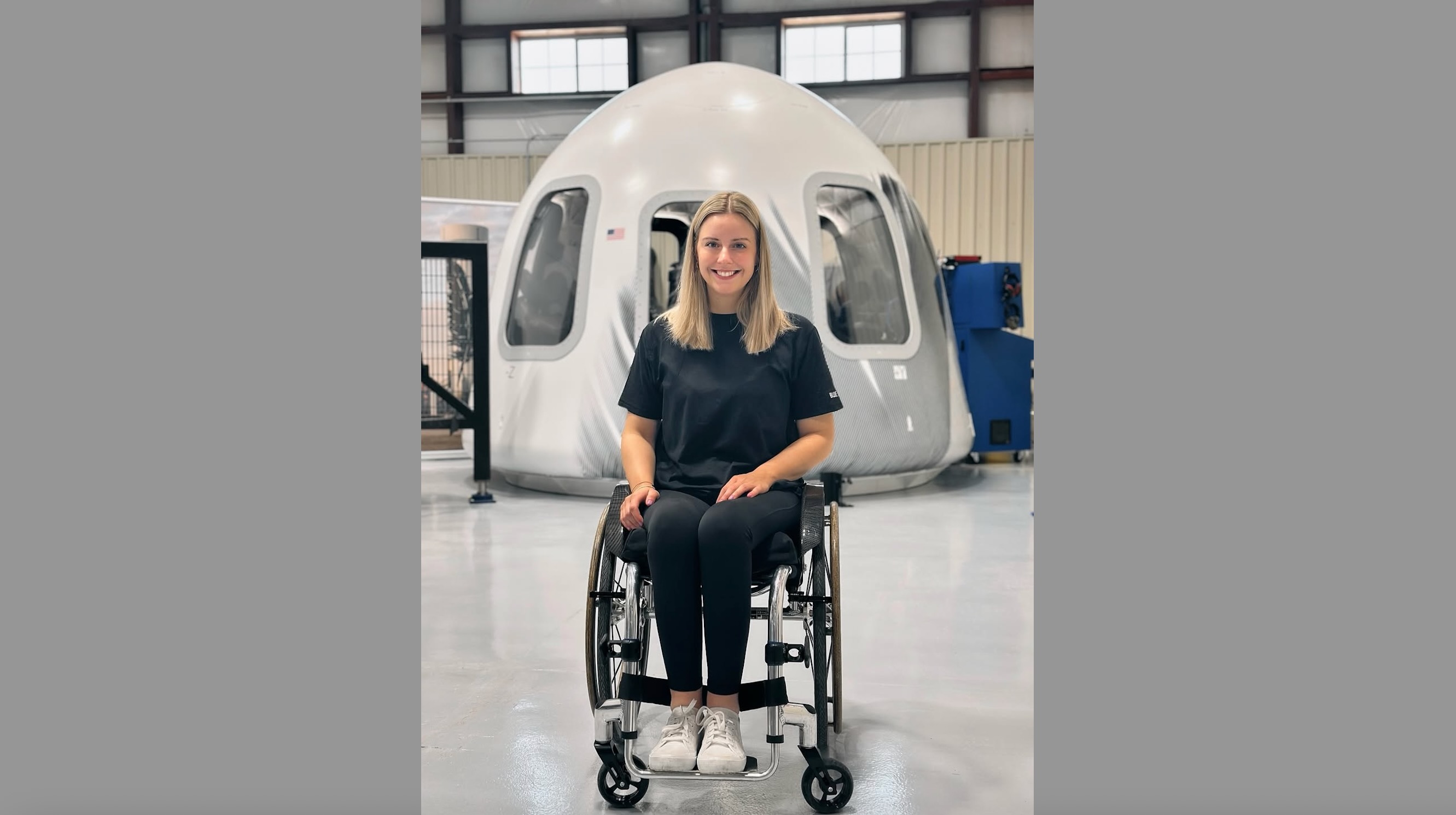
Michaela “Michi” Benthaus is on a trajectory to become the first wheelchair user in space. (Image credit: AstroAccess)Equal opportunity
Ladwig recalled that the late Harriet Jenkins, who was the head of the then NASA Office of Equal Opportunity, led a study on the possibilities for people with disabilities to fly on the space shuttle.
“If memory serves me, her report came out in late 1985 … and back in the day when equal opportunity wasn’t considered woke,” he said.
With the space shuttle Challenger accident in January 1986, Jenkins’ report was quietly put on the back burner, Ladwig said. “In any case, after the accident, it was clear it would be a long time before any [other] civilian would fly on the space shuttle, much less a person with a disability,” he said.
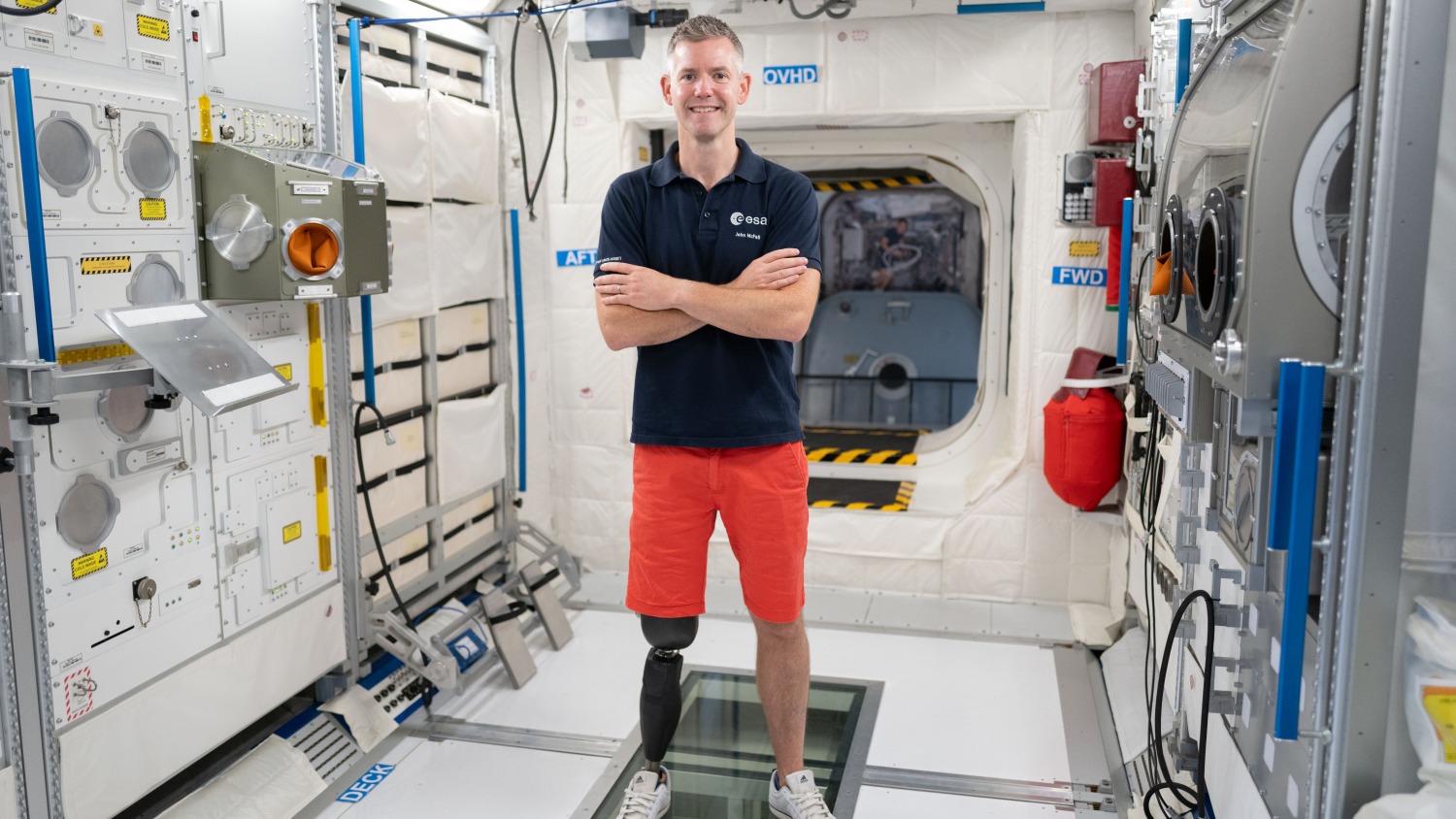
John McFall, a reserve astronaut with the European Space Agency, standing in a mockup International Space Station module. (Image credit: ESA)ESA’s Parastronaut project
But times have changed. For example, the ESA astronaut class selected in November 2022 included John McFall, a former Paralympic athlete, Ladwig said. His selection was part of a Parastronaut Feasibility Project to determine if people with disabilities can safely participate in a mission to the International Space Station.
“The study, completed in 2024, concluded it was feasible to integrate a person with a disability on ISS,” said Ladwig, “but I’m not aware of any specific plans to do so.”
In Ladwig’s view, AstroAccess is to be commended for flying people with disabilities on parabolic flights. The current effort for a Blue Origin flight with Michaela Benthaus “will be an important step for opening up space travel to all who have orbital dreams,” he concluded.