
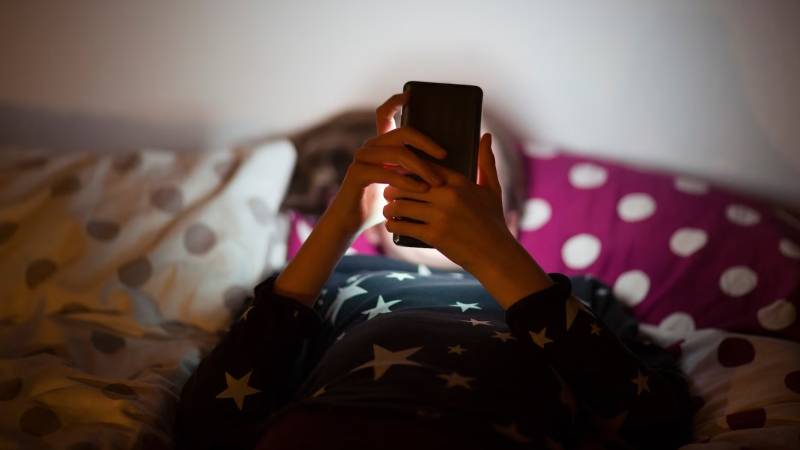
Dear readers. Please do not form an opinion by just reading the title of this column, which has been intentionally worded to generate a debate about the pros and cons of this most important issue. The premise of the above is: Given the increasing evidence linking unsupervised smartphone ownership to poorer mental health, worse sleep patterns, lower educational achievement, loneliness, depression, and exposure to severe online harm by criminals, parents, schools, and government, need to seriously debate the banning of smartphones before 15 years of age.
Smartphones are no longer just a calling and receiving machine. They have become an all-in-one contraption with social media platforms, gaming, cameras, browsers, chat rooms, etc., thus encompassing every facet of a child. They are very beneficial and have made the planet a global village. And with Artificial Intelligence developing faster every day, its usefulness is also increasing.
However, giving smartphones to kids under 15 entails serious issues. For example, a recent study published in the journal Paediatrics, based on a sample size of 10,500 participants in the United States, found that kids with smartphones before the age of 12 were at a 1.3 times higher risk of depression, a 1.4 times higher risk of obesity and a 1.6 times higher risk of insufficient sleep. Unfortunately, despite such longitudinal and cross-national research, the age at which children get their first mobile phone is dropping, and pre-teen ownership has increased dramatically.
Interestingly, the World Health Organisation issued a guideline in 2019, the gist of which was: “Improving physical activity, reducing sedentary time and ensuring quality sleep in children up to age 5 will improve their physical and mental health and help prevent child obesity and associated diseases in later life.”
Now compare the life of a 15-year-old who is addicted to a mobile phone against this edict. These kids can sit for hours playing games, chatting, watching videos and doing a bunch of things on their screens. Their social life ethos is messaging each other. There is cyberbullying going on without any adults knowing about it. If they have a VPN, they can meander into sites of sex, drinking and other dangerous areas for which they are not ready. The algorithms ensure that these kids become more and more addicted to the screen, and in the absence of any meaningful social, physical or emotional connection, they become engulfed by the panorama of the virtual world, with attendant problems.
Given the scientifically proven importance of adequate sleep in the development of adolescents, the non-availability of mobile phones at night until age 15 would reduce a major, preventable health risk
Adolescence (ages 10–18) is a period of rapid brain and physical development, emotional balance and social relationships. In research done by Jean M. Twenge and published in the journal PubMed, after examining a sample of 40,337 kids between the ages of 2 and 17 in the United States in 2016, it was found that as screen time increased (mobile phones, computers, tablets, TV), so did the mental and physical problems. Among 14–17-year-olds, a screen time of more than seven hours per day led to double the chances of depression, anxiety and medication for psychological and behavioural issues. Similarly, the physical attributes required for healthy body development also suffer.
A major pathway through which smartphones harm adolescent health is sleep disruption. Research shows extensively that night-time device usage delays sleep, reduces its duration and quality, and disrupts circadian rhythms. And if the child sees a clip in bed that is disturbing, or he or she is subjected to cyberbullying, the harmful impact on sleep increases exponentially. Given the scientifically proven importance of adequate sleep in the development of adolescents, the non-availability of mobile phones at night until age 15 would reduce a major, preventable health risk.
Mobile phones are the most potent distractors today. In published research, it was proven that schools which banned mobile phones saw improved academic results, especially for low achievers. Meta-analysis of research on the linkage between high screen time and academic performance has proven again and again the negative association between the two.
Unsupervised usage exposes kids to cyberbullying, sexualised content, social comparisons and a host of other dangers for which their minds and personalities are not suitably developed to handle. Allowing mobile-phone usage after 16 years of age, when adolescents are sufficiently mature and can combine ownership with structured digital-literacy education, reduces the risks of cybercrime.
As more and more research highlights the negative impact on kids across the world, many countries have implemented or are considering the proposal of banning mobile phones for children aged 15 years and younger. Malaysia has announced plans to prohibit smartphone use for students aged 16 and below. Australia has recently passed legislation to ban social-media platforms for children under 16, with penalties for companies that fail to comply. Denmark is planning to ban social media for children under 15, citing concerns about mental health and childhood. France has implemented laws requiring parental consent for children under 15 to use social media, and is discussing a ban on mobile phones in schools for those under 15, says The Guardian. South Korea has banned mobile phones in school classrooms nationwide, according to the BBC.
Having been in law enforcement for over 35 years, I have seen the world before and after the mobile phone. If anybody had said in 1990 that this small machine was going to transform Pakistan and the world in this way and in such a short period of time, not many would have believed it. But in the last 30 years, the mobile phone has become a part and parcel of our lives, and it seems there was no life before 1990.
However, the dangers for our children up to the age of 15 cannot be underestimated. I have seen families in deep despair when, because of a single mistake, their children land in big trouble with cybercriminals. And once the darkness of the dark web engulfs a child, it is indeed a very serious issue. The problem is that once a picture or comment comes onto cyberspace, it stays there for eternity. Software exists which can retrieve every deleted item. Thus, giving the mobile phone for unsupervised usage to children 15 years and younger is calling for the Frankenstein monster.
Dear parents, do not let the virtual world steal the dreams of your children. Always remember that their time is the most precious commodity. Do not let them waste it on useless scrolling.