
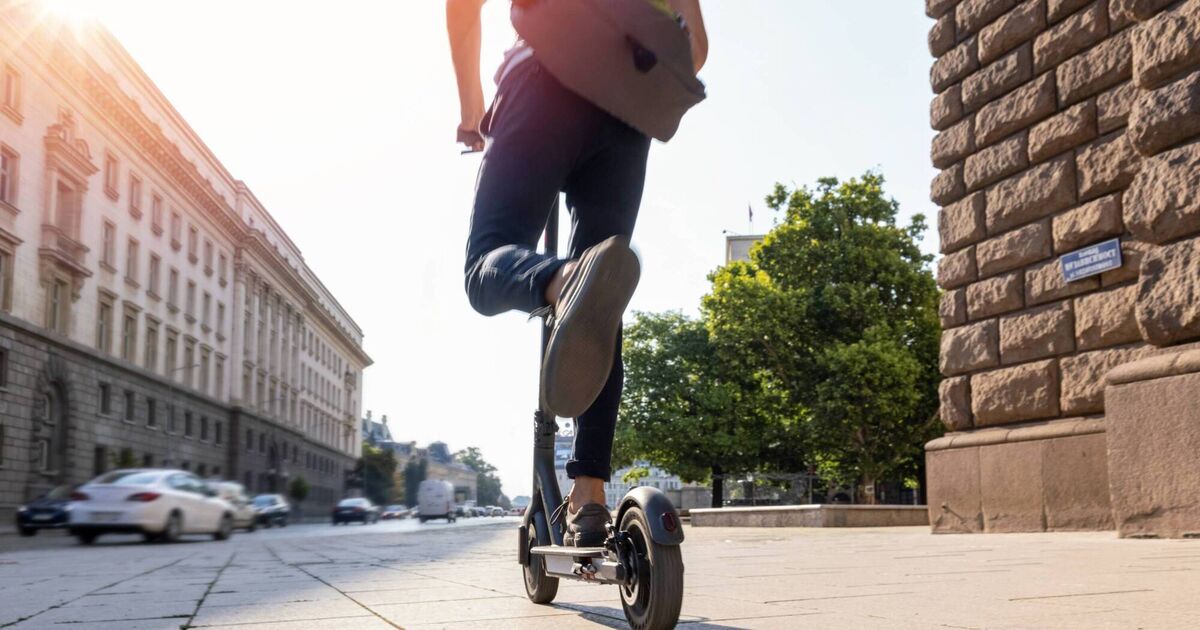
In just a few short years it has taken its place among the many crosses to be borne in modern life. The whirr of approach. The abrupt departure. The riders often masked, like teenage Dick Turpins.

Apologies for the tone of the preceding paragraph, but the e-scooter has a pretty negative image. Or is it a negative reality? The actuality of e-scooter use is pretty bracing once you dig into it.

As recently as last Monday we reported on a new paper issued by the Royal College of Physicians of Ireland (RCPI), one which doesn’t hold back on the significance of injuries related to e-scooter use.

The leading cause of traumatic brain injuries in children being admitted to the paediatric neurosurgical centre at CHI Temple Street is accidents related to e-scooter use, said the RCPI, which added that almost half of children admitted with a traumatic brain injury required neurosurgical interventions and admission to intensive care.

In addition, 40% of neurosurgical and ICU admissions had new issues with movement, and 80% had new difficulties with cognition noted during their inpatient admissions. The average length of time spent in hospital was 18.7 days, similar to the length of hospital stay after being struck by a moving car, but five times the length of stay associated with falling from a bike.

This is a serious amount of serious injuries, and the image problem, or problem image, of the e-scooter doesn’t stop there.

Many readers will have no difficulty summoning up a mental picture which is unflattering to the scooter user: a masked scooter-pilot zooming past them as they step onto a roadway or stroll along a greenway, upright and unmoving as they whirr off into the distance, oblivious to the near-miss of a second or two ago.

A cavalier attitude to the rules of the road or the rights of pedestrians is of course an issue for quite a few of the people who use our highways, from car and lorry drivers to cyclists.

But the e-scooter is a little different. For instance, it appears to be both the subject of crime and an aid to criminals.
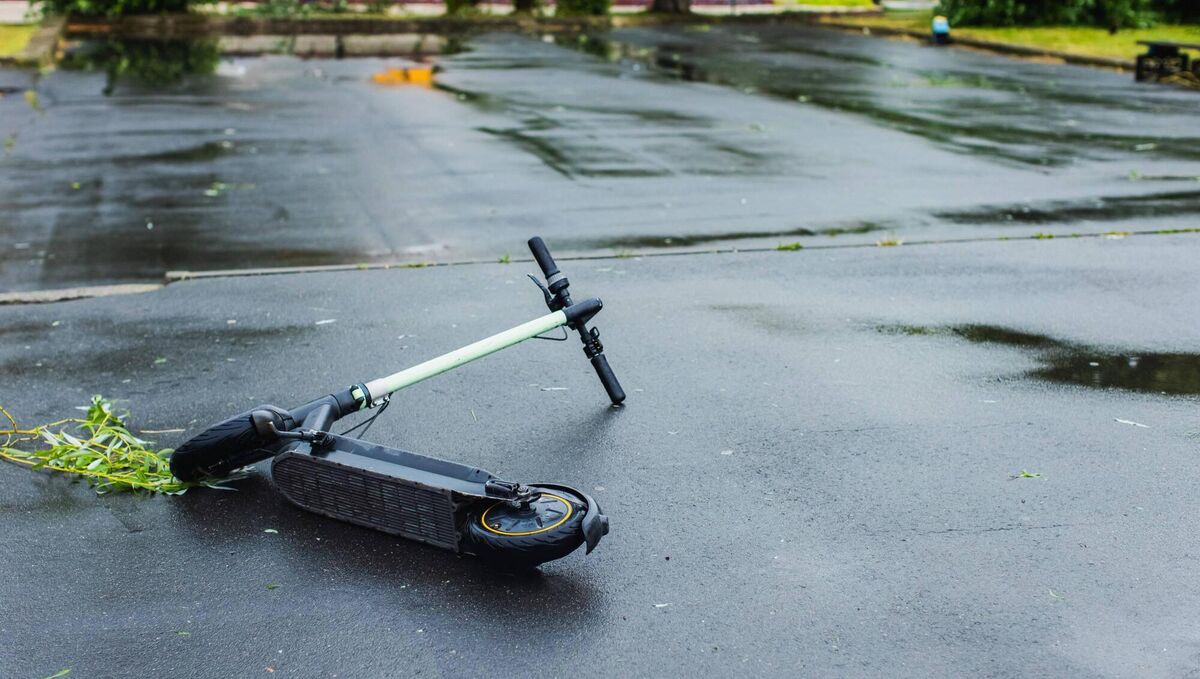
In the former case, the evidence is all around us. Last September a court in Cork heard a district court judge say the theft of e-scooters was happening far too often in Cork City.

As he sentenced a 29-year-old man for stealing an e-scooter parked outside Tesco in Paul St, Judge Philip O’Leary said “this type of offending is too common in the city”, and that perception is borne out the length and breadth of Ireland.

(Special mention here, by the way, for the man given a suspended prison sentence last June for involvement in the “opportunistic” theft of 12 e-scooters from a Dublin business: the Dublin Circuit Criminal Court heard on that occasion that the 12 e-scooters, worth €7,780, have never been recovered.)

The leading cause of traumatic brain injuries in children being admitted to CHI Temple Street is accidents related to e-scooter use, a new RCPI paper shows.The leading cause of traumatic brain injuries in children being admitted to CHI Temple Street is accidents related to e-scooter use, a new RCPI paper shows.

In other jurisdictions the situation is similar. Last year Sky News reported on a stunning hike in crimes involving e-bikes and e-scooters in Britain, saying data released by various police forces in England and Wales reveal that tens of thousands of offences, such as theft, robbery, and burglary, have been linked to the vehicles since 2019: a rise in crimes involving e-bikes and e-scooters of some 730% over the succeeding five years.

UK police representatives outlined the attractions of the e-scooter in particular to criminals; the vehicles have advantages which range from relatively low cost compared to motorbikes or mopeds (less than €1,000) to the fact that they don’t have number plates, which make users very difficult to identify.

Their Irish colleagues would no doubt agree. Last August gardaí engaged in a “day of action” in Dublin, with a particular focus on e-scooters and e-bikes.

The rationale, gardaí explained, was that vehicles like the six e-scooters seized during the operation are often driven on footpaths and down parks and laneways to avoid detection by gardaí.

In the interests of balance, can anyone pipe up on behalf of the e-scooter?

Consider it a prime example of the move towards micromobility, an umbrella term for the use of small, low-powered vehicles and a concept linked to urban concepts such as the 15-minute city. Micromobility advocates claim its benefits include reduced congestion, more active lifestyles, and cost-effective and sustainable transport.

There are other positives. A study published in the Journal of Marketing Research by Kyeongbin Kim and Daniel Minh McCarthy processed data from 391 companies in 98 US cities and the results show the vehicles in a good light.

They found that the introduction of e-scooters in a city had a significant impact on restaurants, increasing spending by around 5.2% for e-scooter users.

They also bring a carbon emission dividend. E-scooters are clearly not burning petrol or diesel like an enormous SUV so they’re clearly better for the environment.

Right?

Unnati Narang of the University of Illinois Urbana-Champaign looked at data from a 2019 trial of 10 e-scooter-sharing companies in US cities and her conclusions about their environmental impact weren’t entirely encouraging.

Prof Narang found that after e-scooters were made available in a city there was a 16% boost in ride-share trips such as Uber and Lyft but a decline in bike-share trips of around 8%. She told Forbes magazine: “We found that e-scooters don’t add to bike share demand. They directly compete with it, which is a classic case of category cannibalisation despite greater need for new trips overall.”

Clearly if e-scooters are taking people away from bike-share programmes then they may be net contributors to our carbon emissions. Worse again, the Journal of Cycling and Micromobility Research suggests that e-scooter use may be replacing public transport options and even walking in some cases.

“Cities should not assume that e-scooters automatically promote sustainability or level the playing field in terms of mobility,” said Prof Narang. 

“They create a lot of externalities, and regulation and planning must address safety and fairness head-on.”

Regulation is certainly on the agenda in Ireland. Adapting the old adage about pets as festive presents, the RCPI had a stark warning for parents mulling over lists for Santa at this time of year.

“We’re urging parents not to buy e-scooters for their children this Christmas,” said Faculty of Paediatrics dean Judith Meenan.

The college has called on the Government to look into further options to keep children safe from e-scooters including reviewing existing legislation: a fair point given the way that existing legislation is routinely ignored.

“Children under 16 are not permitted to operate or be carried as a passenger on e-scooters,” said Dr Meenan.

“Our hope is that this paper will raise awareness of the rules around e-scooter use and the dangers for children and young people who use them.”