
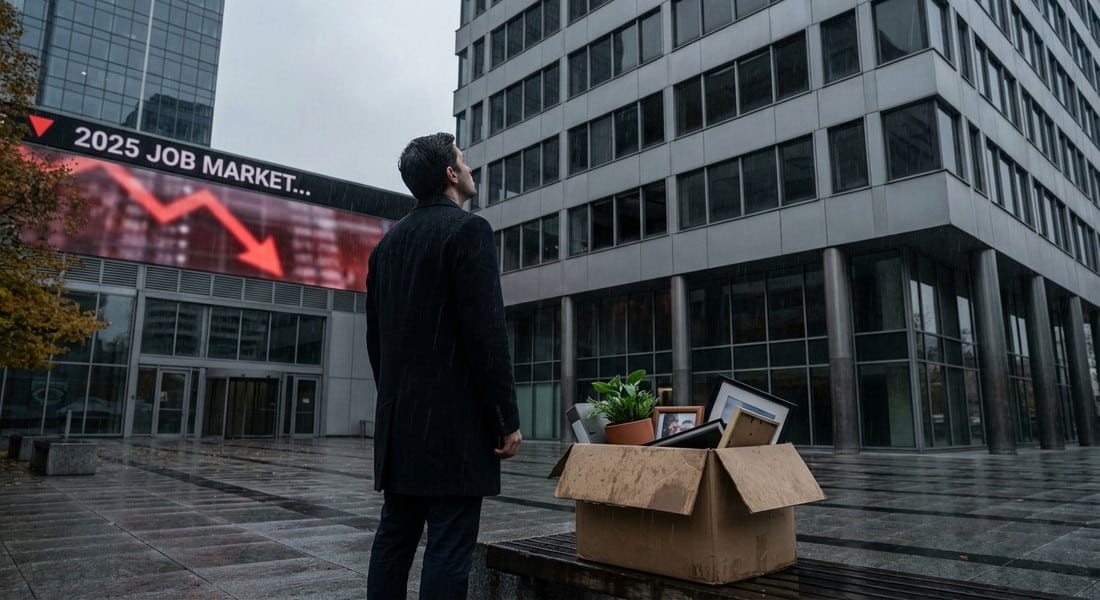
Nearly 1.2 million layoffs in 2025 mark the worst year for job cuts since 2020.
Rising cuts fuel fears over consumer spending, Fed policy, and a potential recession.
The cracks in the U.S. job market are getting too big to ignore.
After months of headlines describing the economy as “resilient,” the reality on the ground has shifted. According to new data from outplacement firm Challenger, Gray & Christmas, the total layoff count for this year is pushing past 1.2 million. That makes 2025 the worst year for job losses since the sudden shock of the pandemic in 2020. If you take the pandemic out of the equation, you have to go all the way back to the financial crisis of 2009 to find numbers this bleak.
Frank Luntz, the veteran Republican pollster and strategist, didn’t mince words when he flagged the data on X (formerly Twitter) this Thursday.
“This year has had the highest layoffs since 2020. If you take away 2020, it’s the highest number of job cuts since 2009.”
Luntz pointed to a Wall Street Journal update citing the Challenger report, a post that quickly circulated among investors and policymakers who are already on edge.
A Cooling Economy Drives the Cuts
While the headline number is startling, the reasons behind it tell a more specific story about corporate anxiety.
It’s not just one industry shedding weight anymore. Challenger’s data suggests companies are slashing costs to prepare for a rougher road ahead. They are staring down slower growth, expensive borrowing costs, and a consumer base that just isn’t buying as much as it used to.
“Executives are looking at 2026 and beyond and seeing softer orders, weaker pricing power, and tighter credit,” said Dr. Melissa Hart, a labor economist at a New York think tank. “Layoffs are often the first line of defense when margins get squeezed.”
The pain started in tech, moved to media, and is now bleeding into retail and financial services. One Wall Street strategist noted that the shift is concerning because it signals the trouble is moving from Silicon Valley to Main Street.
Even smaller logistics and manufacturing firms, which don’t usually make national news, are quietly trimming staff as shipping volumes dip.
The Human Cost: ‘We Thought the Worst Was Behind Us’
For the workers behind the statistics, the shift has been jarring.
Rachel Kim, a 34-year-old software engineer in Austin, Texas, found herself out of a job in October. She was let go from a mid-sized cloud computing firm that decided it needed to “right-size” to survive.
“We thought the worst was behind us after the pandemic,” Kim said. “Then they called us into a Zoom meeting… It was a punch in the gut.”
Kim bought a condo last year, banking on the idea that the tech sector had stabilized. Now, she spends her nights tweaking her résumé and hoping mortgage rates drop.
Her experience is being replicated in job hubs from Boston to the Bay Area. A product manager in Seattle, who asked to stay anonymous, said his social circle is full of similar stories.
“Every week, someone else in my group chat is posting a layoff email,” he said. “It feels like 2023 all over again, just bigger and broader.”
The Fed’s Dilemma
This spike in joblessness is forcing investors to rethink what the Federal Reserve will do next.
The general consensus is that the Fed will have to cut interest rates aggressively next year. The logic is simple: weaker labor demand should cool off wage growth and inflation, giving the central bank room to ease up.
“Layoffs on this scale are a clear signal that the labor market is no longer running hot,” Hart explained. “That gives the Fed more room to cut, but it also tells you growth is slowing more than many hoped.”
However, it’s a delicate balance. A former Fed staffer noted that the central bank is walking a tightrope. If they wait too long to cut rates, the economy could spiral into a recession. If they panic and cut too fast, they risk reigniting inflation. These layoff numbers just made that job much harder.
Consumer Spending in the Crosshairs
Economists are watching consumer spending closely, as it drives roughly two-thirds of the American economy. The fear is that a layoff wave will cause everyone—even those with jobs—to snap their wallets shut.
“When people lose their jobs, they don’t just cut back on luxuries,” Hart noted. “They delay car purchases, cancel vacations, and start saving every dollar they can. That hits growth fast.”
We are already seeing the cracks. Credit card delinquencies are ticking up, and retailers are warning that holiday shoppers look hesitant.
“Traffic is down, and people are trading down,” said a regional manager for a national apparel chain in Ohio. “They’re asking about sales, clearance, and coupons more than ever.”
If this sentiment spreads, the drag on spending could be enough to tip the scales toward a downturn. As one strategist put it, job cuts don’t just hurt the people who leave; they scare everyone who stays into tightening their belts.
Markets on Edge
Wall Street hasn’t taken the news well. The Challenger numbers, amplified by Luntz’s commentary, have put pressure on tech and consumer stocks as investors slash their earnings forecasts for 2026.
While layoffs can sometimes boost stock prices in the short term by promising efficiency, this volume of cuts feels different. It looks less like streamlining and more like digging in for a storm.
“Markets are basically saying: we believe the slowdown is real,” Hart said. “The question is how deep it goes.”
Investors are fleeing to “safe” stocks like utilities, while bond yields are dropping in anticipation of a slower economy.
The Politics of Pain
Luntz’s involvement brings a political dimension to the economic data. He’s known for understanding what makes voters tick, and he knows that job security is a massive trigger issue.
“People may not follow GDP numbers,” Luntz has said previously, “but they know when their neighbor loses a job.”
With layoffs mounting, Capitol Hill is bracing for renewed fights over unemployment benefits and safety nets. Progressives are calling for better support for displaced workers, while business groups warn that companies need the flexibility to trim costs if they are going to survive the downturn.
A Turning Point
The numbers are clear: nearly 1.2 million planned cuts, a figure that hasn’t been seen since the chaotic days of the pandemic, and before that, the Great Recession.
Whether this is a temporary correction or the start of a painful recession depends on a few moving parts: how fast the Fed reacts, whether consumers keep spending, and if companies start hiring again once they’ve slimmed down.
But as Luntz’s post makes the rounds on social media, the mood has shifted. The question isn’t whether the job market is cooling anymore. The question is how cold it’s going to get.