
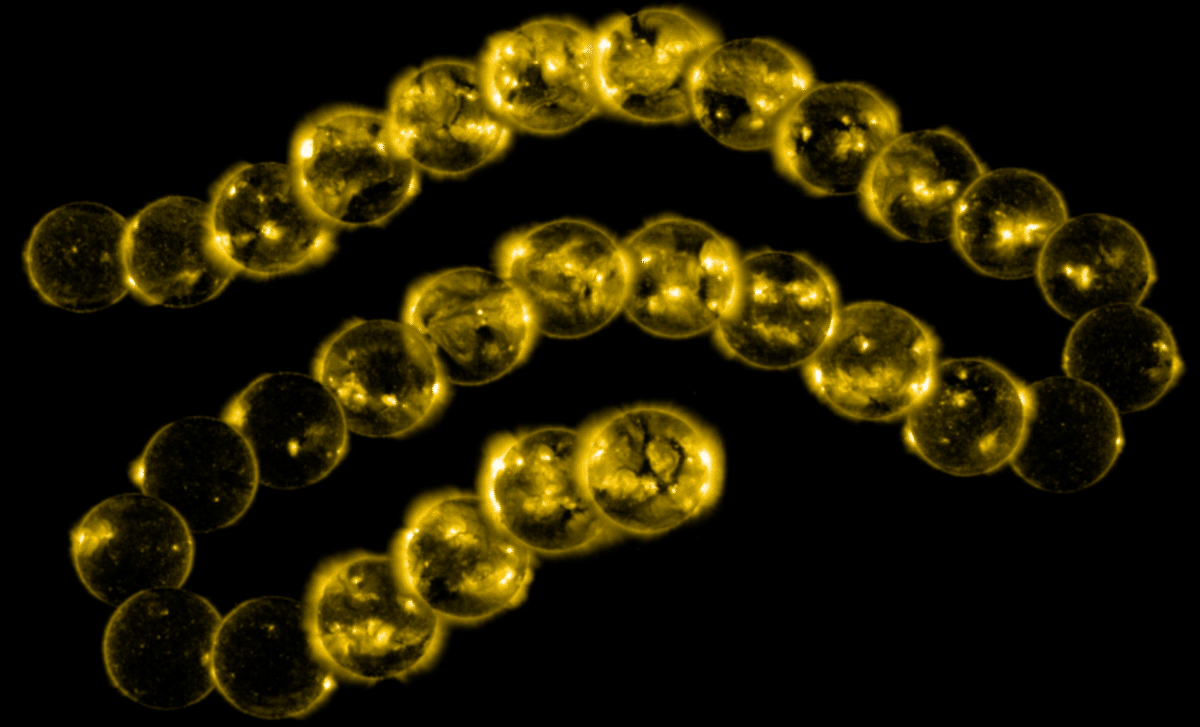
For three decades, the Solar and Heliospheric Observatory (SOHO) has been our eyes on the Sun, unveiling mysteries of solar activity and space weather. What began as a two-year mission has since evolved into a cornerstone of solar science, with its most recent findings published in Nature Astronomy. SOHO’s journey is marked by both scientific triumphs and dramatic recoveries, shaping the future of solar exploration.
The Incredible Longevity of SOHO
As SOHO celebrates its 30th anniversary, it stands as one of the longest-operating space missions ever. Originally designed to last just two years, the spacecraft has defied expectations, continuing its groundbreaking work observing the Sun’s behavior from a unique vantage point 1.5 million kilometers from Earth. The mission’s survival and success are often described as a testament to the dedication of the teams behind it. Prof. Carole Mundell, ESA Director of Science, highlights the ingenuity and international collaboration that made it all possible, stating,
“It is testament to the ingenuity of our engineers, operators, and scientists, and to international collaboration, that this mission has exceeded all expectations.”
SOHO’s resilience is reflected in the numerous crises it has overcome. One of the most harrowing moments occurred just two and a half years after its launch, when a critical fault caused the spacecraft to spin uncontrollably, cutting communication with Earth.
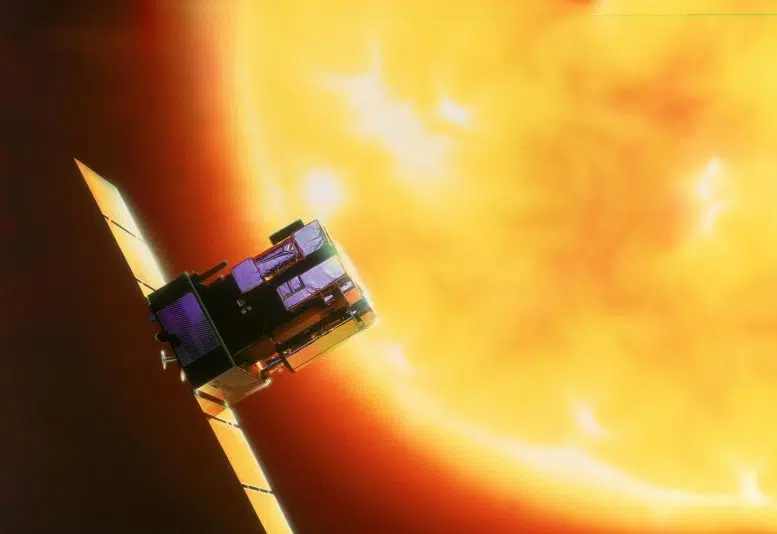 Credit: ESA
After months of searching and troubleshooting, the spacecraft was brought back online. This and other challenges only strengthened its role as an essential asset in space exploration.
“SOHO has overcome nail-biting challenges to become one of the longest-operating space missions of all time,” says Mundell.
Revolutionizing Solar Science and Space Weather Forecasting
SOHO has transformed solar science, particularly in the study of space weather and solar storms. Over the years, it has provided crucial data to predict solar phenomena, which could potentially disrupt communications, power grids, and satellites on Earth. According to Daniel Müller, ESA Project Scientist for SOHO,
“SOHO pioneered new fields in solar science. It is a game-changer in the study of space weather, providing real-time monitoring of the Sun to forecast potentially dangerous solar storms heading towards Earth, and its legacy continues to guide future missions.”
The spacecraft’s ability to track solar storms has not only changed how we view the Sun but has also led to the development of national space-weather monitoring systems, like the PROSWIFT Act in the U.S.
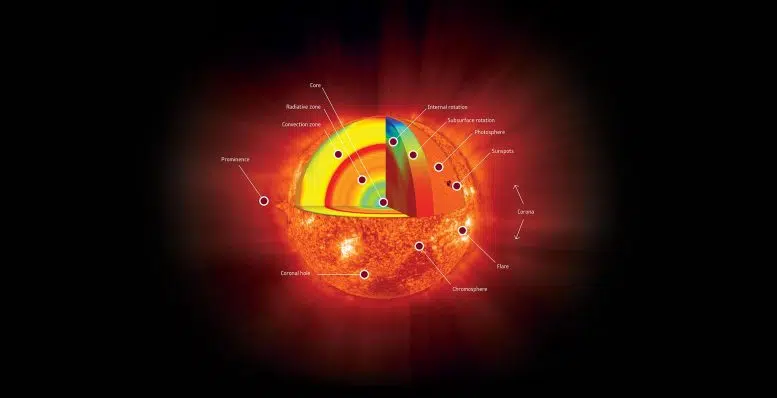 SOHO peered inside the Sun. Credit: SOHO (ESA & NASA)
What sets SOHO apart from other missions is its uninterrupted observation of the Sun’s activity over nearly three full solar cycles, providing an invaluable data set for understanding solar variability. This data has proven essential for understanding how solar radiation affects the Earth’s atmosphere, particularly in terms of its role in weather patterns and climate. SOHO’s daily observations continue to fuel scientific papers and research, ensuring its impact on solar studies will be felt for many years to come.
Overcoming Early Setbacks: SOHO’s Resilience
The early years of the SOHO mission were fraught with challenges that could have ended its mission prematurely. One such crisis involved a failure of the spacecraft’s stabilizing gyroscopes, which threatened its ability to maintain proper orientation for taking precise measurements. In a testament to the brilliance of the international team behind SOHO, a new software solution was developed to bypass the gyroscopes and keep the mission going. The spacecraft was back on track and continued to gather high-quality solar data. As Nicky Fox from NASA highlights,
“The SOHO mission is a great example of the incredible partnerships between NASA and ESA.”
This cooperation was crucial in ensuring that SOHO could navigate these early setbacks and continue delivering world-changing data.
SOHO: A Comet Hunter Like No Other
In addition to its solar observations, SOHO has made an unexpected mark as the most prolific comet hunter in history. By using its coronagraph, SOHO has discovered over 5,000 comets, a feat that has never been achieved by any other space mission. Most of these comets, known as ‘sungrazers’, approach the Sun at extremely close distances, making them visible through SOHO’s instruments. This capability has provided valuable data on the movement and composition of these comets, enhancing our understanding of the early solar system.
In March 2024, SOHO discovered its 5,000th comet, cementing its place in history. Despite not being a primary mission objective, this comet-hunting success has expanded the scientific community’s understanding of comet behavior. Additionally, citizen scientists worldwide have contributed to this discovery through the Sungrazer Project, showcasing the power of collaboration in space exploration.