
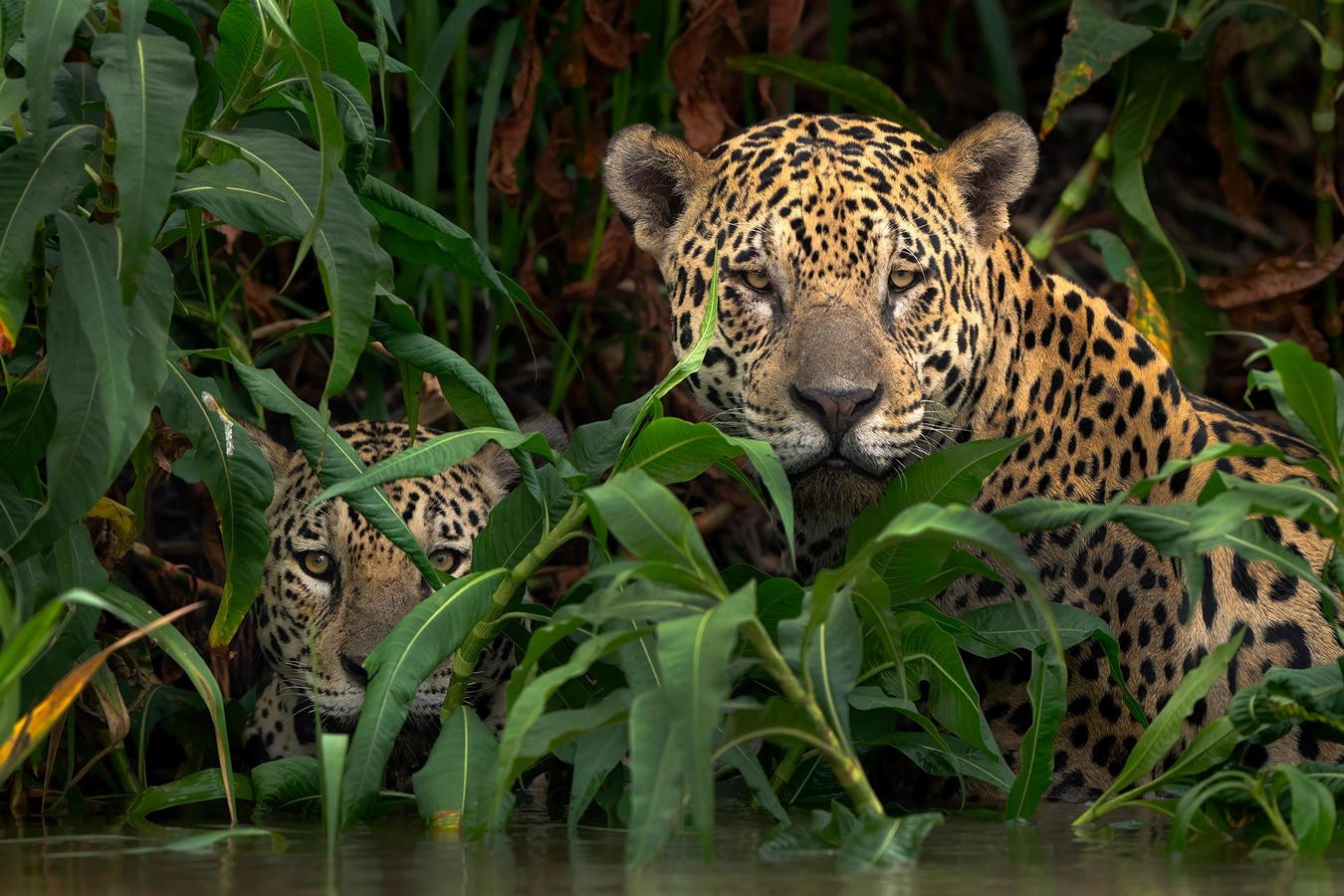
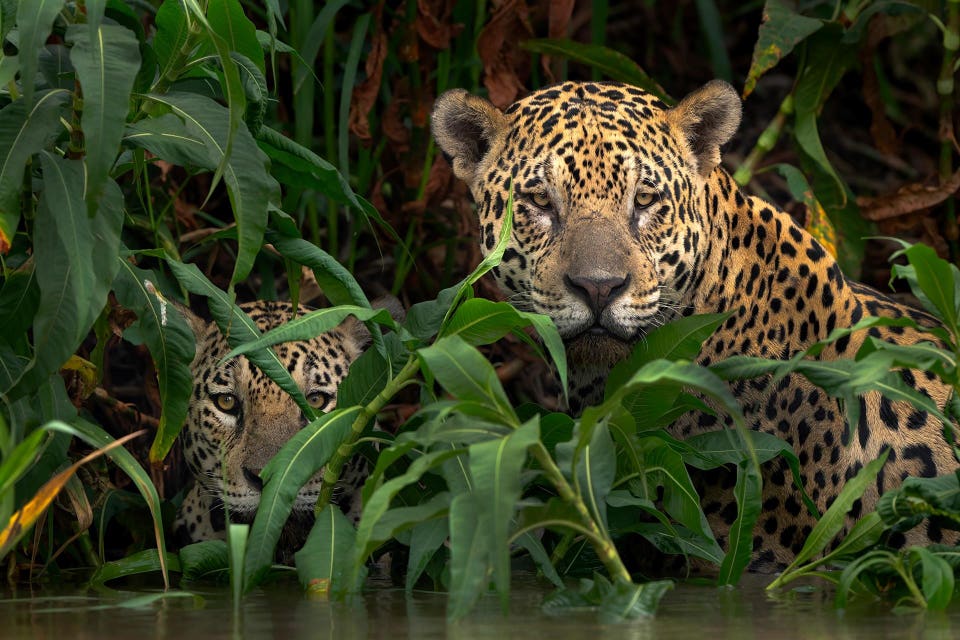
From rainforest canopies to sunlit savannas, these wildlife photographs take us around the world to witness the remarkable biology of life on Earth.
By © Hira Punjabi of Thane, India
Nature’s Best Photography brings together some of the world’s most accomplished wildlife photographers, each of whom vies to capture moments that most of us will never witness firsthand. Through these photographs, we’re granted rare access to the habitats that some of the most specialized and resilient creatures on the planet call home.
From an evolutionary biologist’s perspective, what makes these images truly fascinating is how clearly they display the adaptations that allow each species to survive and reproduce in its niche. Here’s a breakdown of the anatomy, behavior and ecological relationships that these photos reveal.
1. Giraffes (Maasai Mara National Reserve, Kenya)
Giraffes necking (Maasai Mara National Reserve, Kenya)
By © Amy Gerber of Cody, Wyoming USA
Pictured here are two giraffes standing neck-to-neck on the open plain. Their long throats are gently intertwined in what appears to be an unusually tender moment.
Giraffes are the tallest land mammals on Earth. This is a distinction that has been driven by extreme elongation of the neck and legs through evolutionary time. Although research notes that “necking” is typically a male dominance behavior — involving violent swings of the head — social contact between giraffes is also common, and it plays a crucial role in bonding and communication.
Giraffes’ cardiovascular systems are among the most specialized in all of the animal kingdom. They have enormous hearts and pressure-regulated blood vessels, which prevent them from fainting when they need to lower their heads to drink.
2. Young Gorilla Nap Time (Bwindi Impenetrable National Park, Uganda)
Young Gorilla Nap Time (Bwindi Impenetrable National Park, Uganda)
By © David Swindler of Kanab, Utah, USA
This endearing shot shows a young gorilla perched cross-legged on a tree branch, clutching a bundle of leaves as if it were a pillow, as its eyes drift shut. It’s a gentle, still scene, taking place in a forest more often associated with powerful, ground-dwelling giants.
The gorillas of Bwindi are mountain gorillas (Gorilla beringei beringei), one of the two critically endangered subspecies of eastern gorillas. Despite their immense adult size (males can exceed 180 kilograms) infants and juveniles are highly arboreal, spending much of their early lives climbing, playing, and resting in trees.
These gorillas share approximately 98% of their DNA with humans. Their long childhoods reflect a similarly slow developmental strategy to our own, which favors learning, social bonding and complex cognition over rapid growth.
3. Flying Foxes (Maharashtra, India)
Flying foxes (Dharur, Maharashtra, India)
By © Baiju Patil of Maharashtra, India
Countless Indian flying foxes fill the daylight sky in this striking, ground-level shot. Their vast wings catch the sun, making them glow almost transparently as they surge overhead in a restless aerial current.
The Indian flying fox (Pteropus medius, formerly Pteropus giganteus) is among the largest bat species in the world. Their immense wingspans can exceed 1.5 meters (5 feet). And unlike most microbats, this species relies primarily on eyesight rather than echolocation. This is likely an adaptation tied to their fruit-based diet.
As they travel long distances each night in search of figs, mangos and other fruits, they simultaneously serve as critical seed dispersers and pollinators. This means that they actively shape forest regeneration across South Asia. Their mass roosting and synchronized flights are spectacular examples of how social behavior and ecosystem function are deeply intertwined.
4. Sumatran Orangutan On Strangler Fig (Gunung Leuser National Park, Indonesia)
Sumatran orangutan on strangler fig (Gunung Leuser National Park, Northern Sumatra, Indonesia)
By © Marco Gaiotti of Genova, Italy
Here, a Sumatran orangutan sits atop the massive root system of a strangler fig. He stares directly into the lens with an unmistakably confident, almost regal composure. His cheek pads are fully developed, and his long limbs drape effortlessly over the living architecture of the tree.
Sumatran orangutans (Pongo abelii) are the most arboreal of the great apes; they spend nearly their entire lives in the forest canopy. As research from the American Journal of Primatology explains, males’ prominent cheek pads (called flanges) are used for producing long vocalizations, which travel for kilometers through dense rainforest. This, in turn, advertises both their dominance and reproductive fitness.
5. Bighorn Sheep (Mt. Timpanogos, Utah)
Mt Timpanogos in Utah’s Wasatch Mountains erupts with brilliant color each August as the wildflowers bloom. While trying to photograph hummingbirds, we noticed some bighorn sheep lying down in the ridge above us. We climbed up to the ridge just as the sheep were going out into a field of wildflowers to eat. I couldn’t have asked for a more scenic place to photograph them!
David Swindler (www.PicturetheJourney.com)
In this image, we see a lone bighorn sheep standing nearly hidden in a neck-high meadow of wildflowers. It grazes calmly amid grasses, forbs and shrubs that carpet the alpine landscape.
Bighorn sheep (Ovis canadensis) are renowned for the massive, curved horns of adult males, which they use in spectacular head-to-head collisions during the breeding season. Remarkably, as research from Evolution notes, these horns can take up between 8 to 12% of their total body weight.
Although bighorns were once widespread across western North America, their populations crashed in the late 19th and early 20th centuries due to overhunting, disease transmission from domestic livestock and habitat loss. However, careful reintroduction and disease-management programs in Utah have allowed many herds to rebound. This makes scenes like the one pictured above both a beautiful and biologically hard-won success in modern wildlife conservation.
6. Red Squirrel (Finland)
Red Squirrel (Finland)
By © Simon Roberts of Chapel Stile, Cumbria, UK
Standing upright in fresh snow, this red squirrel seems fixated on the camera, with an intense, almost curious gaze. Its ears and nose are dusted in snowflakes, suggesting that it’s likely in the middle of a long bout of winter foraging in the frozen forest.
The Eurasian red squirrel (Sciurus vulgaris) is superbly adapted to boreal and temperate woodlands across Europe and northern Asia. Unlike some mammals that hibernate, red squirrels remain active through winter. They survive primarily off of food caches — pine cones, seeds and fungi — that they store during the warmer months.
Their high metabolic rate, dense winter fur and exceptional spatial memory are what allow them to endure such harsh subzero temperatures. However, although they remain largely active throughout the year, they may still stay in their nests during more severe winter weather.
7. African Elephant Clan (Amboseli National Park, Kenya)
This female elephant stepped forward with authority as she approached our vehicle. Her family fell into perfect formation behind their leader. I lay on the floor of the truck with the door open so I could get a low angled shot. The matriarch and I locked eyes, she radiated intelligence and calm. I will never forget the thrill of being in such close proximity to these extraordinary animals. No baiting Location: Amboseli National Park, Kenya African savanna elephant, Loxodonta Africana – Endangered
By © Kathy Karn of Campbellville, Ontario, Canada
In this photograph, a tightly knit clan of African elephants advances in perfect V-formation across the grassy plains of Amboseli. Their immense forms move with near-perfect group coordination toward the camera.
African elephants (Loxodonta africana) are the largest land animals alive. Adult bulls can reach over 6,000 kilograms (13,000 pounds). They differ from Asian elephants (Elephas maximus) in several key anatomical traits: larger ears adapted for heat dissipation, more pronounced tusks in both sexes and a characteristically concave back.
Their social structure is matriarchal. Family groups are typically led by the oldest, most experienced female, whose memory of water sources, migration routes and seasonal changes usually determines the survival of the entire herd. Compared to their Asian cousins, African elephants are generally more open-habitat specialists, as they’re adapted to wide savannas rather than dense forests.
Are you an animal lover who owns a pet? Take the science-backed Pet Personality Test to know how well you know your little friend.
Do you have an eye for nature photography? Join my Nature Photography Club and take your wildlife photos to the next level.