
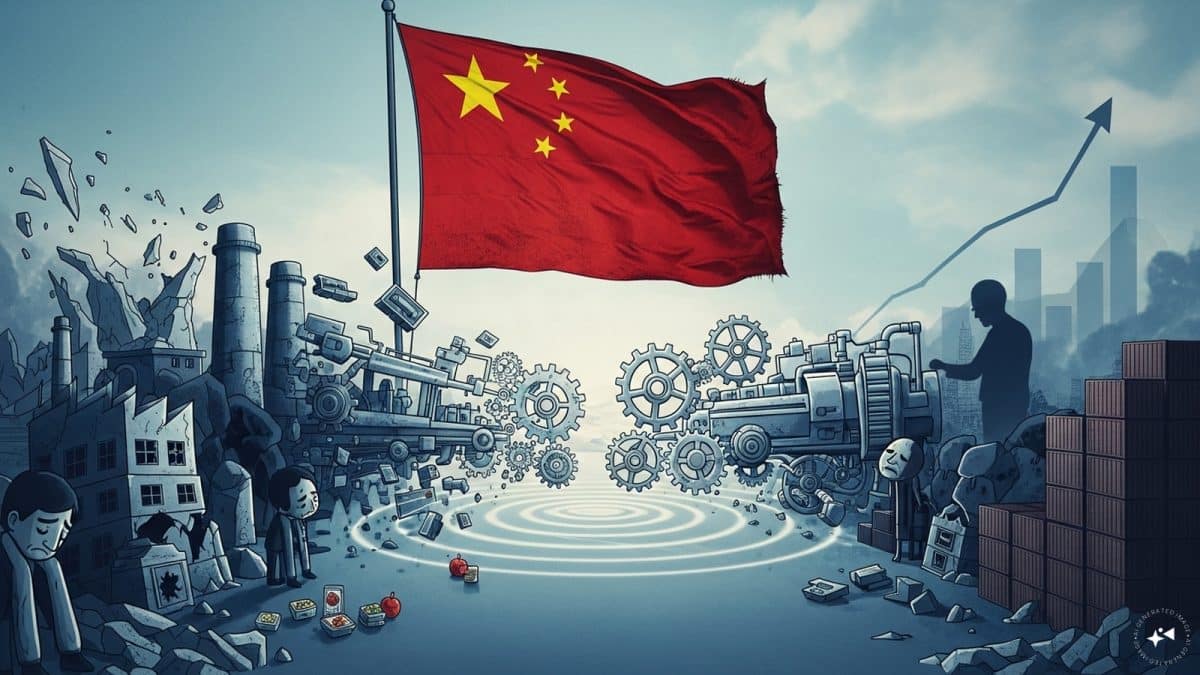
The sharp rise in Chinese exports is reshaping global trade in uneven ways. While cheaper Chinese products can help consumers abroad by raising purchasing power, this short-term gain is increasingly overshadowed by the pressure it places on domestic industries that struggle to compete with China’s low-cost manufacturing base.
The recent surge in Chinese exports is creating uneven effects worldwide. Cheaper Chinese goods may support purchasing power abroad, but this gain is increasingly outweighed by the strain on domestic industries struggling to compete with China’s low-cost manufacturing.
‘Beggar thy neighbour’ strategy
Reports citing analysts say Beijing is pursuing a “beggar thy neighbour” growth model, expanding its economic reach at the expense of others. With dominance across a vast range of manufacturing sectors, China now holds significant leverage over global supply chains and its trading partners.
This reflects a widening gap between short-term consumer benefits and long-term challenges for countries whose industries face growing pressure from Chinese competition.
Rising exports, shrinking imports
Despite imposing tariffs, the United States has seen imports rise 10 per cent year-on-year, while China’s imports have fallen three percent in dollar terms.
The US jump may partly reflect firms front-running tariffs, but China’s trend is structural: over the past five years, its export volumes have risen sharply while imports have stagnated. This has allowed China to capture an expanding share of the global manufactured goods market—underscoring its “beggar thy neighbour” approach.
STORY CONTINUES BELOW THIS ADA shifting global equation
A recent Goldman Sachs report illustrates how this dynamic has changed. Previously, a one percent increase in Chinese output boosted global output by 0.2 per cent through higher imports. That relationship has now turned negative.
China’s current growth model is driven by its leadership’s push to enhance manufacturing competitiveness and expand exports—not by rising demand for foreign goods.
Cheaper Chinese goods still boost purchasing power abroad, but Goldman estimates that this benefit is more than offset by the blow to local manufacturing sectors. As China grows roughly 0.6 percentage point faster annually in the coming years, growth in the rest of the world could fall by about 0.1 percentage point per year.
Winners, losers, and rising headwinds
China’s expansion continues to benefit its own population and countries supplying inputs to its export industries. But Goldman warns that the fallout for other industrial economies—particularly in Europe, East Asia, and Mexico—will intensify as China deepens its export-driven strategy.
HomeWorld‘Beggar thy neighbour’: The problem with cheap Chinese exports flooding the worldEnd of Article