
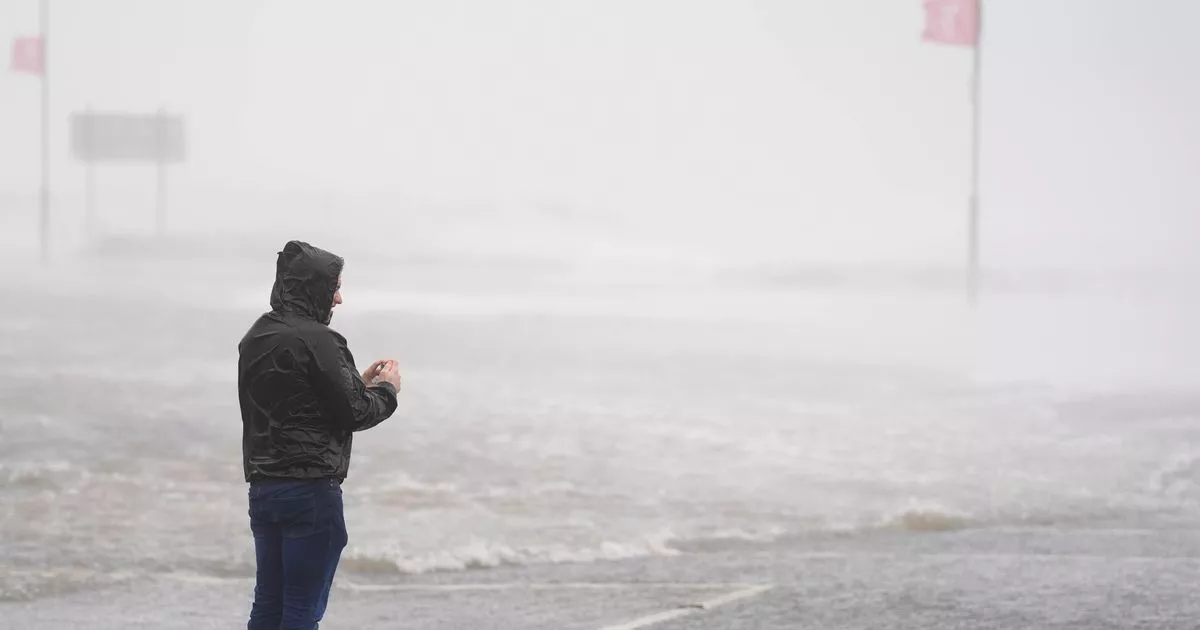
Households across Ireland are being advised to prepare a nine item emergency kit and flood plan ahead of Storm Bram making landfall.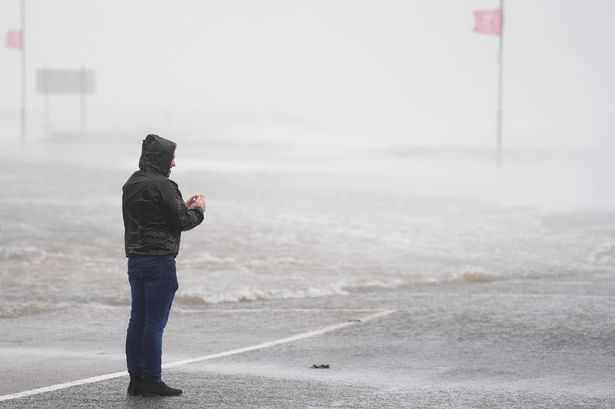 A person looks at a flooded road in Galway (file photo)(Image: Brian Lawless/PA Wire)
Households across Ireland are being urged to prepare a nine item emergency kit as Storm Bram is set to batter the country overnight and throughout tomorrow, bringing very strong winds and torrential rain.
Met Eireann has issued a series of weather warnings, including Status Orange alerts – the second highest level – for coastal areas in the south, west and northwest. Inland and eastern counties are covered by a mix of Status Yellow alerts.
At the time of writing, a Status Yellow rain warning is in place for Carlow, Kilkenny, Wexford, Cork, Kerry, Tipperary and Waterford from 9pm until 9am. A nationwide Status Yellow wind warning will follow from 6am to 9pm tomorrow.
A Status Orange wind warning takes effect at 7am for Cork, Kerry, Waterford and Wexford, lasting until 3pm. A second Orange wind warning follows from 10am until 9pm for Clare, Limerick, Donegal, Galway, Leitrim, Mayo and Sligo.
The storm is expected to cause flooding, wave overtopping, dangerous travel conditions, fallen debris, displaced objects and power outages.
Met Eireann meteorologist Matthew Martin explained the rapid development of the system, saying: “It’s looking increasing likely that Ireland will experience some very inclement weather from Monday night and through Tuesday. A low-pressure system in the Atlantic is going to deepen fairly rapidly as it approaches the southwest coast on Monday night.
“Initially there will be a spell of heavy rain before a swathe of very strong winds develop. There remains some uncertainty in the track and intensity of the system, but it looks likely that this will be an impactful event in some areas, especially in coastal areas of the south, west and northwest.
“Flooding impacts are expected as the rain will fall on already saturated ground and many rivers are currently approaching bank full conditions. We are in a period of high astronomical tides, which will coincide with the strong, potentially onshore winds, so there is high risk of coastal flooding. We echo the well-known advice of the Irish Coast Guard: ‘Stay Back, Stay High, Stay Dry’.
“The high tides will prevent the rivers from discharging to the sea, significantly increasing the risk of upstream flooding along low-lying areas. People should refer to the guidance of their local authorities and emergency responders in their area.”
Matthew added that alerts may be upgraded as the storm approaches and encouraged the public to “check in regularly with Met Eireann’s forecasts and warnings, as the situation is likely to evolve with certainty in the system track and timings increases”.
With widespread flooding expected, the national forecaster is urging households to be proactive. As part of its Be Winter Ready campaign, the weather service recommends that those living in high risk areas prepare a flood plan and assemble an emergency kit in advance.
The advice states: “If you do live in an area at risk of flooding, you may be able to lessen the impact of a flood by taking the time to prepare in advance. Make a flood plan for your family or business so that everyone knows what to do and where to go in the event of a flood. Make up a flood kit and ensure that everyone knows where to find it. Practice your flood plan. Ensure that everyone knows what has to be done and what is safe.”
Met Eireann recommends the following nine items for a household emergency flood kit:
TorchWarm and waterproof clothingBattery-powered or wind-up radioCharged mobile phoneRubber glovesRubber bootsFirst aid kitBlanketsChildren’s essentials, if required
Other important flood preparation tips, according to the Be Winter Ready document, include knowing emergency numbers and keeping a printed list handy. It’s also essential to store valuable documents, such as passports and insurance policies, in waterproof containers to protect them from damage.
Make a list of your most valuable possessions and make sure you know exactly where they are kept so you can move them quickly if needed. Familiarise yourself with how to shut off your gas and electricity.
If possible, prearrange a safe spot where you can move your car, if you have time. Lastly, keep any necessary medication close at hand to ensure it’s accessible in an emergency.
Subscribe to our newsletter for the latest news from the Irish Mirror direct to your inbox: Sign up here.