
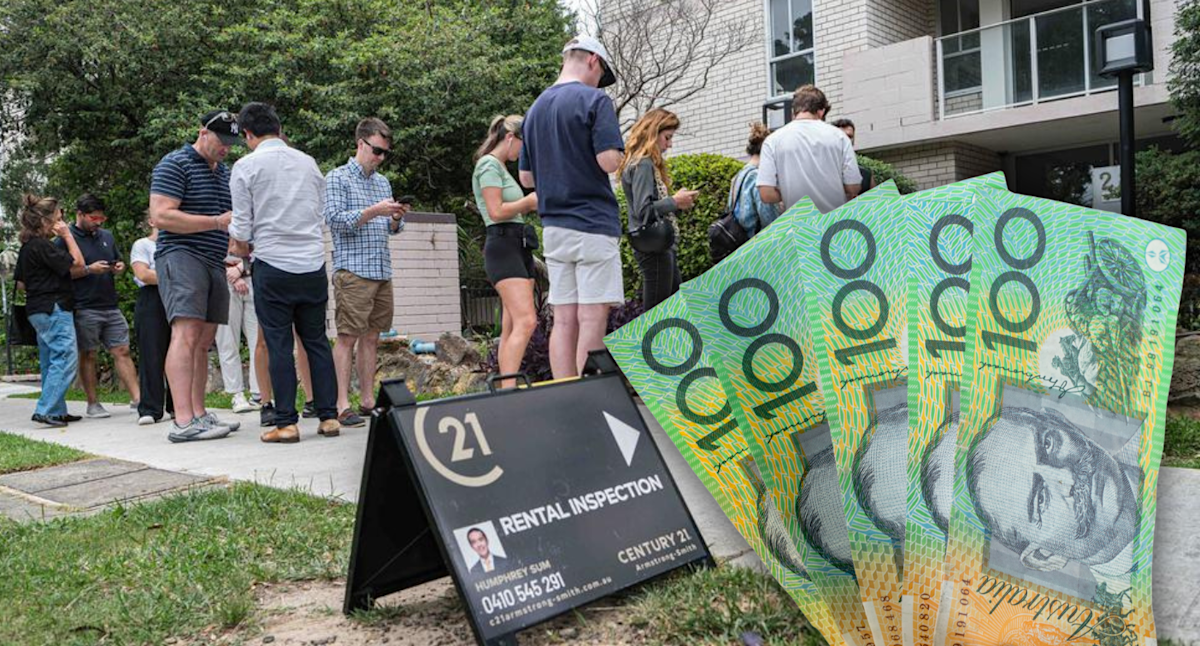
 Retiree renters would need around double the super of homeowners to retire comfortably, Super Consumers Australia research has found. (Source: Newswire/Getty)
Australian renters will need around double the superannuation savings of homeowners in order to achieve a comfortable retirement, according to new research. The savings gap for renters has sparked an urgent wake-up call, with the government warned we are risking a “retirement disaster”.
A typical single retired renter would need $659,000 in super to have a comfortable retirement, compared to the $322,000 needed for a retired homeowner. That’s according to new projections by Super Consumers Australia, based on the spending and lifestyles of real retirees.
A couple renting would need a combined $786,000 in super, compared to a couple who owned their own home and are mortgage-free, who would need $432,000 combined.
RELATED
“Telling renters to simply ‘save more’ isn’t the solution to this problem,” Super Consumers Australia CEO Xavier O’Halloran said.
“The 2026 Retirement Savings Targets for Renters has found that renters are at a real risk of retirement disaster if the Government doesn’t act. Long term solutions need to focus on getting more people into affordable housing.
“But we’ve got a crisis facing retirees right now, Commonwealth Rent Assistance has not kept pace with actual rents.”
Do you have a story to share? Contact tamika.seeto@yahooinc.com
This is the first time the group calculated spending levels and savings targets for retirees who rent. It was based on single people renting a one-bedroom apartment and couples renting either a one- or two-bedroom apartment in capital cities.
Rent for typical one-bedroom apartments across the capitals was $470 per week in June, with Sydney the highest at $560 per week.
The group found the high cost of rent meant people who rented in retirement needed to spend 30 to 47 per cent more than homeowners to have the same standard of living.
Across Australia, renters needed one-and-a-half to three times as much super as homeowners to live the same lifestyle.
Super Consumers Australia is calling for “urgent intervention” to fix the current level of Commonwealth Rent Assistance.
Australian Institute of Health and Welfare data found there were more than 325,000 age pensioners receiving Rent Assistance in June. However, 32 per cent were still classified as being in rental stress and spending more than 33 per cent of their income on rent after receiving the assistance.
Story Continues
The maximum payment for singles is currently $215.40 per fortnight, while for couples it is $203 per fortnight.
O’Halloran said systemic change was needed and called on the government to increase Commonwealth Rent Assistance, link it to rent CPI, and invest in housing designed for older Aussies.
“We’re calling on the Minister for Social Services Tanya Plibersek to address Rent Assistance as a matter of urgency. Every day this isn’t addressed, renters face an impossible financial challenge in retirement,” he said.
Fiona York, CEO of advocacy group Housing for the Aged Action Group, is also calling for changes to ensure renters aren’t left behind, noting there had been a 73 per cent increase over 10 years in the number of older renters.
“Living in expensive and poor quality homes is impacting the health and wellbeing of older renters, and preventing their ability to age well and with dignity,” she said.
“We need to address this retirement divide, by building more public and community housing, reforming housing-related tax concessions, cap rent increases to no more than CPI, and raising the rate of income support payments.”
The Australian Council of Social Service has called for the maximum rates of Rent Assistance to be lifted substantially, income support payments like JobSeeker and Youth Allowance to be increased to at least $589 per week, and social housing to be increased nationally.
According to the government, maximum rates of Rent Assistance have increased by nearly 50 per cent since March 2022 due to increases and regular indexation.
The maximum rate went up by 15 per cent in September 2023 and again by 10 per cent in September 2024. There was no increase in the most recent budget.
Get the latest Yahoo Finance news – follow us on Facebook, LinkedIn and Instagram.