
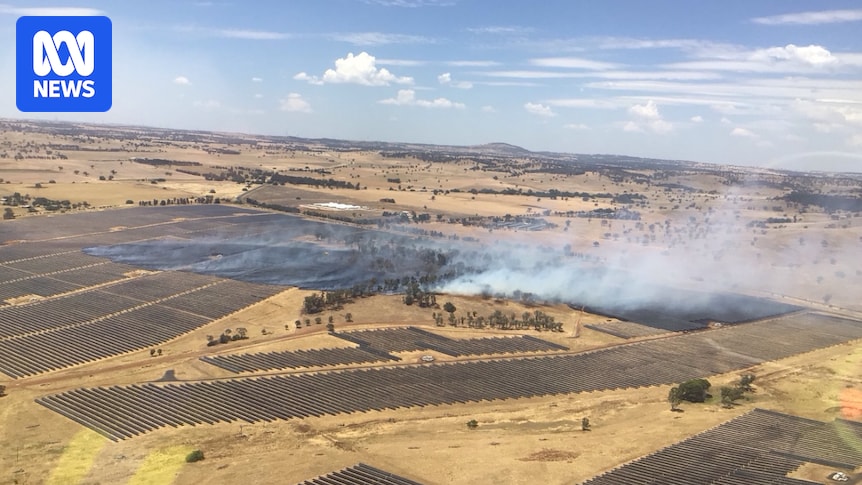
The cause of a grass fire that started on one of Australia’s largest solar farms remains a mystery.
The blaze broke out inside the Wellington North 425-megawatt solar farm in central west NSW on Saturday afternoon, and burnt more than 92 hectares.
In a statement, the solar farm’s owner Lightsource bp said damage was limited to the north-east corner of the site and the impact on electricity output was unclear.
“At this stage, no damage is expected to major equipment,” a spokesperson said.
“The site is currently operating at around 90 per cent capacity and is expected to be fully operational shortly.”
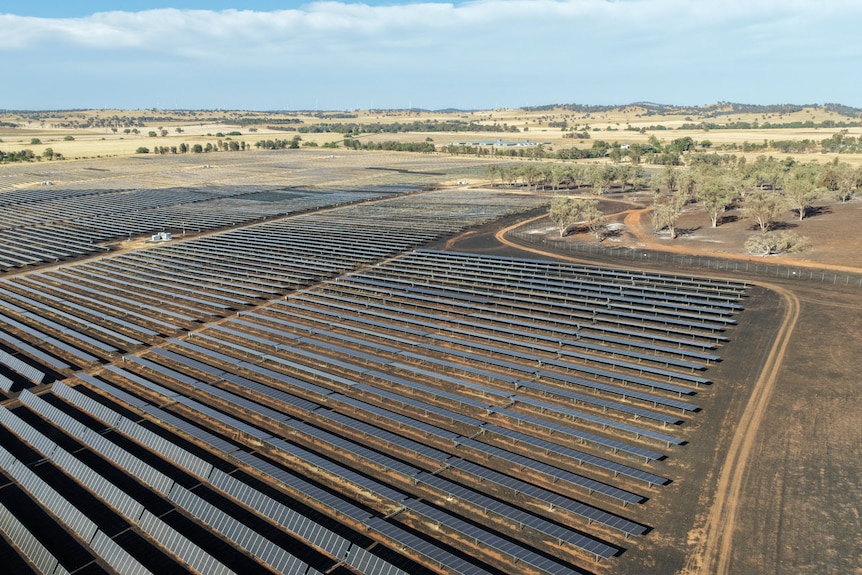
Aftermath of the fire that started on the solar farm in the state’s Central West. (Supplied: Peter Reardon)
Extreme fire danger
An extreme fire danger warning was issued for the region on Saturday morning, and the temperature reached 41 degrees Celsius in Wellington.
New South Wales Rural Fire Service (RFS) operational officer Beth Slender said the fire was fanned by “remarkably strong” north-westerly winds.
“We had a number of local crews respond to that, as well as a number of private units, and they took advantage of some open spaces and they brought that under control really well,” she said.
“That ignition and any other ignition that would happen inside this declaration period will be under investigation.”
The RFS said the fire did not threaten a correctional facility, which was across the road from the solar farm.
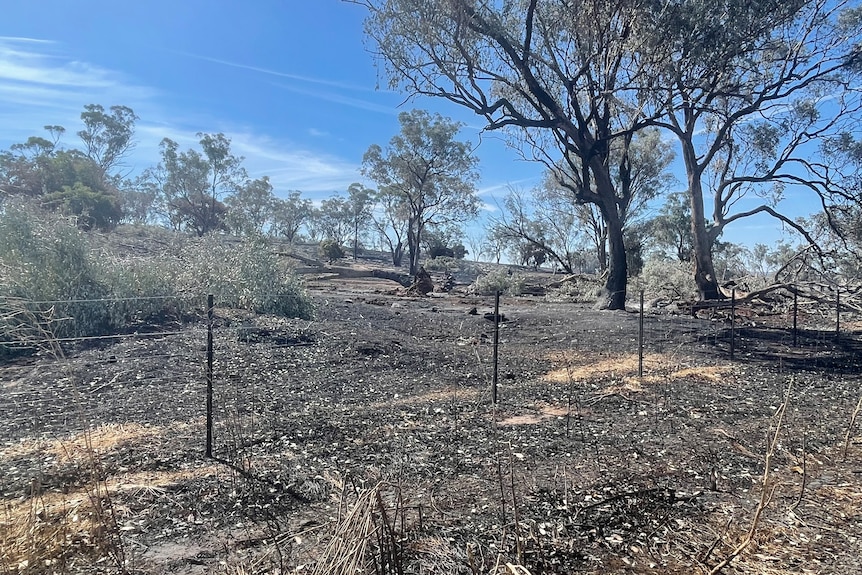
The fire started on one of Australia’s largest solar farms. (ABC Western Plains: Lily Plass)
Community fears
The fire has sparked concern within the district, with residents worried about the capability of volunteer firefighters to respond to blazes in solar farms.
Renee Harrison is involved with the community group Save Geurie — Stop the Boree Solar Project, which is opposed to another renewable energy project proposed for a nearby location.
She has called for energy companies to have more fire safety and firefighting capability on site.
“The RFS is pretty stretched at the moment, so these fires with industrial complexes add a layer of complexity to it all,” she said.
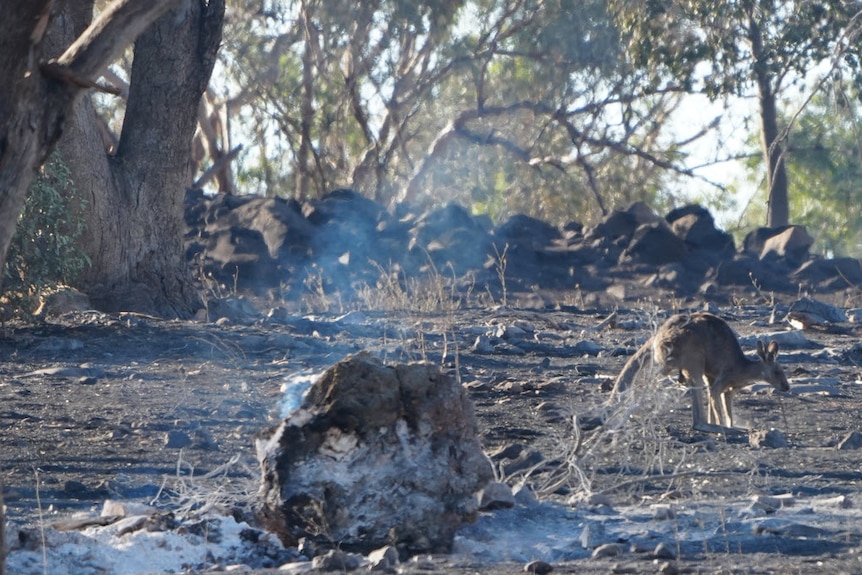
The NSW RFS says the cause of the fire is still under investigation. (Supplied: Peter Reardon)
“If you look at Wellington, there’s a lot of fuel load around the facility … they’ve got fenced off vegetative screening, and that’s meant to be maintained, but it’s full of weeds and growth that sort of stands taller than I do.
“They need to be held responsible for their fire management strategies on their own sites.”
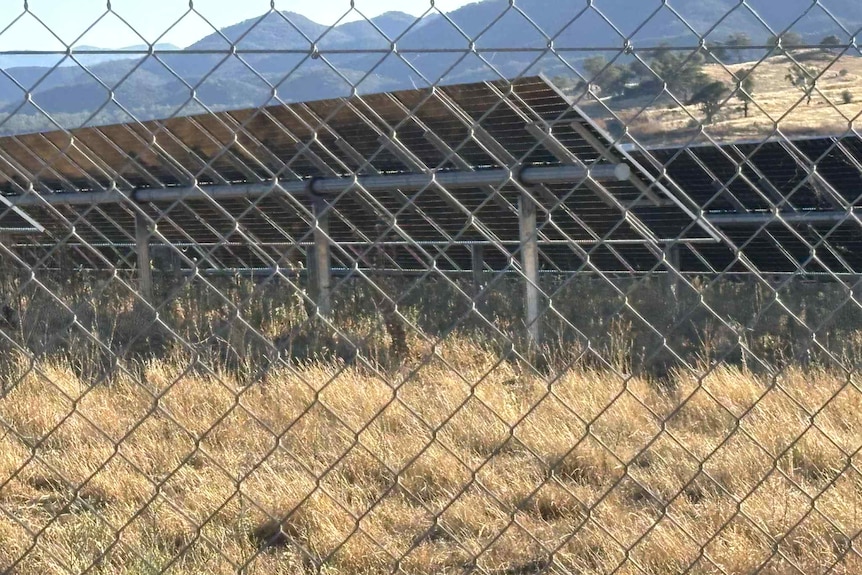
Renee Harrison says the fuel load around the Wellington solar farm has become quite noticeable in recent weeks. (Supplied: Save Geurie — Stop the Boree Solar Project)
Solar farm fires
Senior research fellow in renewable energy at Charles Sturt University, Simon Wright, said developers in the sector were looking to protect their assets from any kind of climate danger.
“For example, you’ll see a lot of vegetation control around these assets, more and more developers will choose non-combustible materials, fire-resistant materials to minimise the risk,” he said.

Simon Wright says solar farms are not any different to other industrial sites when it comes to fire risks. (Supplied: Simon Wright)
Dr Wright said there was also a focus on safety for the electrical components of solar farms, including lightning protection and monitoring of the area.
“The research suggests that solar farms pose no increased risk in the short to medium term as temperatures rise compared to any other industrial facility,” he said.
“Any industrial facility, any asset, would potentially be exposed to fire risk.
“The solar farm in that regard is no different to any other industrial facility.”