
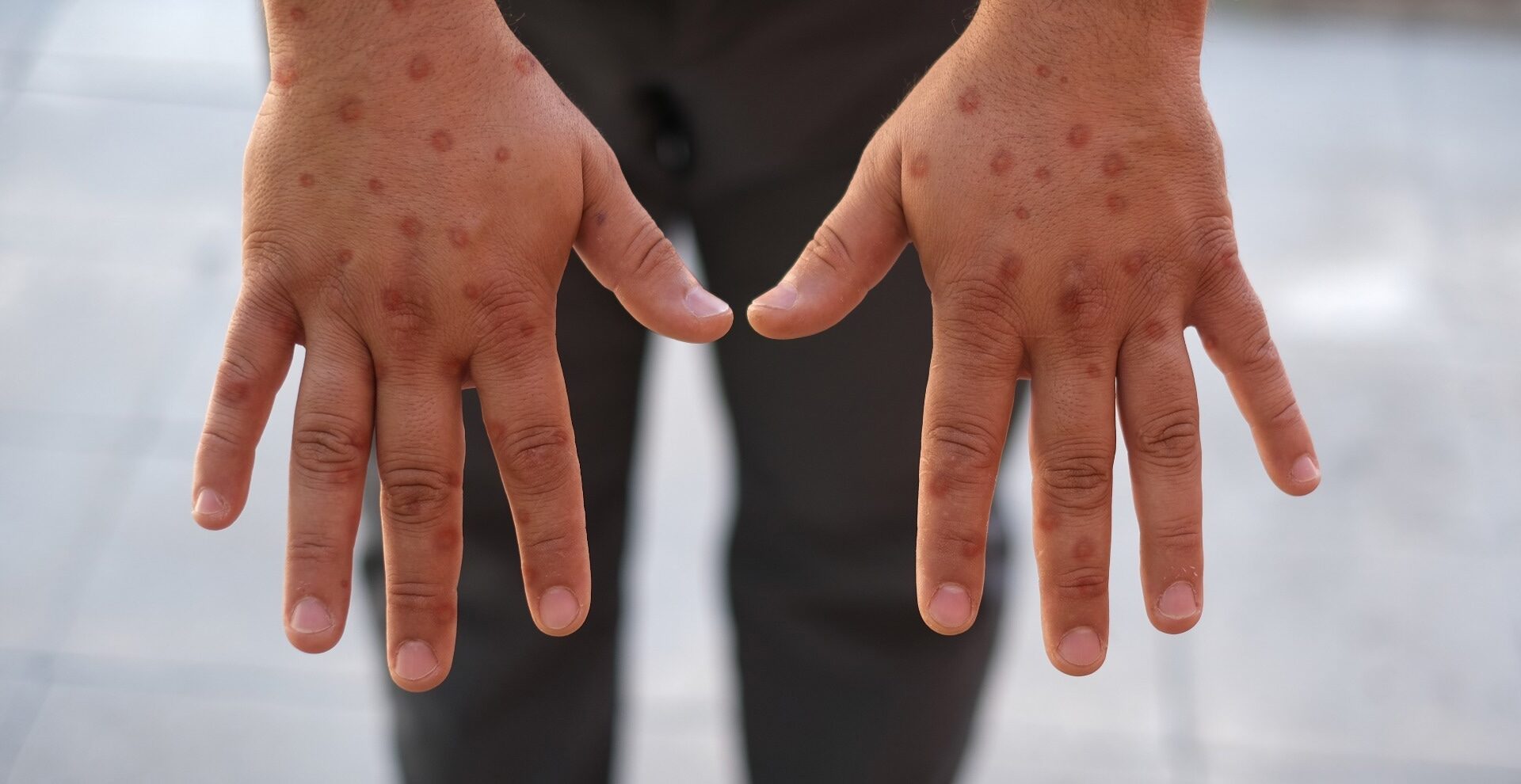
New Bayesian evidence from eastern Democratic Republic of the Congo shows that mpox clade Ib often develops more slowly than assumed, prompting calls to rethink exposure monitoring and postexposure vaccination strategies.
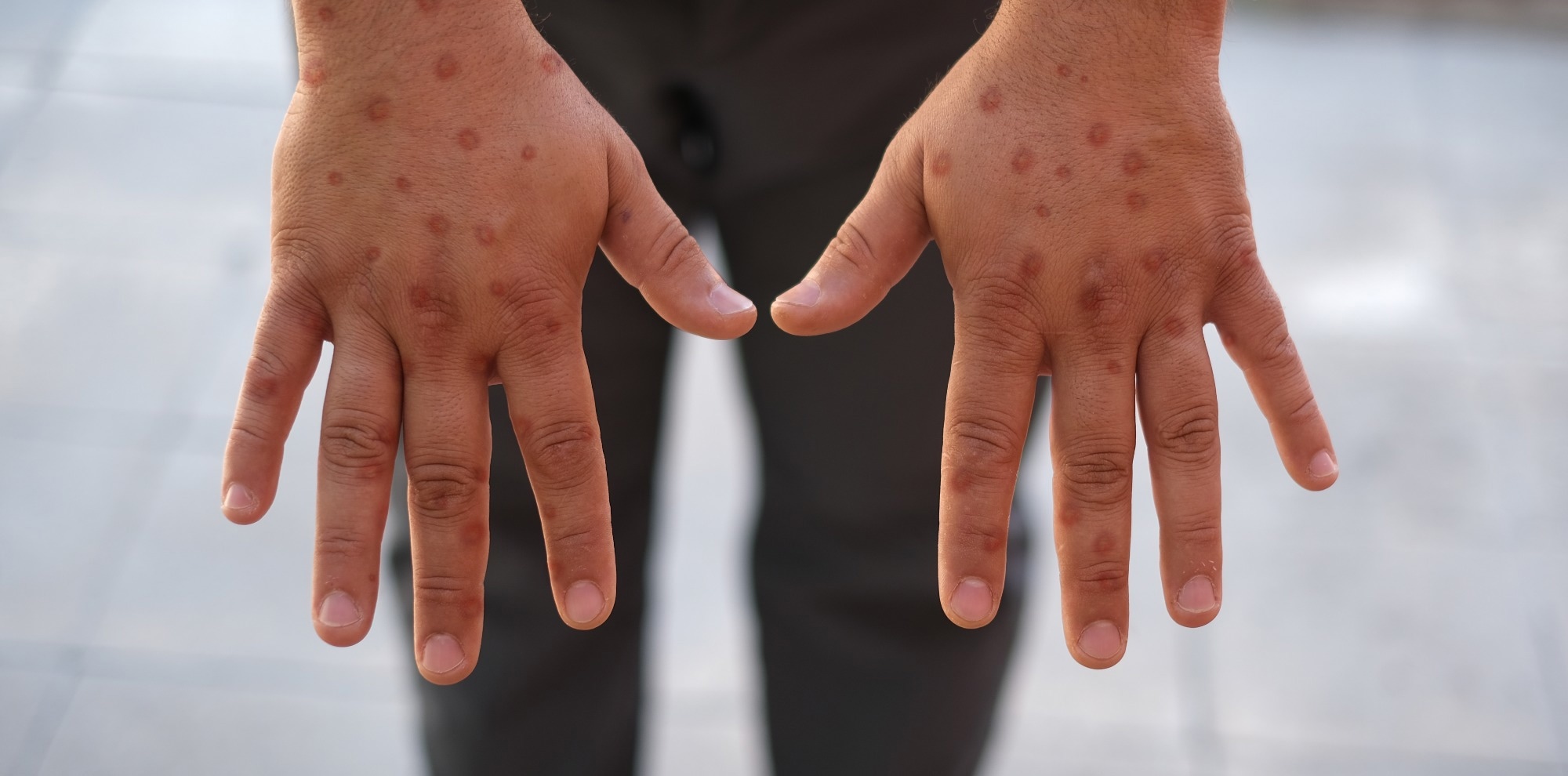
Study: The Incubation Periods of Mpox Virus Clade Ib. Image Credit: Selman GEDIK / Shutterstock
The spread of mpox is among the dangers looming large in the present-day world and has been declared a regional and international public health emergency. A recent study published in the journal Annals of Internal Medicine sheds light on the incubation period of the mpox virus (MPXV) clade Ib, a key feature that determines its spread and underlies public health responses.
Emergence and Early Dynamics of Clade Ib
The MPXV clade Ib emerged in September 2023 in South Kivu, Democratic Republic of the Congo. Initially, it spread rapidly through sexual transmission.
The natural reservoir of this virus may be the fire-footed rope squirrels. Notwithstanding, the virus later spread via the nonsexual route (community transmission), mainly affecting young children, in the eastern part of the country. Spillover events from animals to humans appear to be relatively rare. As of August 2025, 11 other African countries have been involved in community transmission of this clade.
The incubation period, the time from infection to symptom onset, of clade II, which spreads mainly via the sexual route, is one to two weeks. Based on this, the World Health Organization (WHO) recommends that exposed individuals be observed for 21 days, both to reduce the risk of transmission and to confirm its epidemiologic features.
Additionally, people who may have been exposed should be vaccinated against the virus within 14 days of exposure, based on the estimated incubation period for other clades and knowledge gained from smallpox vaccination.
However, little is known about the incubation period of clade Ib, which may hinder the framing of proper preventive strategies even as the current epidemic continues to expand.
Study Design and Surveillance Framework
The study aimed to identify the incubation periods of MPXV clade Ib when transmitted via different routes and across different demographic groups. The researchers used Bayesian analysis on clinical surveillance data from the period June to October 2024. Participants were individuals presenting with suspected mpox, a subset of whom had polymerase chain reaction (PCR)-confirmed infection, and a further subset classified as high-confidence cases based on low cycle threshold (Ct) values.
The study was based on the Mpox Treatment Center in the Congolese region of South Kivu, which is the epicenter of the current MPXV clade Ib outbreak. The participants’ demographic and exposure data were recorded, as was the symptom onset and route of transmission.
Case Characteristics and Exposure Profiles
The study captured 973 recorded cases during this period. Of these, 35.6% (346 patients) were suspected to have mpox (based on their clinical symptoms without polymerase chain reaction (PCR) testing) and also had a history of contact with another suspected mpox case.
The time of exposure was available in 70% of these cases (243 patients). Among these, half were male, and a third were younger than five years. Five people were 45 years old or more, making them likely to have received the smallpox vaccine. However, only three reported having received the vaccine, presumably during the smallpox eradication program. Of these three, two were positive on PCR, and one had a low cycle threshold (< 34), indicating a high viral load.
About 44% of the 243 cases (107 people) were hospitalized, a figure likely influenced by care-seeking patterns and surveillance practices rather than disease severity alone.
There were 123 patients among the 243 who had both valid PCR tests and contact information. Of these, 92 (72%) tested positive and 31 (25%) were negative. Considering only the 92 PCR-positive cases, 37 patients (40%) had high viral loads, lending high confidence to their PCR results, whereas higher Ct values among the remaining cases raised the possibility of false positives.
Stratifying by reported route of exposure, the 243 patients with a history of contact reported having come into contact with 320 suspected cases of mpox, with one person in 79% of cases and with multiple cases in 21%. Nonsexual contact and close-contact respiratory exposure were the predominant routes, reported by 95% and 84%, respectively.
Most cases were exposed to infections within the same household.
Estimated Incubation Period Across Transmission Routes
Among the 37 high-confidence patients, the median incubation period from exposure to the appearance of the characteristic rash was 13.6 days, with a credible interval of 9.6-19 days.
About five percent of cases showed a rash within 3.1 days of exposure, and 95% by 32.3 days, indicating that a substantial minority of infections may develop symptoms after the standard 21-day monitoring period.
Factors affecting the incubation period include, most importantly, the route of transmission. Sexual transmission is associated with the most rapid onset of symptoms (rash), the median being 10.3 days. In contrast, nonsexual transmission has a median incubation period of 13.5 days. Notably, the range of credible limits for both routes of transmission overlapped.
The absence of meticulous exposure histories necessitated adjusting modeling parameters to compensate. The final result yielded robust median estimates of the incubation period, which were insensitive to confounding across multiple sensitivity analyses. When only contact-case pairs with symptom-onset dates recorded for both were analyzed, the median incubation period (for nonsexual exposure) was 12.4 days, 9.8 days among high-confidence cases, and 15.5 days among confirmed cases; however, these subgroup analyses were based on small samples and should be interpreted cautiously. Some evidence suggested shorter incubation in younger age groups, but findings were inconsistent across case definitions.
Implications for Monitoring, Vaccination, and Control
The findings of this study suggest that “clade Ib may have a longer incubation period than other MPXV clades, and this may vary by transmission route.” While sexual transmission was prominent early in the outbreak, much of the current epidemic in eastern Democratic Republic of the Congo is driven by nonsexual community transmission, particularly within households and among children.
These findings support tailoring public health interventions to the dominant transmission routes in each setting, including strengthened surveillance, potentially longer postexposure monitoring periods, and vaccination strategies adapted to both sexual and nonsexual transmission. “These findings have implications for global recommendations on postexposure monitoring periods and prophylaxis.”