
Quick Take
Santa Cruz’s water usage remains at its lowest since the 1960s, despite population growth in the past few decades. Officials say cultural shifts, shrinking lawns and efficient appliances have helped keep demand low.
It comes up invariably whenever there is a discussion about development: Santa Cruz has a water demand problem.
But it doesn’t. Data from the city’s water department shows that since 2000, water demand has fallen from about 4.5 billion gallons a year to around 2.5 billion – a 45% drop – even with roughly 8,000 more residents in town.
“We are really at the floor of water use,” said Heidi Luckenbach, the city’s water director, referencing low water demand. She added that even after times of water restrictions – when residents were told to save and faced fines for excessive water use – instead of water use rebounding to prior levels, demand stayed low, and now has dropped to levels not seen since the 1960s.
This dramatic decrease in water usage, experts say, comes from a combination of factors: increased water-consciousness and improved plumbing, which together have made modern homes and their yards much more water-efficient.
While the low usage leaves the door open for new development, officials said, it doesn’t change the need for improvements to the city’s existing water systems.
No one, nor even the city’s water experts, anticipated this decline, and their 25-year projections of usage were way off, Luckenbach said. Making accurate projections about demand is difficult, she said, as it has to take into account hard-to-predict variables such as weather, new plumbing codes, human behavior and vacancy rates.
The decline stems from both cultural shifts and better fixtures in homes – things like low-flow toilets and high-efficiency washing machines – said Brent Haddad, director of the Center for Integrated Water Research at UC Santa Cruz. But the most important change, he said, is less outdoor irrigation.
“Until about 20 to 25 years ago, we had an aesthetic that said that a beautiful landscape around a house would have grass in it,” Haddad said. “That meant that to make your house look pretty, you were spraying a lot of water on your lawn.”
But in recent years, shifting attitudes have embraced water-conscious practices such as xeriscaping – water-efficient landscaping that makes use of native plants that need less water.
Statewide legislation mirrors these shifts. In 2023, California passed a law that prohibits the use of potable water for irrigating “nonfunctional turf” on commercial, industrial and many public or community spaces. The legislation defined “nonfunctional turf” as grass that “serves no practical purpose for human activity or recreation.” The bill will be implemented in stages over the next few years, with local water agencies enforcing it.
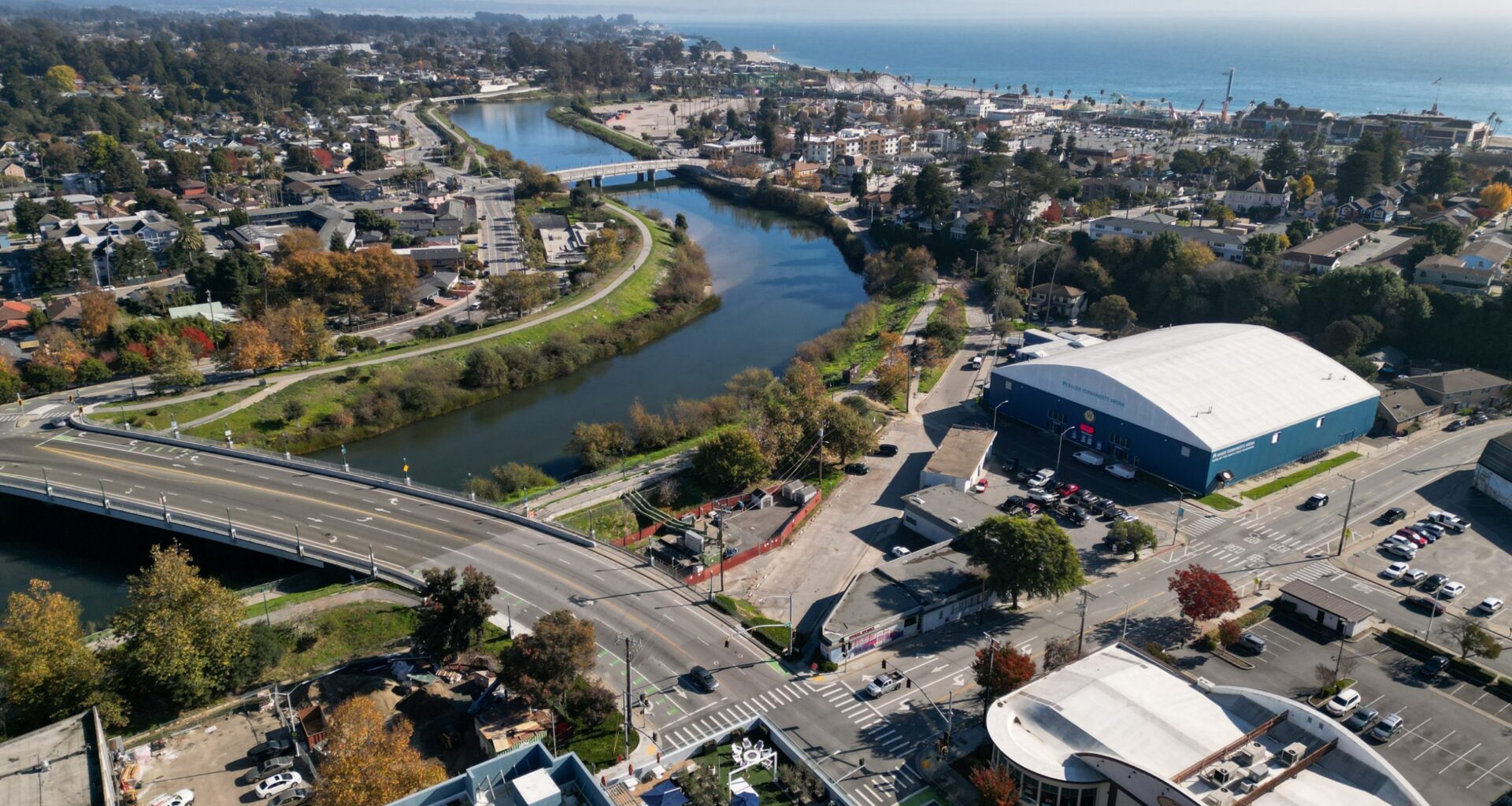
While water departments across coastal California are seeing something of an about-face on water usage, Haddad said it’s particularly important for Santa Cruz, which depends on local water sources like the San Lorenzo River. Compared to many other cities that are connected to statewide water systems, Santa Cruz is primarily reliant on surface water from local rivers, with some groundwater in the mix, which means it has less flexibility in times of drought.
“We live with the water we have here,” Haddad said. “And that’s highly intermittent. So we have to be good at saving or we’ll run out.”
Santa Cruz officials said new housing proposals don’t necessarily mean a strain on the city’s water. Updated regulations mean new construction is more water-efficient, and multiunit complexes avoid the water demands of yards.
A recent report from the city’s water department projects that 12,000 new housing units will be built between now and 2050, which are expected to be accessory dwelling units (ADUs) or multifamily units. Updated 2025 projections forecast water demand in 2050 to be 2.9 billion gallons per year, a reduction of 2.2% compared to 2024 projections.
“New development isn’t changing the water supply solutions we need to pursue,” said Lee Butler, the city’s director of planning and community development. “The amount of demand new development puts onto our overall system is minor compared to what the need is if we have multiple dry years.”
 Santa Cruz city planning director Lee Butler (left) discusses plans with Mayor Fred Keeley. Credit: Kevin Painchaud / Lookout Santa Cruz
Butler said that reliability, not demand, is the biggest issue facing Santa Cruz’s water system. To address this, the water department is retooling the city’s water infrastructure and regulations to make sure there’s enough water in times of drought.
One way to make the water system more resilient is to build interties – pipelines that connect Santa Cruz to other water districts, such as Soquel Creek and Scotts Valley. In times of drought, cities can share to help meet water demands.
Santa Cruz is also building aquifer storage wells to store water underground. During wet winters, water can be put away to be used in times of drought.
Water officials said these investments, along with the rise in costs in general, is why rates continue to rise. Luckenbach said it’s challenging to explain rate increases to customers already doing everything they can to reduce their own personal water usage and the city’s overall water demand: “There’s always that question of, ‘Wait a minute, you’re asking me to use less and now you’re charging me more?’”
For his part, Butler said the water system is an essential piece of the puzzle of smart growth in Santa Cruz: “I absolutely think that we’ve got much more space for development on the water side.”
Have something to say? Lookout welcomes letters to the editor, within our policies, from readers. Guidelines here.