
While many investors ran to assets such as gold this year to find a safe haven from economic and geopolitical storms, others turned up their collars and headed towards the high-risk sectors of China, healthcare/biotech and South Korea.
Even though over a five-year period China continues to struggle and, at the time of writing (late November), the Hang Seng Index was down around 4%, a 32% leap in the year-to-date shows signs of a performance turnaround.
The S&P Biotechnology Select Industry Index is similarly down nearly 2% over a five-year basis, but 37% healthier in 2025. The Korea Composite Stock Price Index has produced flat returns over the last three years, but this year shot up 64%.
So, what has driven this return to form, and will the revival continue?
China
Aberdeen Asian Income Fund Limited (LSE:AAIF) portfolio manager Isaac Thong explained that the main drivers for China this year have been artificial intelligence (AI) and semiconductor stocks.
“The government sees these, along with automation, robotics and electric vehicles, as helping its economy make the next leap forward. It’s not about making toys and shoes anymore. It’s high skills, high quality and high wages,” he said.
Indeed, Thong likens the Chinese market to the US with its AI hyperscalers such as Meta Platforms Inc Class A (NASDAQ:META) and Amazon.com Inc (NASDAQ:AMZN).
“Alibaba Group Holding Ltd ADR (NYSE:BABA) is the Amazon equivalent with its e-commerce and public cloud. Its share price has almost doubled this year on the same thematics,” Thong said. “Semiconductor stocks are being helped by the government’s desire to build up its own domestic supply chain.”
China represents around a third of geographical exposure in the AAIF. Its holdings include Alibaba and tech titan Tencent Holdings Ltd (SEHK:700). “In Asia, there are a lot of growth opportunities, but the range of outcomes are wide. To make it as straight a line as possible for unit holders, we invest in high-quality businesses with strong moats and high income. We buy them at fair valuations,” he explained.
Thong has been adding exposure to Chinese internet firms this year but also consumer stocks selling white goods. “Concerns over consumer confidence, the property sector downturn and debt have worked their way into expectations and valuations,” he said. “Consumer staple stocks are trading very cheaply, but yields are high, so now is the time to engage.”
James Donald, portfolio manager at Lazard Emerging Markets S Acc fund, agreed that there has been a big change in sentiment about China this year. For the last two years investors have been sceptical about China grumbling about how awful the economy is,” he said. “But we’ve had the promise of monetary policy changes, positive earnings results and President Xi being more friendly with corporations like Alibaba. His handshake with its founder Jack Ma [in February] helped sentiment even though the economy has not dramatically changed.”
Donald has played the new mood by trimming its Chinese exposure. “The quality end of the market became attractively priced in 2023 and we bought in then,” he explained. “Some of those internet platforms and industrial stocks have become a lot more expensive this year, so we’ve trimmed them. We have added new positions in some consumer stocks, which are inexpensive but have good levels of profitability ahead. But our overall exposure came down.”
Concerns over corporate governance standards also leads some investors away from the country.
Kamil Dimmich, manager of Pacific North of South EM All-Cap Equity I£Acc fund, is also cautious following China’s strong showing in 2025. He points out: “While the Chinese markets have done reasonably well this year, this comes on the back of many years of derating. Valuations are not quite as cheap as they were at the start of the year but there are still plenty of highly profitable businesses in the internet and green energy spaces at bargain prices.
“Against this, China continues to face geopolitical headwinds and a weak domestic consumer economy. We favour companies that are inexpensive, even on depressed earnings but would benefit if there is any recovery. At the same time, we keep our overall China exposure modest to reflect the challenges facing the market.”
For investors looking to play China, options include Fidelity China Special Situations Ord (LSE:FCSS). The fund is actively managed, with stock picker Dale Nicholls a seasoned investor who has been at the helm for more than a decade.
For those seeking to simply own the market, options include HSBC MSCI China ETF GBP (LSE:HMCH). The duo appear on interactive investor’s Super 60 list of investment ideas.
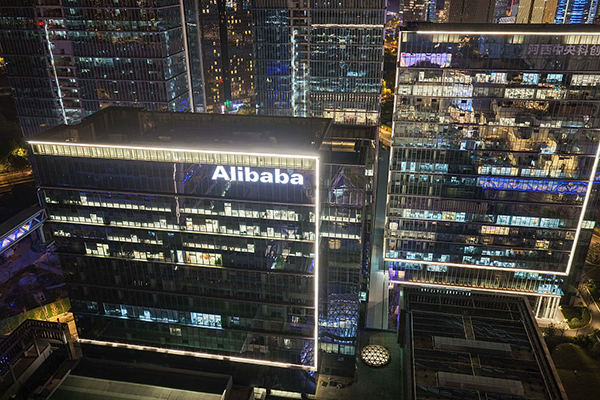
Aerial view of Alibaba Jiangsu Headquarters in Nanjing, Jiangsu Province, China. Photo: Fang Dongxu/VCG via Getty Images.
South Korea
Dimmich said that South Korea has been a standout market this year with the obvious driver being DRAM, which stands for Dynamic Randon-Access Memory chips. These are in strong demand from the world of AI for data centres and training large language models.
Two key DRAM makers are Korean – Samsung Electronics Co Ltd DR (LSE:SMSN) and SK Hynix. They also account for over a third of the MSCI Korea by market cap.
“Historically, DRAM has been a highly cyclical business, so the current situation created by AI demand is unprecedented,” Dimmich explained. “Mushrooming AI data centres require huge amounts of DRAM to embed alongside their cutting-edge NVIDIA Corp (NASDAQ:NVDA) graphics processing units (GPUs). As a result, spot prices for DRAM have roughly quintupled in the space of two months. Longer-term contract price moves are not likely to be as spectacular, but the coming years should produce enormous profits for manufacturers.”
Dimmich said that some of this should find its way back to shareholders given Korea’s newfound focus on corporate governance.
In early 2024, Korea launched a Japan-style voluntary Corporate Value-up Programme to help strengthen shareholder rights, make boards more accountable and boost shareholder returns.
In 2025, the pace of these reforms has ramped up. Newly elected President Lee Jae-myung has embarked on making legislative changes to the Commercial Act, which will enhance shareholder rights by expanding board members’ fiduciary duties to include protecting shareholder interests, not just those of the company.
Shareholder activism, again similar to Japan, is also beginning to “flex its muscles”.
Joe Bauernfreund, chief investment officer at Asset Value Investors, said these changes were necessary as the country has suffered from a “Korea discount” with 70% of stocks in the KOSPI trading 1x below one times book value and 40% less than 0.5x book value.
“It’s one of the cheapest developed markets and it has been so unloved because corporate governance is dominated by the controlling chaebols family firms,” he said. “They historically have acted in their own interest rather than those of minority shareholders. We’ve long had an interest in Korea from a valuation perspective, but the corporate governance changes should be a catalyst for share prices in the long term.”
The AVI Global Trust Ord (LSE:AGT) has built exposure of 11% to Korea over the last few months. “It is a massive call from us but the companies we are invested in trade on very wide discounts and are doing well operationally,” he said.
It includes Samsung C&T and its subsidiary Samsung Biologics, which is a contract drug manufacturer with lengthy contracts with most of the largest pharma firms in the world. “The company has plans to build new plants and introduce a new shareholder returns policy next year,” said Ross McGarry, senior investment analyst at AVI.
It also holds Youngone Corporation, which makes outdoor apparel popular in South Korea both as streetwear fashion and to meet the post-pandemic hiking boom. “We feel it is massively undervalued,” said McGarry. “There are rich opportunities beyond Samsung Electronics and SK Hynix.”
Thong said his investment trust is invested in both those main firms because without them “there will be no AI”. He added: “They are trading at a fraction of their AI equivalents in the US.” It is also invested in financials and insurance firms in Korea driven by the Value-up reforms.
Dan Cartridge, fund manager at Hawksmoor Fund Managers, cautions, however, that the dominance of SK Hynix could be a future risk. “As the AI build-out continues, the stock will likely continue to perform well, though if AI investing is peaking this would likely be negative for future returns.”
For investors keen on Korea and China he highlights Federated Hermes Asia ex Japan Eq F GBP Acc as “offering chunky exposure to these regions”. For a global fund option, Ranmore Global Equity Institutional GBP has just under 10% in Korea.

President Lee Jae-myung of South Korea. Photo: Chung Sung-Jun/Getty Images.
Biotechnology
The biotech sector looked set to continue its four-year long bear market as 2025 dawned.
“A hangover post-Covid exuberance and more recently policy clouds under the Trump administration continued to weigh on the sector,” said Philip Matthews, director and co-portfolio manager at Wise Funds.
Matthews added: “This left the underlying companies looking historically cheap with a very high percentage of early stage companies trading at market capitalisations lower than the cash they held on their balance sheets. While more established companies with products on the market were trading at highly attractive multiples (on the Enterprise Value-to-Sales ratio).”
Since the summer, fortunes for the sector have improved and the sector now looks set to outperform both the S&P 500 and Nasdaq this year.
Recent deals between large pharmaceutical companies and the US administration around the lifting of tariffs and US drug pricing have calmed investor fears. A resumption of M&A activity as large pharma companies faced a patent cliff has also helped.
Riccardo Persona, private client investment manager at Whitman Asset Management, said the regulatory uncertainty as well as “burgeoning innovation” in the sector makes this a multi-year returns story.
He notes: “There is just as much innovation going on in biotech as in the Magnificent Seven stocks. As investors look for more diversification, biotech could become a bigger part of portfolios. Even if multiples catch up, there is still going to be significant earnings growth in the next five to six years.”
Whitman Asset Management is capturing this growth mainly through RTW Biotech Opportunities Ord (LSE:RTW) and the Worldwide Healthcare Ord (LSE:WWH). “Biotech is no longer a story of smaller companies and the risk of failed trials. These are multinationals now helping find solutions to growing healthcare issues such as obesity and cancer. There is a tremendous market opportunity,” he said.
These articles are provided for information purposes only. Occasionally, an opinion about whether to buy or sell a specific investment may be provided by third parties. The content is not intended to be a personal recommendation to buy or sell any financial instrument or product, or to adopt any investment strategy as it is not provided based on an assessment of your investing knowledge and experience, your financial situation or your investment objectives. The value of your investments, and the income derived from them, may go down as well as up. You may not get back all the money that you invest. The investments referred to in this article may not be suitable for all investors, and if in doubt, an investor should seek advice from a qualified investment adviser.
Full performance can be found on the company or index summary page on the interactive investor website. Simply click on the company’s or index name highlighted in the article.