
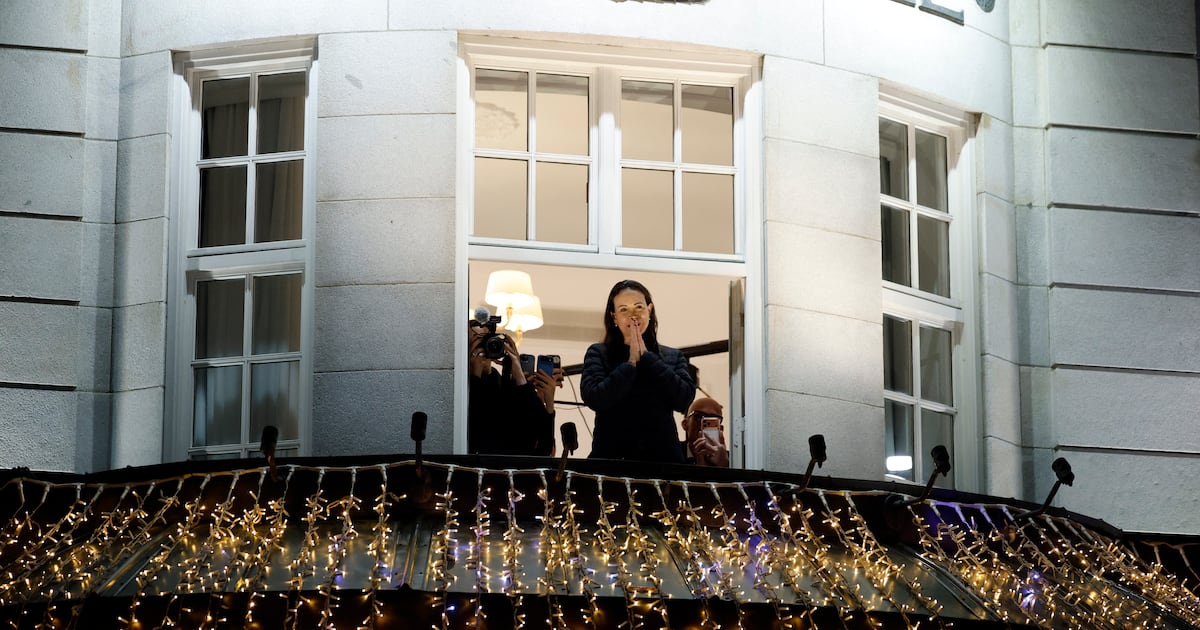
Hours after missing the ceremony in Norway’s capital that awarded her the Nobel Peace Prize, Venezuelan opposition leader María Corina Machado appeared in the city’s streets after midnight on Thursday, greeting a cheering crowd.
She appeared on the balcony of the historic Grand Hotel in Oslo, the capital, around 2:30am, waving to journalists and supporters who had been waiting for hours. People in the crowd started to sing the Venezuelan national anthem.
Ms Machado emerged from the hotel and approached the crowd, climbing over a metal barrier to embrace supporters and grasp their hands.
Ms Machado’s decision to leave Venezuela, after more than a year in hiding, has thrust her back into the global spotlight and escalated the intensifying standoff between president Donald Trump and Nicolás Maduro, Venezuela’s authoritarian president. She was expected to hold a news conference in Oslo later Thursday.
Ms Machado, 58, was awarded the Nobel Peace Prize for leading a successful electoral challenge to Mr Maduro last year. He disregarded the election results, declared himself the winner and cracked down on dissent.
In an audio message published Wednesday by the Nobel Peace Prize committee, Ms Machado said she had left Venezuela and was travelling to Oslo to participate in the day’s festivities surrounding the awarding of the prize. But she arrived too late to attend the ceremony, at which her daughter, Ana Corina Sosa, accepted the Nobel on her behalf.
Trump’s administration, which accuses Mr Maduro of leading two drug cartels, has deployed the largest US naval presence in the Caribbean since the Cuban missile crisis, carrying out fatal strikes on boats that it says were trafficking drugs and, Wednesday, seizing an oil tanker off Venezuela’s coast.
Yet the two leaders spoke by phone last month, and Venezuela recently began accepting US deportation flights, raising the possibility that both sides could be edging toward a diplomatic settlement.
Ms Machado has consistently rejected talks with the Venezuelan government and backed a hard-line, force-based approach, embracing the Trump administration’s military pressure and refraining from criticising its strikes on alleged drug traffickers.
Her challenge now will be to turn this moment in the spotlight into real political leverage. Past opposition leaders who left Venezuela have faded from relevance, and the government has already branded her a fugitive. Given that hundreds of her supporters have been arrested, analysts say that Maduro is unlikely to let her return unless he secures guarantees that keep his government intact.
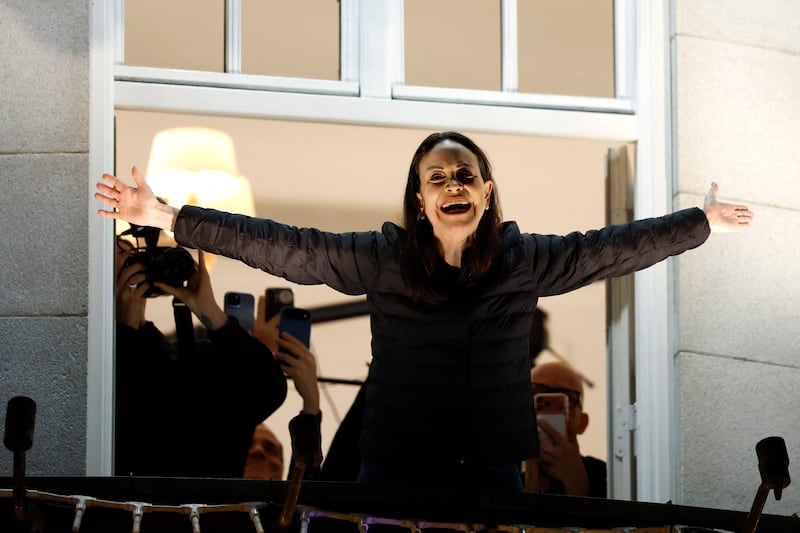 Nobel peace laureate Maria Corina Machado greets supporters from a balcony of the Grand Hotel in Oslo, Norway. Photograph: Odd Andersen/AFP/Getty Images
Aides to Ms Machado had said in the past that she would never leave Venezuela. In an interview last year, a top opposition leader, Perkins Rocha, said, “My knowledge of María Corina Machado is to have the certainty that she would never abandon the country.”
By her side in Oslo on Thursday were two senior aides, Magalli Meda and Pedro Urruchurtu, who spent more than a year sheltered at the Argentinian diplomatic residence in Venezuela’s capital, Caracas, before making their way to the United States in May.
They had sought asylum from Argentina after Venezuela’s attorney general issued warrants for their arrests last year. From inside the Argentinian compound, they helped to run the opposition’s presidential campaign, co-ordinating a large voter-turnout drive and mobilising thousands of monitors to gather tally sheets showing that the candidate from Ms Machado’s party had won.
From abroad, she will have more room to press Washington and other allies to align more closely with her push for sweeping political change in Venezuela.
But that visibility also exposes her to sharper scrutiny. Her backing of aggressive tactics and US military pressure could draw accusations of warmongering, while any hesitation about backing Mr Trump’s hard line could risk upsetting a volatile White House.
Ms Machado is already facing criticism for overstating the Venezuelan government’s role in drug trafficking and for promoting unfounded claims that it had meddled in US elections – moves that could undermine her credibility just as she seeks broader international support.
Her team has not said how and when she left Venezuela. A Wall Street Journal report, citing US officials, said she fled by boat this week, while some Venezuelan officials privately insist she departed earlier with the government’s awareness.
– This article originally appeared in The New York Times.