
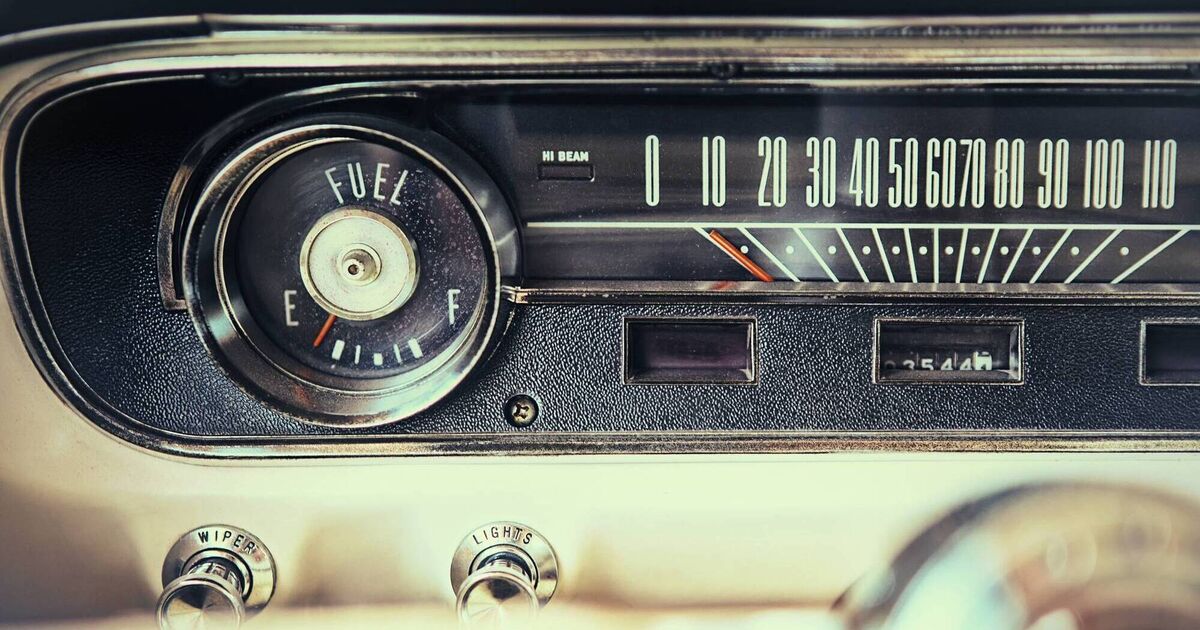
“Why are we stopping?” ask the family as I pull the car in. I can hear myself explaining why, but I don’t think I can get across to them how important this moment is… I need to take a photo of the car’s odometer at 299,999, and again further down the road at 300,000.
An odometer is a device for measuring distance. My father used to call it a mile-ometer but it’s all kilometres now so it’s odometer rather than kilometer-ometer.
The earliest version was invented by Vitruvius 2,000 years ago, based a pebble being popped into a box with the revolution of one chariot wheel.
Yes that Vitruvius, of the Leonardo Da Vinci Vitruvian man sketch where the nudey man has lots of arms — or hurleys in the Cork
version.
Anyhow, 299,999/300,000 was my first big one in this car — 99,999/100,000 happened before I knew the car.
I had missed the 199,999/200,000 event because someone was probably talking in the car. I’ll never forgive them.
For a dull man, missing these milestones is like missing the birth of a child. I was determined to be ‘present’ at this magical moment.
I had been there for 222,222 but that felt token. Like turning up at a birthday but having been out of the child’s life at the most important times.
And then in a flash, or rather 1km, it’s gone — 300,001 has a little frisson but after that it’s the long slow climb to the next peak.
These pleasing patterns are inbuilt in us. We’re easily manipulated by them. Like the 10,000 steps. 10,000 steps has no meaning in exercise terms. It’s better than no steps but as a number, it was just convenient.
It began in Japan. Just before the 1964 Olympics in Tokyo, when there was in interest in getting from the futon to 5k. The Japanese character for 10,000 looks like a walking person and so it became the go-to number.
But it took off. The optimum number of steps is 7,000. That doesn’t mean you should hop in a taxi at that point. It’s just that beyond that the extra benefits tail off.
We like round numbers. Research in psychological science shows that athletes and test takers alike push harder when their performance is just shy of a round number than when they’ve just surpassed one.
Estate agents with round-number prices get lower offers but quicker sales, as buyers interpret the rounded price as a sign of eagerness to sell, according to a National Bureau of Economic Research study.
Roundness also shapes how we judge quality.
A management science study found that when consumers can’t figure out if something is good or not beforehand, say in a restaurant, they see round numbers as good quality and .99s — the number, not the icecream — as a plea for value. That’s why steaks are €30 and not €29.99.
Not only do we like rounding, we like a particular type of rounding. Other research shows we prefer something that’s 80% fat-free to 20% fat. Even though we are ourselves very likely to be 20% fat ourselves having rounded ourselves up.
I think it might also be why we’ve put up with — seemingly without a peep — the rounding that goes on at the till in the shops these days.
Originally to get rid of the handling of pesky coppers — the coins, not the police — it’s happening now when no one uses cash.
They round down too, although of course I never notice that. But it’s interesting how this routine little increase in price is never talked about. We like round.
My next milestone is two years away: 333,333. It’s not round but it has a nice shape. If the alternator holds out and I’m getting close, I’ll call in. I know you’ll want to see it too.