
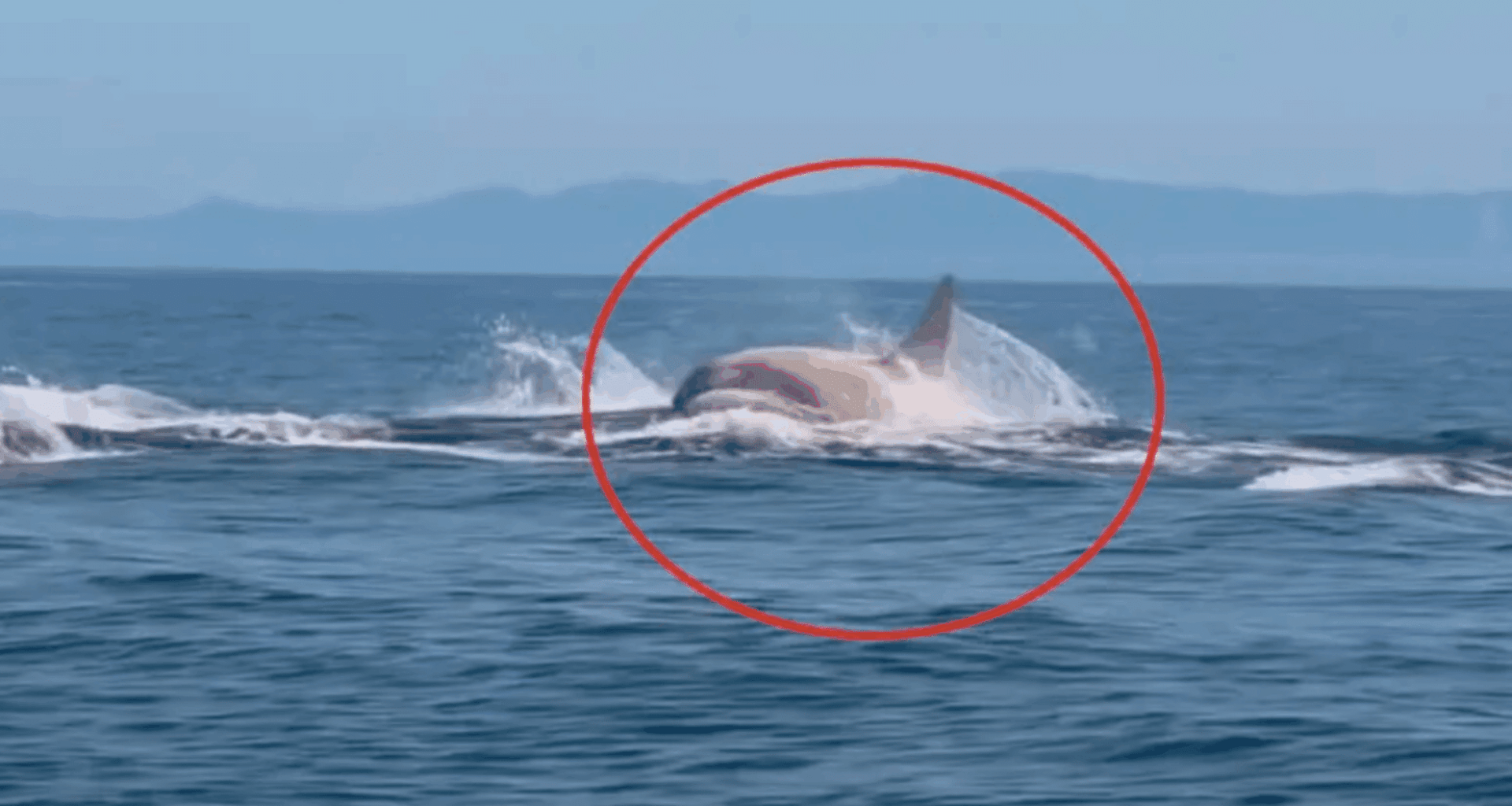
A remarkable sighting of a mysterious creature off Japan’s northern coast is captivating the world. This rare discovery, reported by Daily Mail, has sparked awe and fascination due to the species’ unusual appearance.
The Once-in-a-Lifetime Moment
Photographer Noriyuki Hayakawa’s once-in-a-lifetime encounter with a rare white orca was nothing short of extraordinary. According to Daily Mail, the 64-year-old had spent years documenting orca populations in Japan, but nothing could prepare him for what he saw during a typical whale-watching trip to the frigid waters off the coast of Hokkaido.
“My legs were shaking with excitement,” Hayakawa recalled. “It was the first time in my life I’d seen a white orca. I was desperate to get a shot, they swim fast and only surface for a moment.”
His experience, shared with his followers, has since gone viral, captivating both conservationists and casual observers alike.
Despite his excitement, Hayakawa’s quest to capture the perfect image was not an easy one. Orcas are notoriously fast swimmers, and the rare white whale surfaced only for brief moments. Hayakawa had to act quickly, knowing that such an opportunity might never come again. The moment he captured on camera was not just a beautiful shot, but a rare glimpse into the world of an incredibly elusive creature.
Understanding the Rare Genetic Trait
The white orca seen in Japan is not a true albino, but rather a leucistic orca, meaning it lacks pigmentation in certain areas of its body. True albino animals are completely devoid of pigmentation, but leucism only reduces the amount of melanin, leaving behind some color. The leucistic orca spotted off Hokkaido had creamy white patches around its chin and eyes, distinguishing it from its dark, black-and-white companions.
The sighting was a milestone in orca photography and research. Hayakawa explained the significance of the moment:
“This photo means so much to me. I’ve spent over a decade photographing orcas and this is the first white one I’ve ever seen.”
He emphasized how rare these animals are, hoping that the public would take the time to appreciate both their beauty and their rarity. This particular whale is believed to be part of a small group of just three known leucistic orcas, making the sighting all the more remarkable.
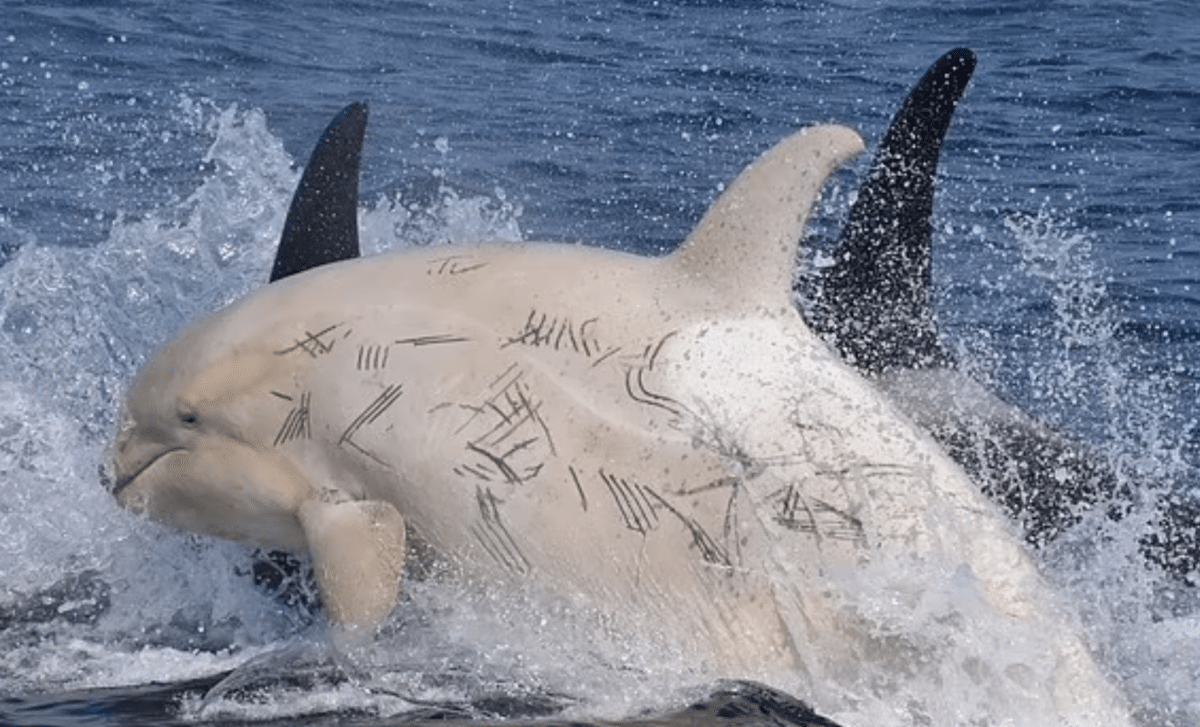 Credit: Rina Nagashima/ Magnus News
The Role of Leucism in Orca Survival
The phenomenon of leucism in orcas raises questions about its impact on the species’ survival. While the condition does not cause the total lack of pigment like albinism, the increased visibility could make these animals more vulnerable to predators. In the wild, survival is often tied to camouflage, and an animal that stands out visually could be at a disadvantage. However, the leucistic orca appeared to be accepted by its pod, and it was seen swimming alongside other orcas in the pod without significant conflict.
The photographer’s documentation adds to the growing body of research suggesting that these rare orcas may be an indication of a genetic shift within the species. As the population of orcas declines, genetic variation becomes more pronounced, leading to the emergence of traits that were once thought to be extremely rare. Scientists have noted that while leucism itself may not directly affect survival, the increased frequency of these genetic traits could signal a broader issue with the orca population, potentially pointing to the species’ diminishing genetic diversity.
The Public’s Response and the Power of Social Media
After capturing the stunning image of the leucistic orca, Hayakawa shared his discovery on social media, where the response was overwhelming. However, not all reactions were positive.
“I received a lot of comments saying it’s fake, that it was made with AI or edited,” Hayakawa said. “But it’s real. I was there.”
This comment underscores the skepticism that sometimes surrounds rare and unbelievable discoveries. The photographer’s personal testimony adds a layer of authenticity to the image, confirming that what the world saw was not a creation of modern technology, but a genuine natural phenomenon.
Hayakawa’s words reflect the passion and dedication of someone who has spent years observing and photographing orcas. His work is a testament to the power of capturing rare moments in nature and sharing them with the world. The image of the leucistic orca serves not just as a visual marvel but as an important reminder of the challenges facing these magnificent animals.