
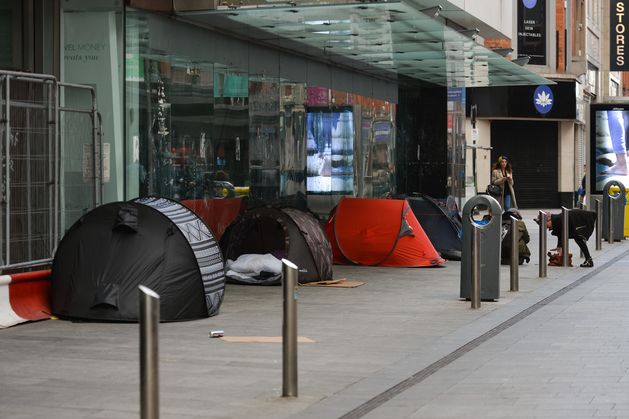
The Department of Housing’s latest homelessness figures show that 16,766 people were accessing emergency accommodation in October.
This breaks down to 11,492 adults and 5,274 children.
The figure contrasts to the 7,991 people accessing the accommodation in May 2021, an increase of 110pc in four years.
Focus Ireland’s Focus on Homelessness report, prepared with Trinity College, analysed trends in homelessness, using official government data, in each of the local authority regions across the country.
Among its conclusions was the discovery that a homelessness “crisis” is pervading in the capital where 70pc of Ireland’s homeless families were found to be residing in emergency accommodation as of June 2025.
The previous number was 75.4pc in June 2021 and 63.1pc in June 2014.
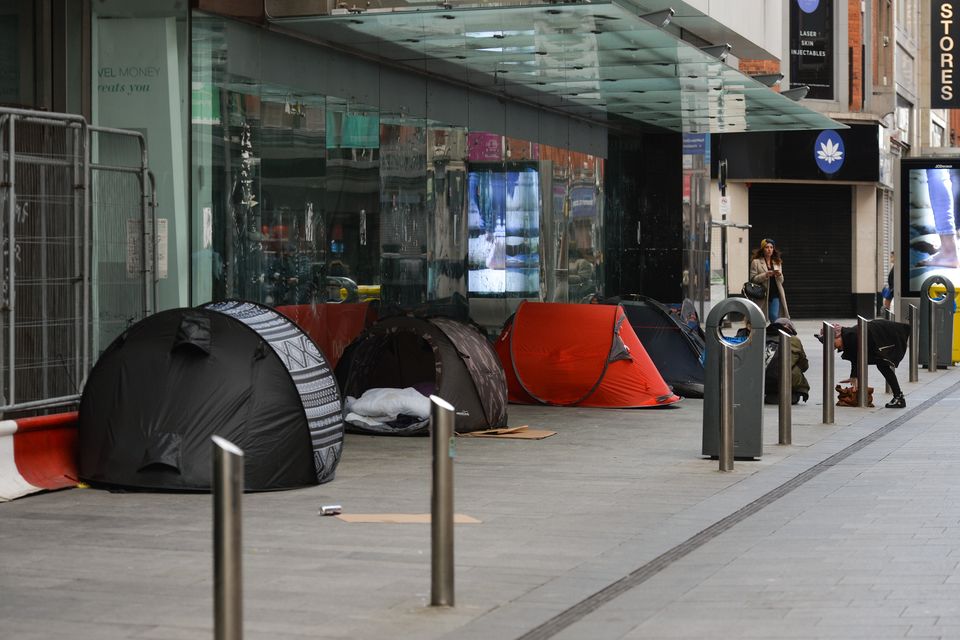
Latest figures show that 16,766 people were accessing emergency accommodation in October. Photo: Getty
News in 90 Seconds – 12 December 2025
Added to this, 52pc were in emergency accommodation for more than 12 months in Q2 of this year, compared to 32pc in 2022. More than one in four families, or 26pc, were there for over 24 months.
Child dependents in emergency accommodation have risen by 117pc since 2021 and 546.6pc since 2014, reaching 3,666 by June of this year.
One quarter of those exiting emergency accommodation in Dublin were successfully transferred to private rental housing, down from 60pc in 2021. This collapse is evident in all counties, according to the report, but none as severely as in Dublin.
Mike Allen, director of advocacy at Focus Ireland and co-author of the report said: “The figures show that, while all forms of homelessness are growing, families and children are bearing the brunt of the housing crisis in Dublin.
“Behind every percentage increase are children growing up in emergency accommodation, often for extended periods. The fact that Dublin accounts for nearly 70pc of all homelessness in Ireland is stark and deeply troubling.
“We are spending more than ever on homelessness, both at national and local level. But the balance is wrong. Emergency accommodation dominates the budget, while prevention and long-term housing solutions remain underfunded. Unless resources are shifted, we will continue to see increases in the numbers of individuals and families entering homelessness.”
Mr Allen also highlighted the “deeply worrying” collapse in exits to the private rental sector. “Families and single people who once relied on the private rental market for a home, supported by schemes like HAP, now find that pathway closed,” he said.
”While the supply of social housing is increasing, it is not keeping pace with the decline in the private rental sector. To reduce homelessness we need more social homes, an increased proportion of them going to long-term homeless households and a new approach to the private rental sector which makes it an affordable and secure route out of homelessness.”
Focus Ireland warns that if a rebalancing of expenditure away from emergency accommodation and towards prevention and long-term housing does not occur, Dublin risks locking families into homelessness for years to come.