
A recent study quantifies the impact of biodiversity loss on ecological functions by tracking energy flows within them. It found that declines in birds and small mammals have led to a significant erosion of ecological functions in sub-Saharan Africa.The study crunched data on nearly 3,000 bird and mammal species found in the region, which performed 23 key ecosystem functions, ranging from pollination to nutrient disposal.In the paper, the researchers group animals according to the ecological roles they play. By taking into account species present in an area, their abundance, body sizes, diets, and metabolic rates, they turn the animal’s food consumption into a measure of energy flow.The analysis found that the “ecological power” of wild mammals and birds weakened drastically, by about 60%, in areas converted to agricultural land; however, in well-managed protected areas, ecological functions are almost 90% intact.
See All Key Ideas
It’s a fundamental question for ecologists in this age: How are biodiversity losses reshaping how ecosystems function? A recent study quantifies the impact of biodiversity and abundance losses on ecological functions by tracking the energy flows within them.
“African wildlife has lost a third of its ecological power — the energy that drives vital ecosystem functions such as nutrient cycling, seed dispersal, and carnivory or pest control,” Ty Loft, a conservation biologist at the University of Oxford, U.K., and first author of the paper published in the journal Nature, told Mongabay by email.
Conventional approaches that focus only on species abundance can tell us how animal populations have changed, for example, to what extent elephant numbers have fallen in a given region. But translating these changes into ecosystem-wide shifts is difficult, and doing so across thousands of species in a variety of ecosystems is a mammoth challenge.
Ecological energetics quantifies how species shape ecosystems through their food intake, their ecological roles, and the energy that flows through them.
Energy is constantly being transferred from vegetation to animals, between animals, and from animals back to the environment. The natural realm isn’t a static space with animals tacked onto it; these are living, breathing worlds with which animals inhabit and interact. Take vegetation: animals directly shape the landscape by grazing and browsing (eating), and indirectly through the dispersal of seeds and nutrients (e.g., through pooping).
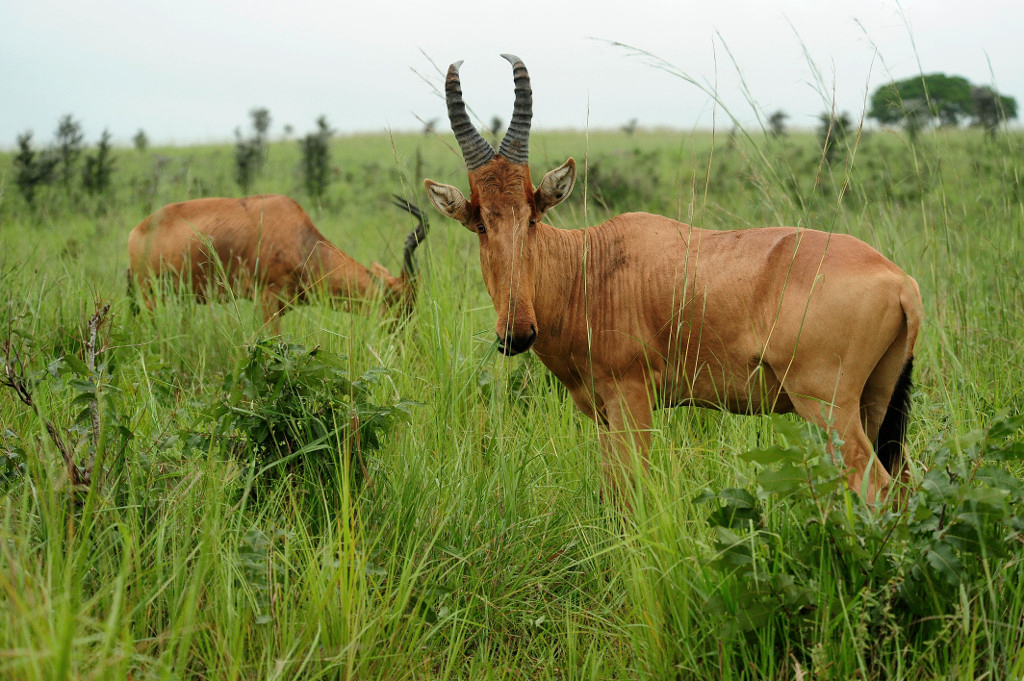 A Jackson’s hartebeest in Uganda. Image by Julie Larsen ©WCS.
In the paper, Loft and his colleagues focused on nearly 3,000 bird and mammal species in sub-Saharan Africa. They considered 23 ecosystem functions, ranging from pollination to nutrient disposal, grouped them into 10 function classes, and then grouped the animals according to the ecological roles they play. By taking into account species present in an area, their abundance, body sizes, diets, and metabolic rates, they turned the animal’s food consumption into a measure of energy flow: kilojoules per square meter per year. This formula captures how much energy animals in an ecological function guild consume and expend, a proxy for the power channeled into an environmental function.
The authors traced the extent to which energy flows have diminished compared to historical values, i.e., before humans began altering them in significant ways. In this case, the authors took as their baseline the year 1700.
In general, the “ecological power” of wild mammals and birds weakened drastically, by about 60%, in areas that had been converted to agricultural land in the study area. However, in well-managed protected areas, ecological functions are almost 90% intact. For example, the study documented a striking decline in ecological functions performed by megafauna such as elephants outside protected areas in sub-Saharan Africa.
“The paper offers quite unique and novel insights,” Santiago Soliveres Codina, an ecologist at the University of Alicante in Spain, who wasn’t involved in the study, told Mongabay by email. “The nice thing about using the energetic approach is that it is able to establish a functional ‘importance’ for each species, comparable across species, based on how much energy it moves throughout the ecosystem, and between ecosystems.”
The approach better captures the relative importance of animals to ecosystems by accounting for food consumption rather than only biomass or size. Take, for example, birds or small mammals like rodents, which are small in size but consume and process energy faster.
“They burn through calories very quickly. And all of that eating has a big impact on ecosystems, including by spreading seeds, controlling insect and pest populations, and pollinating plants, among other impacts,” Loft said.
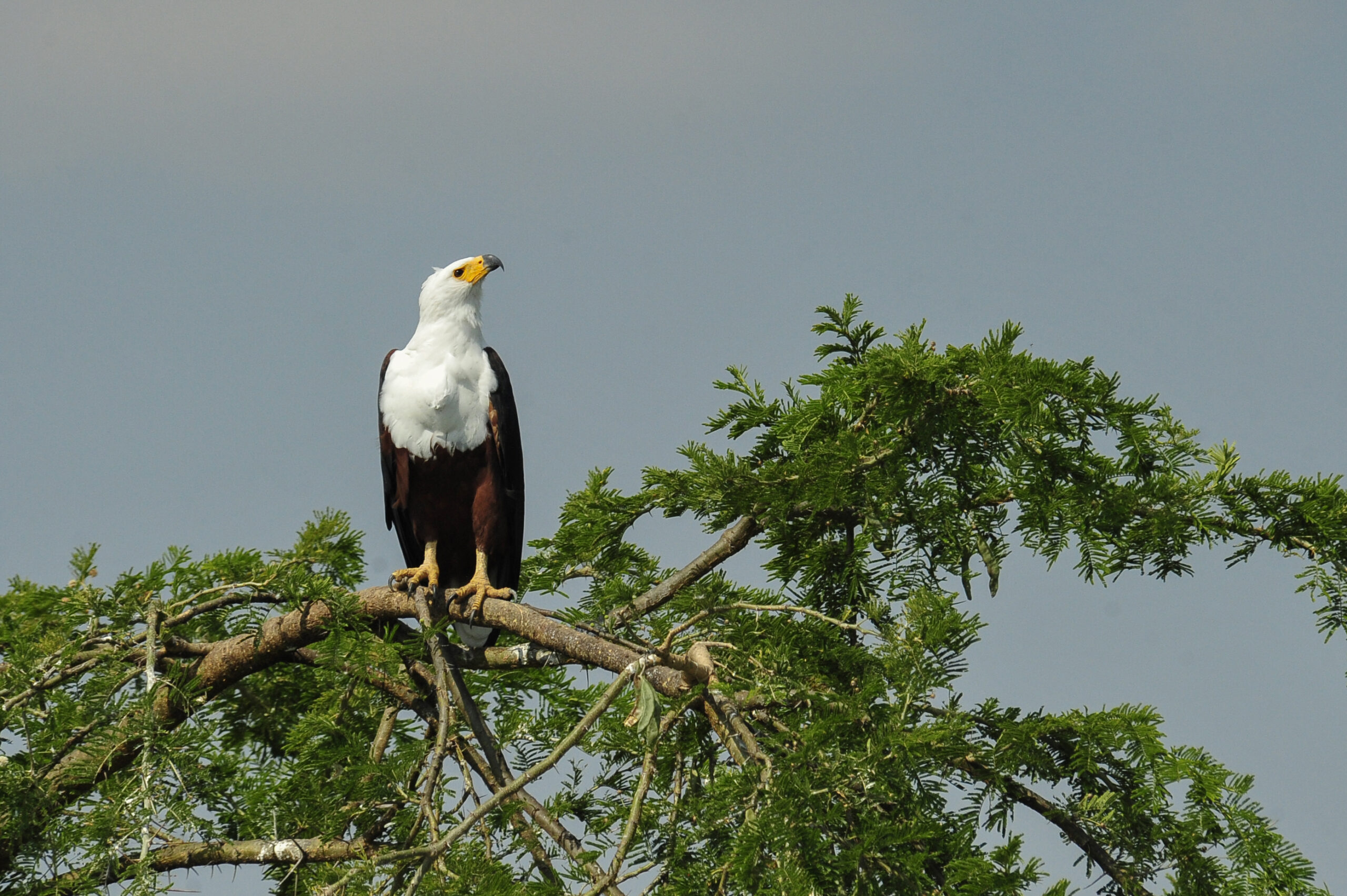 An African fish eagle in Uganda. Image by Julie Larsen ©WCS.
For Codina, this finding is striking. “What was quite interesting to see for me is the unexpected[ly] large role of birds and small mammals, despite their small sizes, in the energy flow across ecosystems,“ he said, “or how the key animals change from one type of ecosystem [forest] to another [drylands].”
A method that relies solely on changes in animal abundance will not faithfully capture ecosystem changes, as it assigns equal weight to all species. “In reality, some species disproportionately affect ecosystem function owing to their population densities, body sizes, dietary preferences, rates of food consumption and features,” the paper notes.
Innovative as it is, ecological power alone may not capture all the ways ecosystems have changed in response to human-caused impacts.
“In particular, energy flow needs to remain coupled with consideration of the number of species contributing to energy flow to avoid wrongly labelling the persistence of a few generalist species as ecological intactness,” the paper said.
Analyzing ecological processes this way is also a data-heavy exercise. Codina described the approach as “really data demanding,” adding that the data on current and historical abundances of wild animals rely on models and estimates. “Solid as they are, of course, they will have some errors,” he said.
Because calculating energy flows isn’t just about how much food animals eat, but the rates at which they metabolize the food, Codina raised the possibility that metabolic efficiency could have changed in wild animals living on lands impacted by humans, a factor the study didn’t account for.
“Any large study such as this one rests on many assumptions, combines many datasets, and therefore includes a substantial amount of uncertainty,” Loft said, adding “[it] may not be able to usefully guide action within a specific ecosystem.”
However, such analysis can shed light on the “big picture changes to the world’s biodiversity and its ecosystems,” Loft said.
Codina agreed that these kinds of results can help shape conservation policy. They “can help when choosing which species to reintroduce first in restoration programs, or which places or species to prioritize in conservation,” he said.
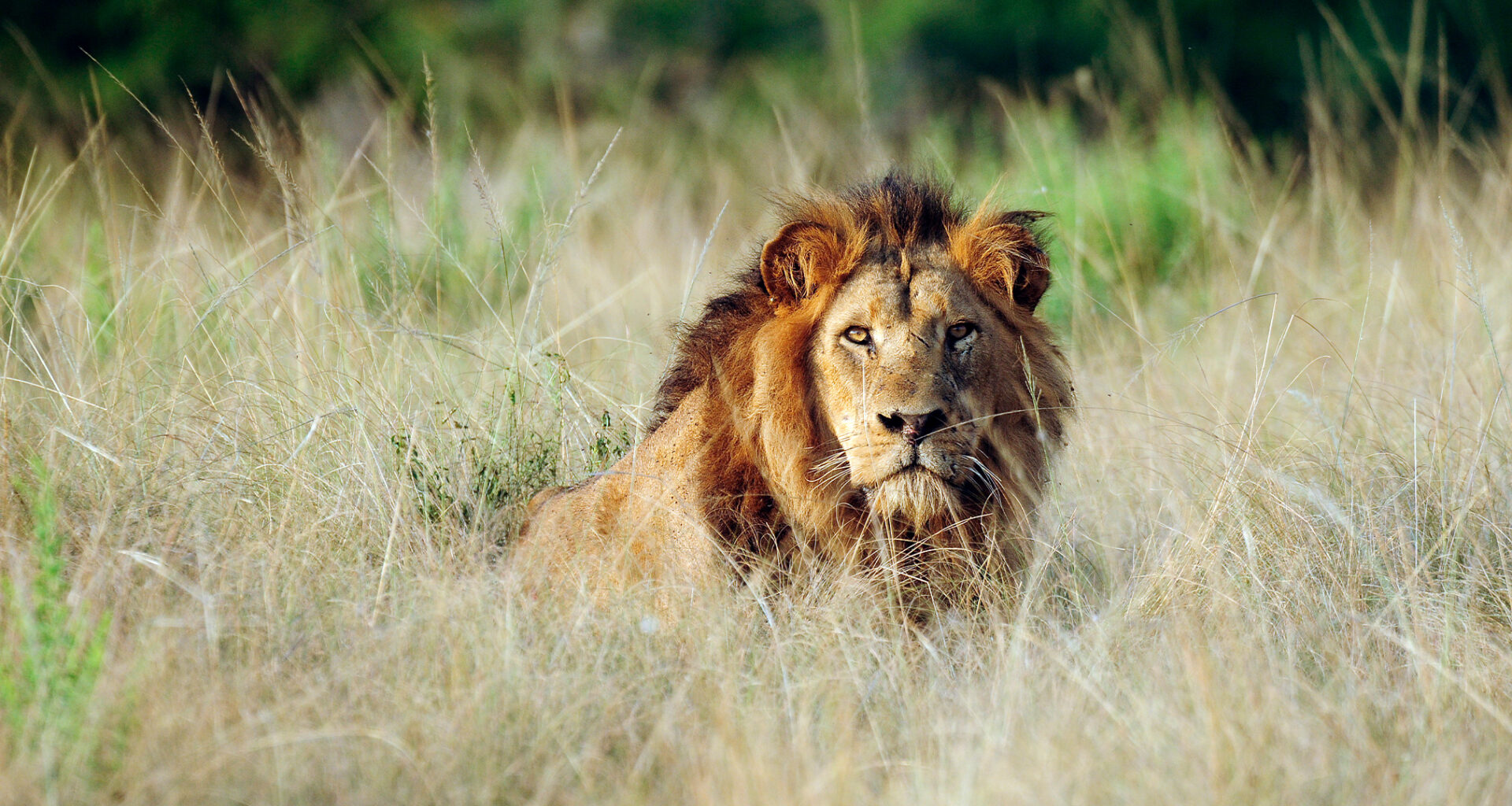
Banner image: An African lion in Uganda. Image by Julie Larsen ©WCS.
Citations:
Loft, T., Oliveras Menor, I., Stevens, N., Beyer, R., Clements, H. S., Santini, L., … Malhi, Y. (2025). Energy flows reveal declining ecosystem functions by animals across Africa. Nature. doi:10.1038/s41586-025-09660-1
Foden, W. (2025). What changing energy flows reveal about Africa’s ecosystems. Nature. doi:10.1038/d41586-025-03215-0
Antunes, A. C., Berti, E., Brose, U., Hirt, M. R., Karger, D. N., O’Connor, L. M., … Gauzens, B. (2024). Linking biodiversity, ecosystem function, and nature’s contributions to people: A macroecological energy flux perspective. Trends in Ecology & Evolution, 39(5), 427-434. doi:10.1016/j.tree.2024.01.004
