
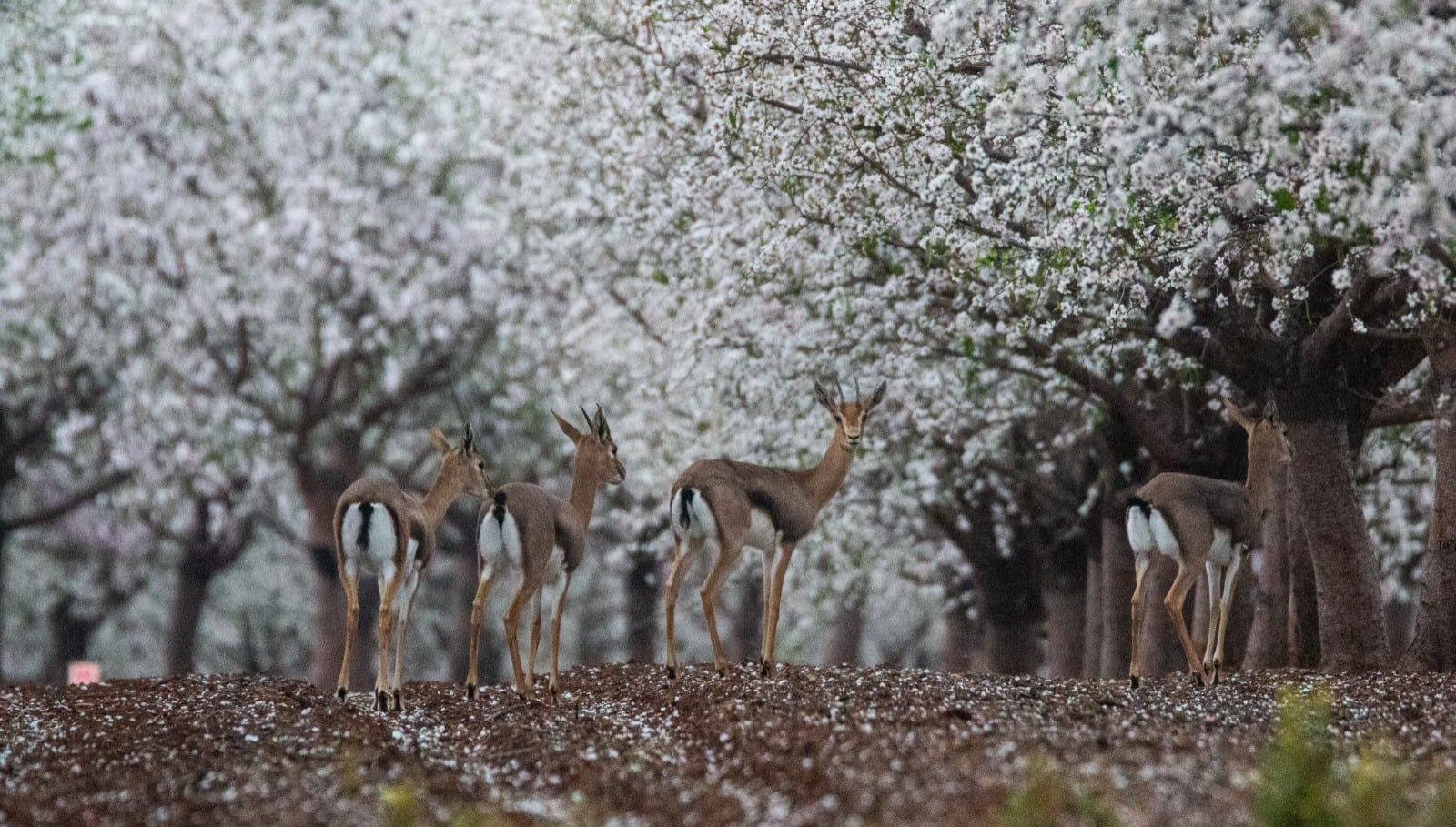
Rises in illegal wildlife smuggling, wildlife poisoning, rabid animals entering Israel, and deaths of hikers who didn’t follow the rules brought bad news for nature in 2025, according to an annual roundup by the Israel Nature and Parks Authority.
But in good news, visitor numbers are back to half of what they were before the October 7, 2023, Hamas attack, which halted all overseas tourism, nearly half a million people (480,000) enjoyed the country’s campsites, up from 260,000 last year, and populations of gazelle, Nubian ibex (mountain goat), turtles, and vultures are holding up (with drops in some areas of the country due to this year’s drought).
On the flip side, the year saw 3,209 criminal cases opened for illegal wildlife smuggling (compared to 2,042 last year and 2,667 in 2023), which included dozens of monkeys and several lion cubs thought by police to have been flown into Israel by drone from Egypt and Jordan.
Fifteen people died while hiking in open spaces, compared with five last year. The most recent death occurred a month ago in Ein Avdat, when a young volunteer living in the desert community of Midreshet Sde Boker before his army conscription went off the marked trails.
“In all these cases, people didn’t take enough water, or didn’t know which way they were going,” said the authority’s general director, Raya Shurki, addressing the organization’s annual media meeting Monday. “We have more than 80 information booths in the run-up to the main holidays. We invest heavily in explaining safe hiking. It’s all about public education.”
Get The Times of Israel’s Daily Edition
by email and never miss our top stories
By signing up, you agree to the terms
But, she went on, more money was needed to maintain open spaces, and visitor management had to be improved.

Israeli hikers enjoy the renewed water flow in the Tsalmon stream, where desalinated seawater is being pumped in to revitalize the stream and help raise the water level of the Sea of Galilee, near the community of Livnim in northern Israel, November 21, 2025. (Michael Giladi/Flash90)
She cited the Tsalmon Stream, recently revived with desalinated water that flows into the Sea of Galilee, as part of the first experiment of its kind in the world to replenish a freshwater lake with processed water. “Someone needs to take control of visitor management,” she said. “Lots of cars arrive, people are going into the water.” The same applied to a section of the Jordan River that flows south from the Sea of Galilee to Kibbutz Beit Zera, which is undergoing rehabilitation, she added.
Vulture poisoning down
Wildlife counts indicate a vulture population of 180 individuals and 41 nests, mostly in southern Israel. The authority invests substantial resources to protect the Eurasian griffon vulture, nature’s sanitation worker, whose greatest threat is carrion contaminated with chemicals or veterinary drugs. This comes about when farmers or ranchers place poisoned carcasses to protect herds from wolves, jackals, and even feral dogs.
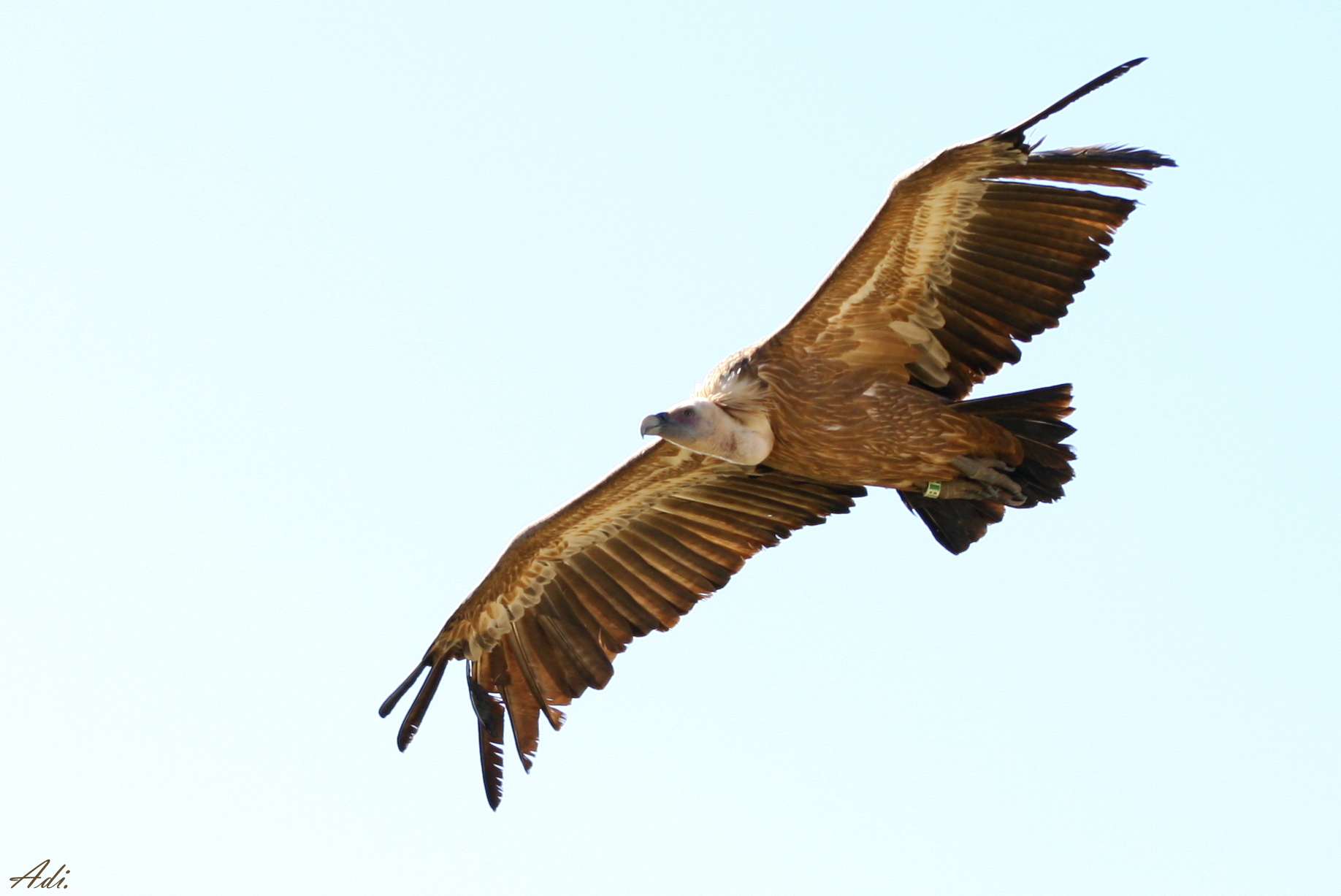
A griffon vulture in flight. (Adi Ashkenazi)
The authority spent NIS 15 million ($4.7 million) this year, out of a multiyear NIS 28 million ($8.7 million) budget from the Environmental Protection Ministry Cleanliness Fund, on vulture protection. It employed four inspectors and four dog handlers for sniffing poison, acquired additional waste trucks and containers to remove animal carcasses, and conducted a major education campaign in Arab schools.
Out of 14 vulture deaths this year, just two were from poisoning, down from 13 poisonings last year.
However, none of this helped 1,000 black kites, a greater spotted eagle, a lapwing, and a gray crow found dead near Moshav Patish in southern Israel, after they had apparently drunk water contaminated by a pesticide. They were among 1,323 poisoned animals this year, up from 238 last year and 215 the year before.
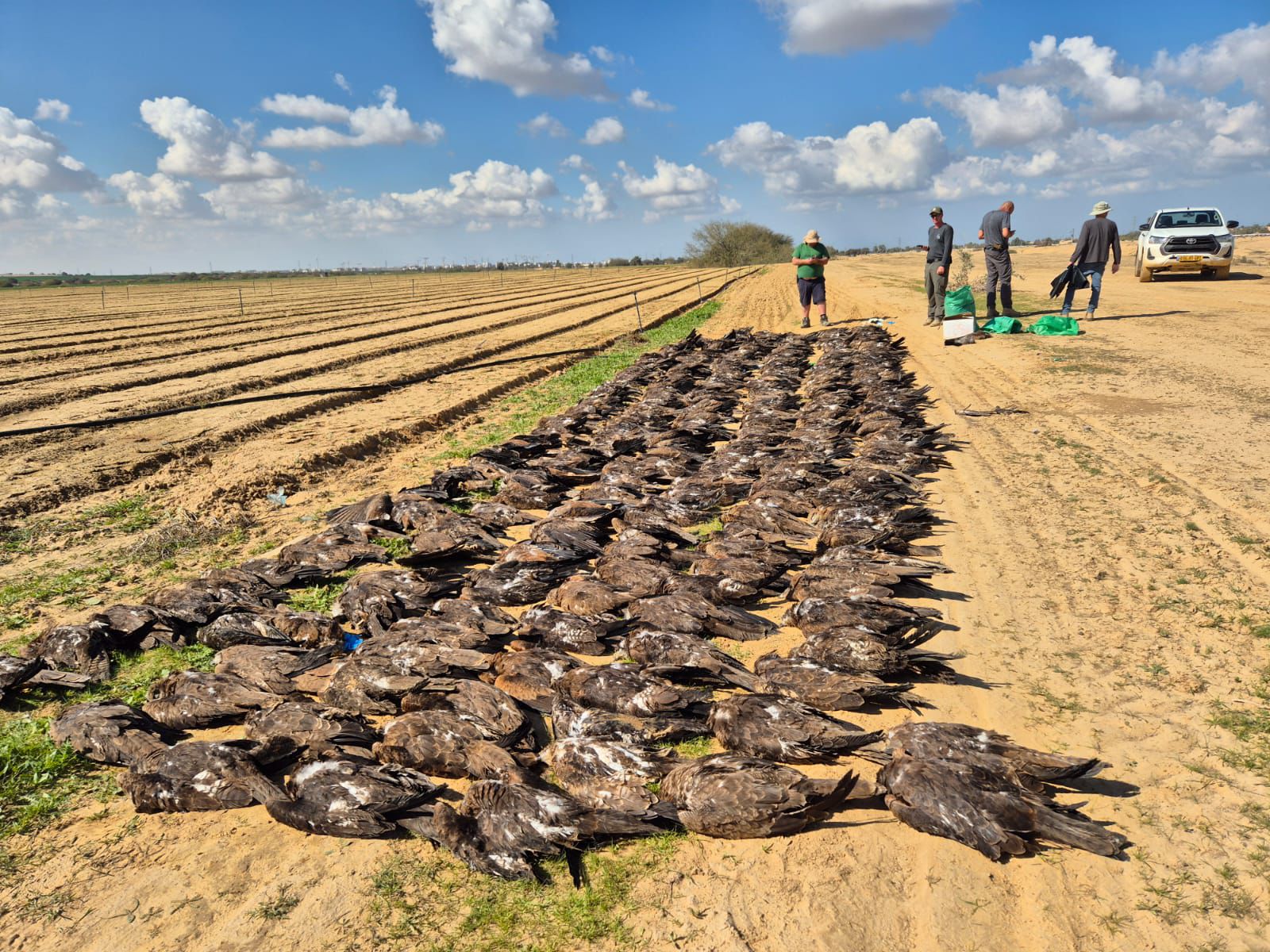
The carcasses of 335 black kites at Moshav Patish in southern Israel, after a mass poisoning event apparently caused by an approved pesticide leaching into puddles caused by irrigation, near Moshav Patish, southern Israel, February 1, 2025. (Israel Nature and Parks Authority)
“We are very worried [about poisoning],” Shurki said, adding that the authority’s chief scientist, Prof. Dror Hawlena, was meeting with Agriculture Ministry officials to push for regulation on safer pesticides.
While better sanitation in Bedouin areas is removing carcasses and food waste from open space, feral dogs, some carrying rabies, are entering Israel through its northern and southern borders, and from the West Bank. To date, there have been 97 reported cases of rabid animals this year, compared with 57 last year. The authority this year distributed some 64,000 oral vaccines to protect animals against rabies.
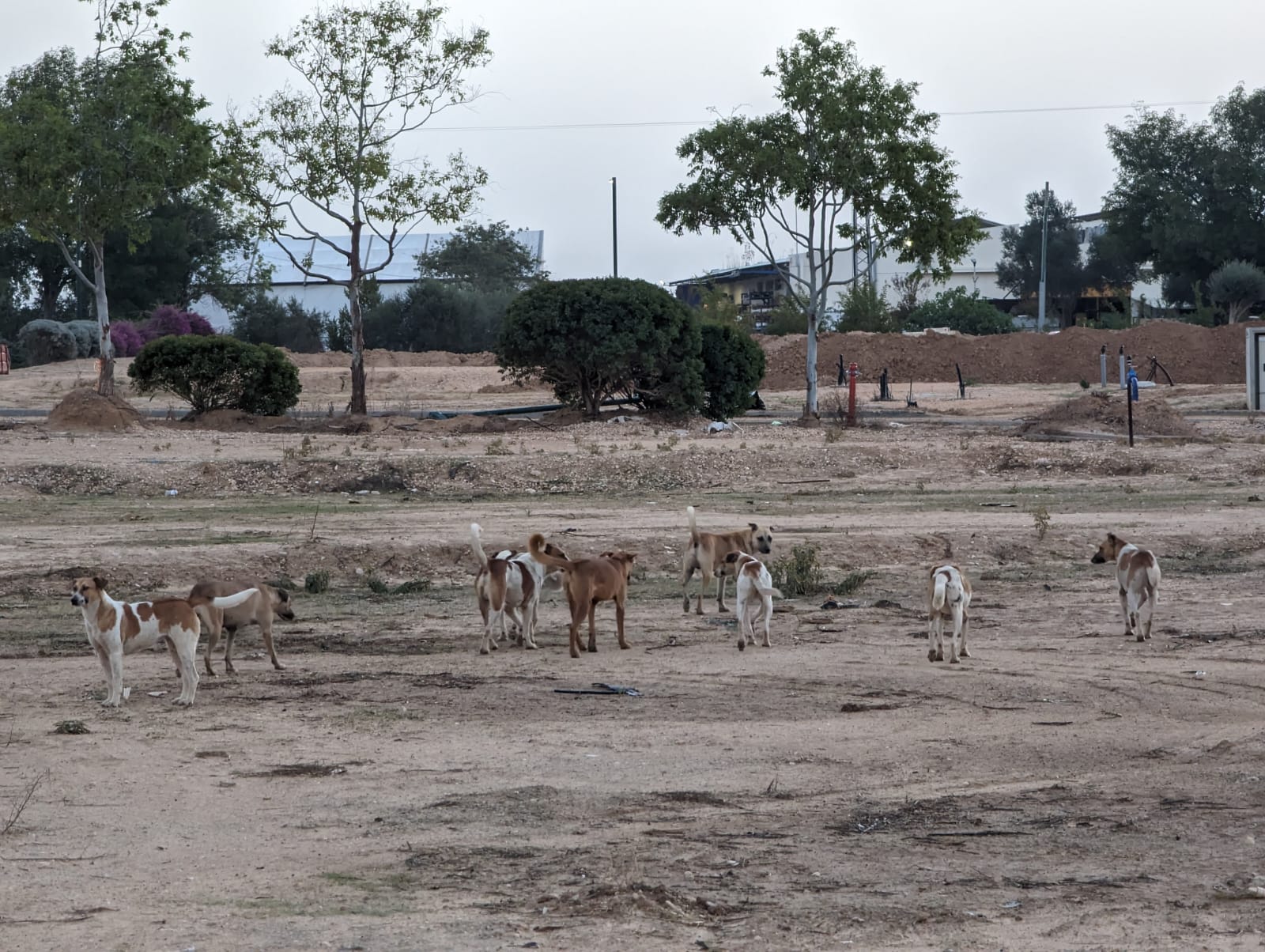
Feral dogs from the Gaza Strip seen near Kibbutz Re’im, southern Israel. (Nimrod Cohen)
You appreciate our journalism

You clearly find our careful reporting valuable, in a time when facts are often distorted and news coverage often lacks context.
Your support is essential to continue our work. We want to continue delivering the professional journalism you value, even as the demands on our newsroom have grown dramatically since October 7.
So today, please consider joining our reader support group, The Times of Israel Community. For as little as $6 a month you’ll become our partners while enjoying The Times of Israel AD-FREE, as well as accessing exclusive content available only to Times of Israel Community members.
Thank you,
David Horovitz, Founding Editor of The Times of Israel