
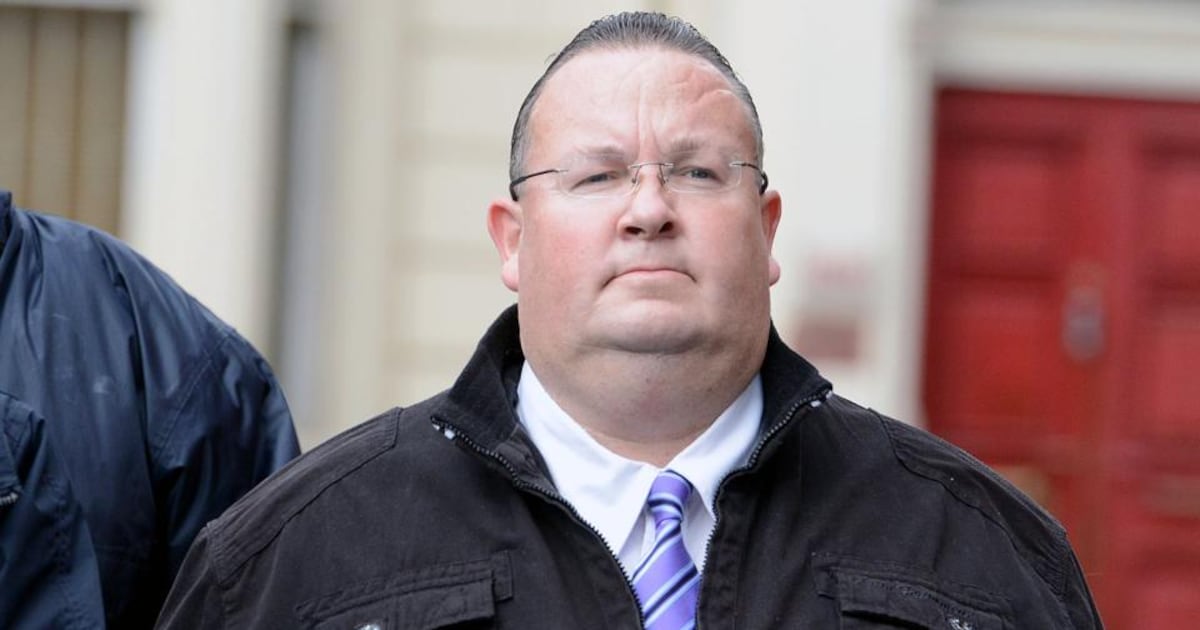
The Central Bank of Ireland has barred former RSA Insurance Ireland chief executive Philip Smith from holding a senior financial role for 13 years but decided not to impose a fine, for fear that it could push him into bankruptcy.
The regulator said that Mr Smith’s participation in regulatory breaches by RSA Ireland merited a financial penalty of €120,000.
“However, as part of the settlement process, Mr Smith submitted sworn information detailing his financial circumstances,” the Central Bank said in a statement on Friday, after a settlement was reached with the former insurance chief.
[ Central Bank to conduct inquiry into RSA Ireland ex-chief Philip SmithOpens in new window ]
“Following a thorough analysis of this information, the Central Bank determined that Mr Smith’s financial circumstances are such that the Central Bank cannot impose a monetary penalty.”
The regulator highlighted that it cannot impose a fine that would be likely to make a person bankrupt.
UK-based RSA Insurance Group suspended Mr Smith and two other senior individuals in early November 2013 as it investigated how the Irish unit timed the setting aside of reserves to cover insurance claims and whether it had booked premiums from customers earlier than it should have.
The company was found by a subsequent Central Bank investigation to have not set aside enough money – or under-reserved – for a series of large loss claims. This artificially inflated its profits.
 Why are apartments in Ireland so much more expensive to build than houses?
The latest report from the Society of Chartered Surveyors Ireland shows that only the top 20 per cent of earners can afford to rent an average apartment built in Ireland in 2025, while just the top 40 per cent of earners can afford to buy one.Paul Mitchell, a chartered quantity surveyor and one of the authors of the Real Costs of New Apartment Delivery report, joins host Ciarán Hancock and Cliff Taylor of the Irish Times to drill down into the main findings of the report.And despite the numerous Government interventions, the cost of building apartments has soared in recent years, but Paul Mitchell is adamant that this report is actually a good news story.Produced by John with JJ Vernon on sound.
Mr Smith settled a legal dispute with RSA in January 2016, after the insurer appealed an earlier Employment Appeals Tribunal ruling that he be awarded €1.25 million relating to how his exit from the company was handled.
The Central Bank fined RSA Insurance Ireland €3.5 million in late 2018 for regulatory breaches relating to the accounting issues.
RSA Insurance in Ireland rebranded in October to Intact Insurance as part of a rebranding of the wider RSA Insurance Group by its Canadian owners. Canada’s Intact Financial Corporation and Danish insurer Tryg took over the group in 2021 and split the operations. Intact took on the group’s UK, Irish and Canadian businesses and certain other international units.
The Irish Times reported in early 2023 that the Central Bank was setting up a public inquiry into suspected regulatory breaches by Mr Smith.
A number of case hearings have since been held in private the inquiry panel, chaired by retired High Court judge Mr Justice Iarfhlaith O’Neill.
The settlement agreement announced on Friday averted public hearings in relation to the case.
Mr Smith is currently general manager of Cricket Leinster, a provincial governing body for cricket in Ireland.
The Dublin-based insurer’s UK parent injected €423 million of cash between 2013 and 2015 into its Irish subsidiary, which was once the largest general insurer in the country. The funds were used to fill a hole in the Irish unit’s balance sheet and shore up its finances after the extent of under-reserving became known.
The Central Bank enforcement investigation into Mr Smith found that the executive “frequently did not approve the recommended amounts” that an RSA Ireland claims handler said should be set aside for certain large claims.
One case involved €20,001 being set aside to cover a serious motor accident, when the claims handler had recommended that €2.7 million be held in reserve, the regulator said.
“As a result, over an extended period, the claim reserve estimates recorded for certain large loss claims were significantly lower than the recommended claim reserve estimates. Further, several large loss claims remained at an initial standard reserve estimate despite Mr Smith being aware that the potential liability far exceeded this amount.
“The actions of directors and senior executives shape the conduct and operating culture of the firms they lead – none more so than the CEO,” said Colm Kincaid, a deputy governor with the Central Bank.