
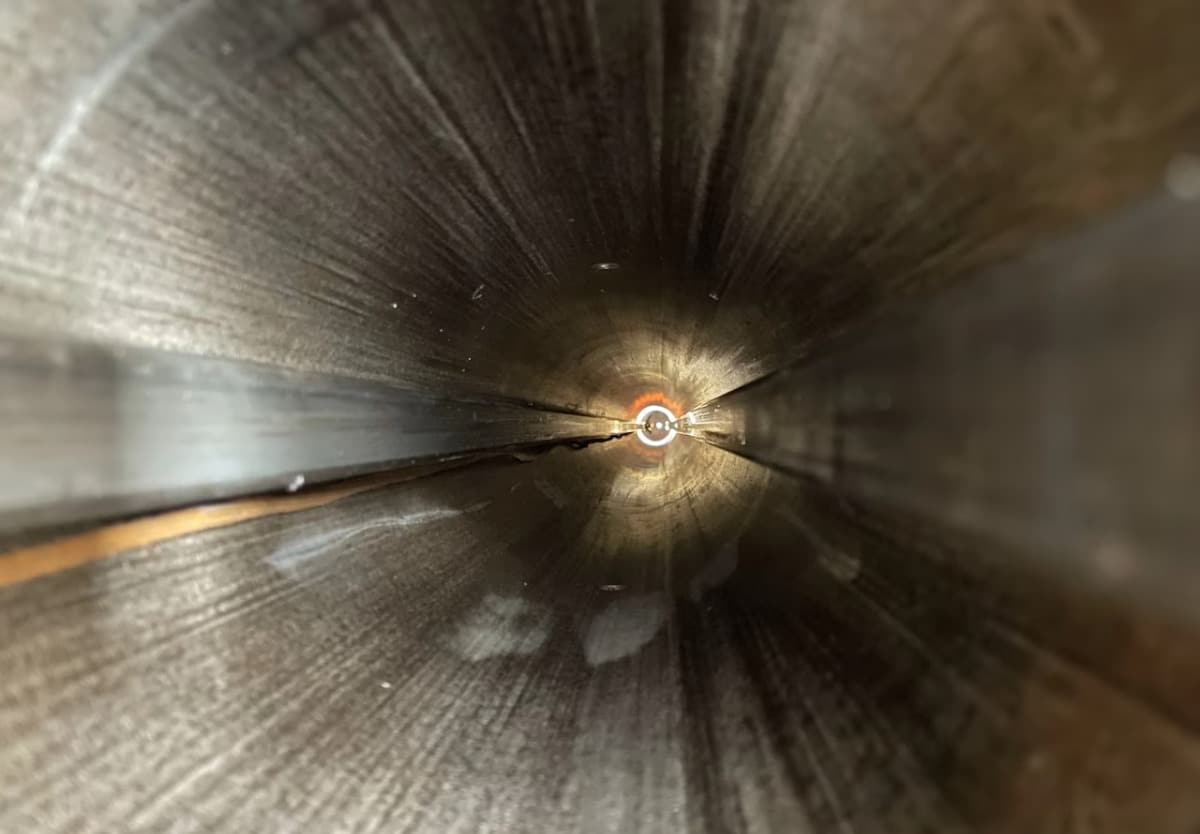
The American company Longshot is turning science fiction into engineering reality. Its plan? To build a gigantic cannon capable of blasting satellites straight into orbit — no rockets required. Here’s how this wild invention works.
Why use a cannon to reach space? According to Longshot, it’s all about cutting costs. Traditional rockets are expensive — around $3,000 per kilogram of payload — while a cannon-based system could do the job for just $10 per kilo. It sounds crazy, but the idea isn’t entirely new. Cannons have hurled projectiles across battlefields for centuries; now, engineers are trying to send them beyond the atmosphere.
To make that possible, Longshot’s cannon needs to be enormous — more than 10 kilometers long — and powerful enough to fire at Mach 23. The longer the barrel, the less stress on the payload and the smoother the acceleration. Every time the barrel length doubles, the g-forces are halved, meaning less heat and fewer structural problems.
From Jules Verne to Modern Science
The concept isn’t far from Jules Verne’s 1865 novel From the Earth to the Moon, where a massive cannon launched three explorers toward the lunar surface. Verne’s only oversight? Human bodies can’t withstand that kind of acceleration.
In real life, the idea resurfaced in the 1960s with the HARP (High Altitude Research Project), a joint Canadian-American military effort. The HARP team fused naval gun barrels into a 40-meter tube and managed to fire a 180-kilogram projectile — the Martlet 2 — to an altitude of 180 kilometers, crossing the Kármán line that marks the start of space.
It wasn’t enough to achieve orbit since the shot lacked horizontal velocity. At its peak, the projectile hit Mach 6 — impressive, but nowhere near the Mach 23 that Longshot wants. At that speed, air becomes plasma, and a projectile’s surface can heat to 1,650 degrees Celsius (over 3,000°F).
At the beginning of this video, Mike Grace, the astonishing head of Longshot, makes this strange observation: if you want to do something in aerospace engineering, you have to find a project that an engineer from Nazi Germany worked on, and appropriate it. © Relentless
How to Fire at the Edge of Space
To survive such speeds, Longshot’s engineers designed a special protective shell. For instance, a 454-kilogram payload would be enclosed in a 1,360-kilogram casing that burns away during ascent, reducing weight and maintaining the necessary orbital speed.
The projectile itself looks like a futuristic bullet — rounded at the front to hold the payload and flattened in back for stability. Instead of gunpowder, Longshot uses compressed air for propulsion, and future versions may run on hydrogen.
To minimize drag, the front of the barrel is vacuum-sealed before launch. Compressed air then strikes the projectile’s flat rear fins, propelling it forward. This “impact thrust” happens multiple times along the cannon’s length, stacking velocity with each burst.
The company has already built a working 18-meter prototype with three secondary boosters. It can launch a 15-centimeter projectile at Mach 4.2, and over 100 successful tests have been conducted so far.
A Giant Leap — or Just a Long Shot?
The next step: scaling up to a 36.6-meter version before eventually constructing the ultimate 40-kilometer cannon with a 9-meter barrel diameter. It’s an audacious plan that borders on the unbelievable — but Longshot’s CEO insists it can be done.
Even if it never becomes a practical space launch system, the military applications are obvious. Whether it’s a step toward cheaper access to orbit or a future defense project, Longshot’s vision proves that sometimes, the biggest ideas really do start with a bang.

Sylvain Biget
Journalist
From journalism to tech expertise
Sylvain Biget is a journalist driven by a fascination for technological progress and the digital world’s impact on society. A graduate of the École Supérieure de Journalisme de Paris, he quickly steered his career toward media outlets specializing in high-tech. Holder of a private-pilot licence and certified professional drone operator, he blends his passion for aviation with deep expertise in tech reporting.
A key member of Futura’s editorial team
As a technology journalist and editor at Futura, Sylvain covers a wide spectrum of topics—cybersecurity, the rise of electric vehicles, drones, space science and emerging technologies. Every day he strives to keep Futura’s readers up to date on current tech developments and to explore the many facets of tomorrow’s world. His keen interest in the advent of artificial intelligence enables him to cast a distinctive light on the challenges of this technological revolution.