
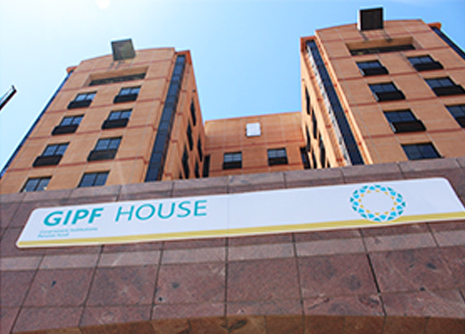
The Government Institutions Pension Fund (GIPF) has confirmed that nearly N$1.5 billion in its investments have lost value since 2008 – including the N$1 billion reported by The Namibian in November.
Documents obtained in recent weeks show that the fund’s board of trustees was briefed last year that losses were approaching N$618 million at the time, with some investments written down to zero.
GIPF corporate affairs executive Edwin Tjiramba has confirmed the amount of N$1.5 billion.
“The cumulative impairment (potential loss) from March 2008 to March 2025 is about N$1.5 billion. We must, however, also see this in the context of the GIPF total asset portfolio,” he says.
An impairment involves a loss in the value of an asset due to poor performance, market changes, or damage.
The fund’s total asset amount stood at N$35 billion as at 31 March 2008 and has grown to N$182.1 billion by 31 March this year.
Tjiramba this week said there is a 416% increase in asset growth net of the cumulative loss of N$1.5 billion in value over the same period.
“While the aim is not to lose a single dollar, the reality is that when investing, impairments do occur from time to time, and the quantum of such impairments largely mirrors the size of the investment portfolio,” he said.
EARLY SIGNS
A board resolution adopted on 26 September 2024, which The Namibian has seen, shows that the fund recorded a total loss in value of N$618 million in the 2023/24 financial year alone.
According to the report, NamPro Fund I and II had a combined impairment of about N$44 million. Namibia Mid-Cap Fund was recorded to have an impairment of N$37.5 million.
Meanwhile, VPB Growth’s impairment was N$7.6 million, and Allegrow recorded a N$18 million value loss, but the biggest write-down was South Suez Africa Fund with N$49 million.
The report shows that of the total loss in value in 2023/24 of N$12.6 million was completely written off, with funds involved being valued at zero, meaning that money is gone forever – unless the funds start performing again.
This is from Kongalend Renewable Energy Fund Trust, previously valued at N$6.7 million, and the Ariya Bridge Capital Trust Fund, valued at N$5.9 million.
Earlier this month, The Namibian reported that the fund is at risk of losing around N$1 billion linked to a company called Signal Structure Finance Fund, which was managed by South African based TriAlpha Investment Management as part of the GIPF’s offshore portfolio.
A 12-page report presented to the GIPF board of trustees on 24 September shows Namibia’s biggest pension fund has more than nine poorly performing investments, including some losing value, struggling to operate, or being entangled in legal disputes.
‘NOT ALL DOOM’
The pension fund said a write-down does not always mean the money is permanently lost.
Tjiramba said the Kongalend Renewable Energy Fund Trust (Kreft) was impaired because it struggled to recover loans from the small and medium enterprises (SMEs) and households it funded.
“Kreft only returned N$50 million to the GIPF. The remaining loans were classified as doubtful, hence the balance was written down to zero,” he said.
Tjiramba said the Ariya Bridge Capital Trust Fund investment value loss was later reversed.
“While an impairment was raised for Ariya during the period ending 31 March 2024, the project was completed successfully, and the full repayment of the capital amount plus interest was made to the GIPF. The impairment was fully reversed during the period ending 31 March 2025,” he said.
Tjiramba said fund managers and internal staff can be held accountable where negligence, fraud or a breach of mandate is found.
He said the impairment related to South Suez Africa Funds I and II was N$17 million, not N$50 million, and this amount was also reversed in the following year because the investments improved.
‘SYSTEM FAILURE’
Labour expert Herbert Jauch says recurring investment losses point to deeper systemic issues rather than isolated investment failures.
He says the GIPF holds significant power in shaping the direction of investments in the country.
“The GIPF is not only the largest fund in the country; it also has the economic muscle to steer investments. The fund must weigh two key issues: its long-term sustainability and the benefits to members. Pensioners rely on the fund,” he says.
Jauch criticises the growing trend of investment vehicles based outside Namibia while domestic savings continue to leave the country.
“It is quite absurd if we establish investment promotion structures outside Namibia at high cost while workers’ savings are invested elsewhere,” he says.
Jauch says investment decisions should be made with strict consideration to avoid repeated write-offs.
“The bulk of investments should be inside Namibia,” he says.
Jauch says pension funds form the largest pool of domestic savings, and if used correctly can help drive long-term economic development without jeopardising contributors’ money.
He says new impairments raise concerns about whether lessons from the Development Capital Portfolio (DCP) era have been fully applied.
LOSS OF TRUST
Teacher’s Union of Namibia (TUN) secretary general Mahongora Kavihuha says the fund’s repeated losses have eroded trust among fund members.
“The board and management disregard the members and the public when giving reports,” he says.
He questions the silence of unions represented on the fund’s board.
“The game between the GIPF and the prime minister must come to an end,” Kavihuha says.
He says the fund needs to be subjected to greater public accountability.
“The GIPF should start having annual general meetings and they need to be mandatory. We need to elect the board of trustees,” he says.
Kavihuha also criticises the oversight of the Namibia Financial Institutions Supervisory Authority (Namfisa) of the pension fund.
“It is time for the parliament and Namfisa to call out the GIPF. This thing of regulators playing soft hands with government institutions must end simply because the GIPF is backed by the government. Namfisa too must pull up its socks,” he says.
He says the latest impairments reinforce the need for elected trustees, compulsory public reporting, and strict monitoring of all unlisted investments.
Business Financial Solutions (BFS), which manages the NamPro Funds, says it is not aware of the impairments recorded by the GIPF, and maintains that its own reporting to the pension fund has been consistent and comprehensive.
BFS chief investment officer and acting managing director Christina von Doderer says the NamPro Funds’ performance must be viewed within the economic conditions faced by small businesses after the pandemic.
“The financial year ending on 31 March 2024 was still reflecting the aftermath of Covid-19. Our provisioning for expected credit loss is conservative and guided by International Financial Reporting Standards, so while certain facilities may be impaired in our books, these are book rather than realised losses.
“Had it not been for the accounting provisions, NamPro Fund II would have realised a surplus.”
She says the funds have shown improvement.
“The performance has turned around. We have not had any bad debts over the past two years and we just declared a dividend of N$25.5 million to the investors of NamPro Fund II for the 2024/25 financial year.”
Von Doderer says BFS is unaware of any governance or performance monitoring concerns and that the fund has been kept fully informed.
“We consider these unfounded and unsubstantiated. All our investors receive monthly management accounts, quarterly updates and annual general meetings,” Von Doderer says.
The new write-offs come as the GIPF continues to face questions over several legacy projects that stalled or delivered below promised returns.
NAMFISA
Namfisa chief executive Kenneth Matomola says the regulator cannot disclose fund-specific information because the Namfisa Act requires confidentiality.
He says any details on the affected investments must come from the GIPF.
Matomola says the overall regulatory framework for unlisted investments is adequate.
“Unlisted investment managers are required to be registered with Namfisa before they can conduct unlisted investment management activities. They must meet fit and proper requirements and submit annual audited financial statements and bi-annual returns,” he says.
He says Namfisa conducts on-site inspections to check whether fund managers are complying with the law.
Whether the regulator will launch a forensic investigation into the DCP legacy investments or the new impairments falls under the GIPF’s internal operations, Matomola says.
“Please consult the GIPF. These DCP mandates were specifically dealt with internally by GIPF. Namfisa does not have a mandate on operational matters,” he says.
In an age of information overload, Sunrise is The Namibian’s morning briefing, delivered at 6h00 from Monday to Friday. It offers a curated rundown of the most important stories from the past 24 hours – occasionally with a light, witty touch.
It’s an essential way to stay informed. Subscribe and join our newsletter community.

The Namibian uses AI tools to assist with improved quality, accuracy and efficiency,
while
maintaining editorial oversight and journalistic integrity.
Stay informed with The Namibian – your source for credible journalism. Get in-depth reporting and opinions for
only N$85 a month. Invest in journalism, invest in democracy –
Subscribe Now!