
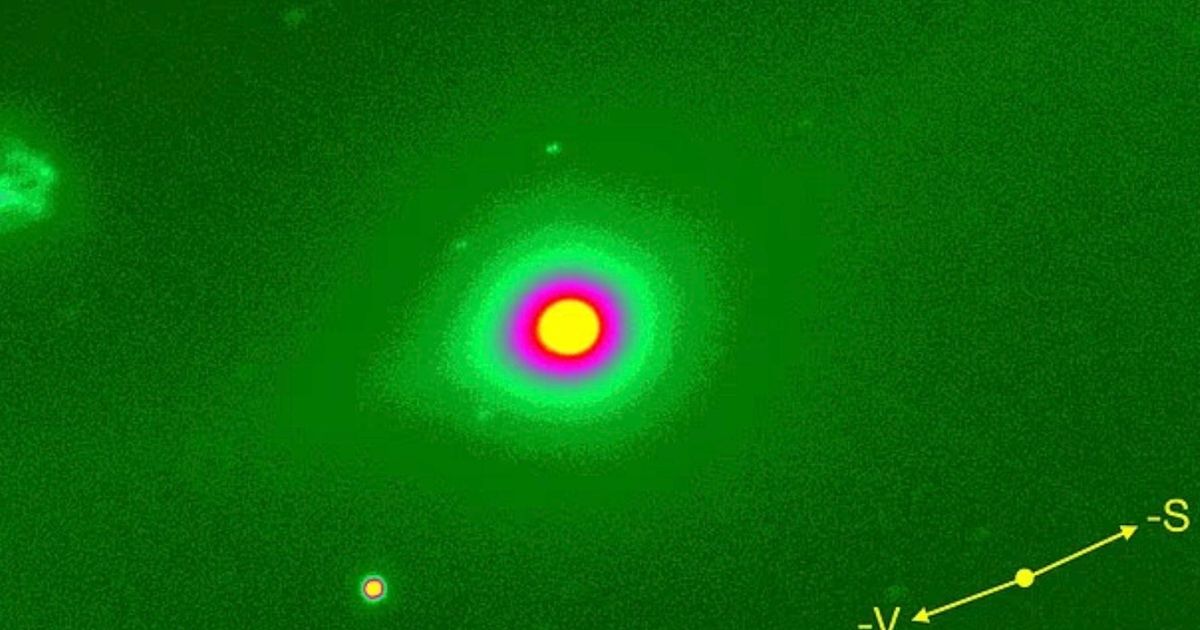
The catalyst for the sudden global focus is the object’s erratic behaviour, with scientists documenting rigid, physics-defying anti-tail jets and unexplained pulsations
11:03, 04 Dec 2025Updated 14:56, 05 Dec 2025
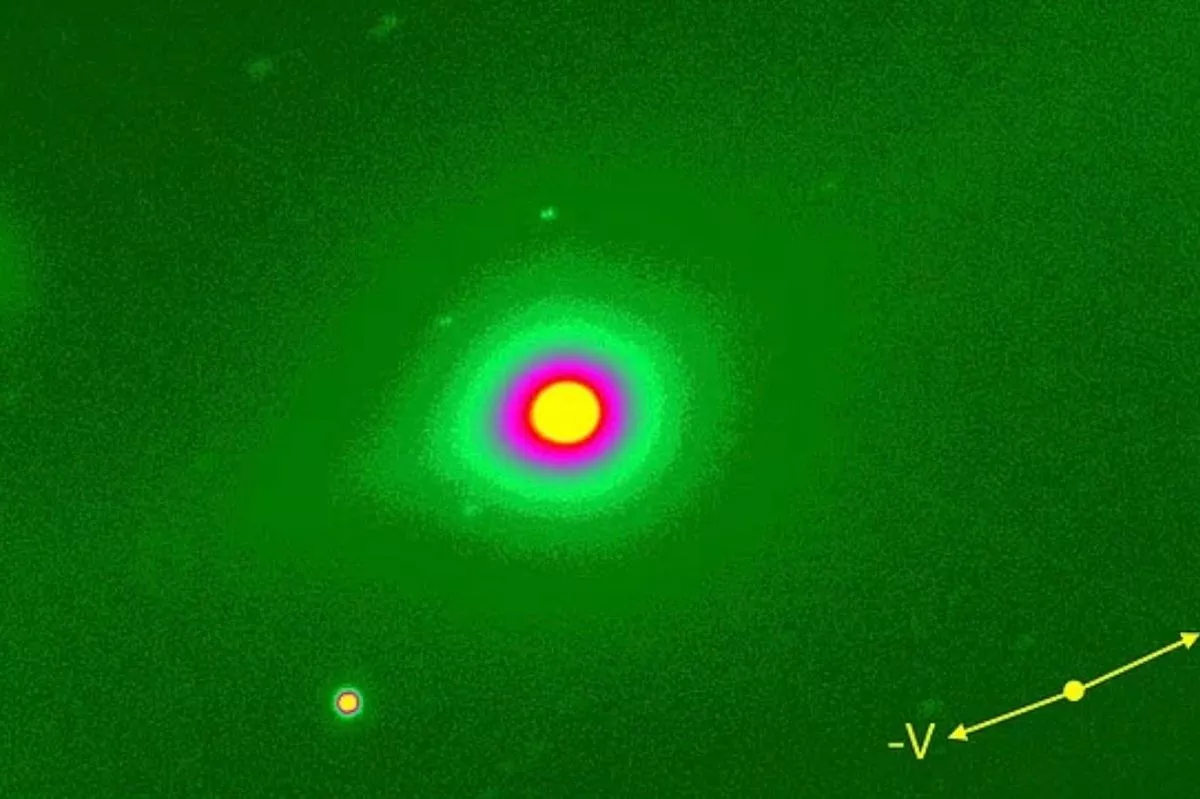 Chaos, panic and everything in between(Image: David Jewitt and Jane Luu/The Astroner’s Telegram)
A wave of large-scale planetary defence drills has been carried out across the world in recent weeks, prompting speculation that governments are preparing for the unpredictable behaviour of the interstellar object known as 3I/ATLAS.
Although each exercise has been presented as routine, their timing and scale have raised questions among space analysts and defence officials. The European Space Agency initiated the sequence with the activation of its full planetary defence triad, which includes mission control, rapid-response modelling and ground-based observation networks.
The unprecedented three-day simulation was followed by Japan’s accelerated asteroid-impact drill involving civilian, military and commercial satellite operators. Within two days, the US Space Force completed a high-altitude orbital tracking rehearsal that had originally been scheduled for late 2026 but was abruptly moved forward.
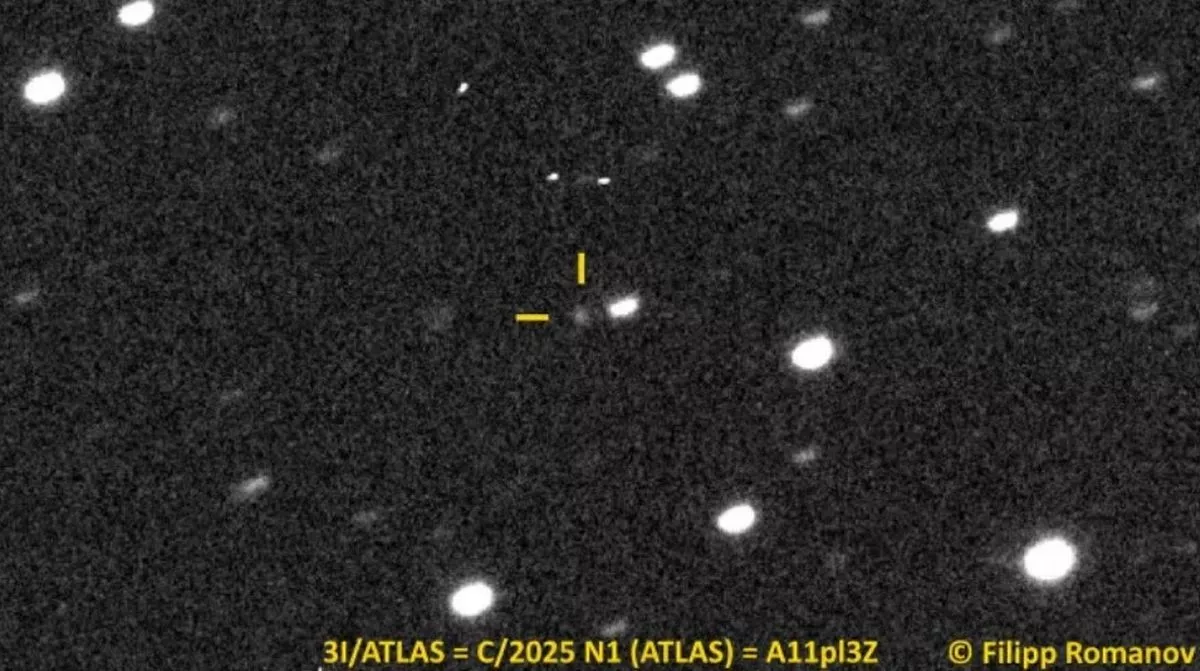 The European Space Agency initiated the sequence(Image: Filipp Romanov/Wikimedia Commons)
Countries that rarely publicise such activities, including Australia, South Korea and Brazil, have also participated in joint exercises.
These drills involved data-sharing systems built to analyse what internal documents describe as “high-velocity non-gravitationally accelerated objects,” a term that appears to reference 3I/ATLAS.
The catalyst for the sudden global focus is the object’s erratic behaviour. Scientists have documented rigid, physics-defying anti-tail jets, unexplained pulsations and a persistent non-gravitational acceleration that does not match natural models.
A new hypothesis by astrophysicist Avi Loeb suggests that the sunward anti-tail could be a swarm of compact objects travelling alongside 3I/ATLAS rather than a gas plume.
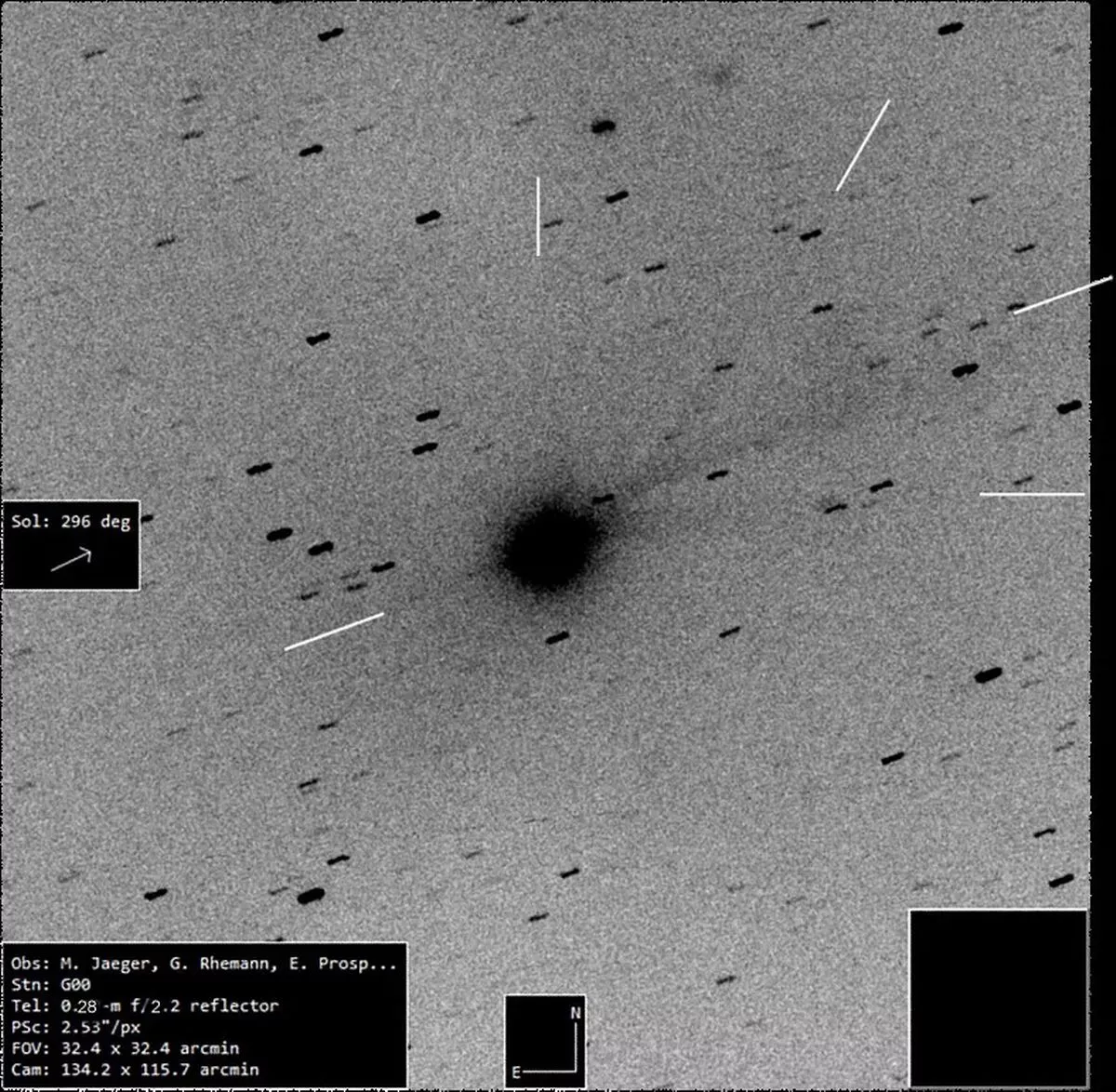 Within two days, the US Space Force completed a high-altitude orbital tracking rehearsal(Image: M. Jäger, G. Rhemann, E. Prosperi)
According to Loeb, if such a swarm exists, it would lag slightly closer to the Sun and remain offset by tens of thousands of kilometres, a pattern consistent with observations since July.
This possibility has major strategic implications. A swarm would shift planetary defence from tracking a single body to monitoring multiple independent objects, each with its own mass and orbital behaviour.
Defence planners view this as a dramatically more complex scenario requiring expanded sensor networks, additional satellites and faster response capability.
Officials note that the situation has provided a rare political opening.
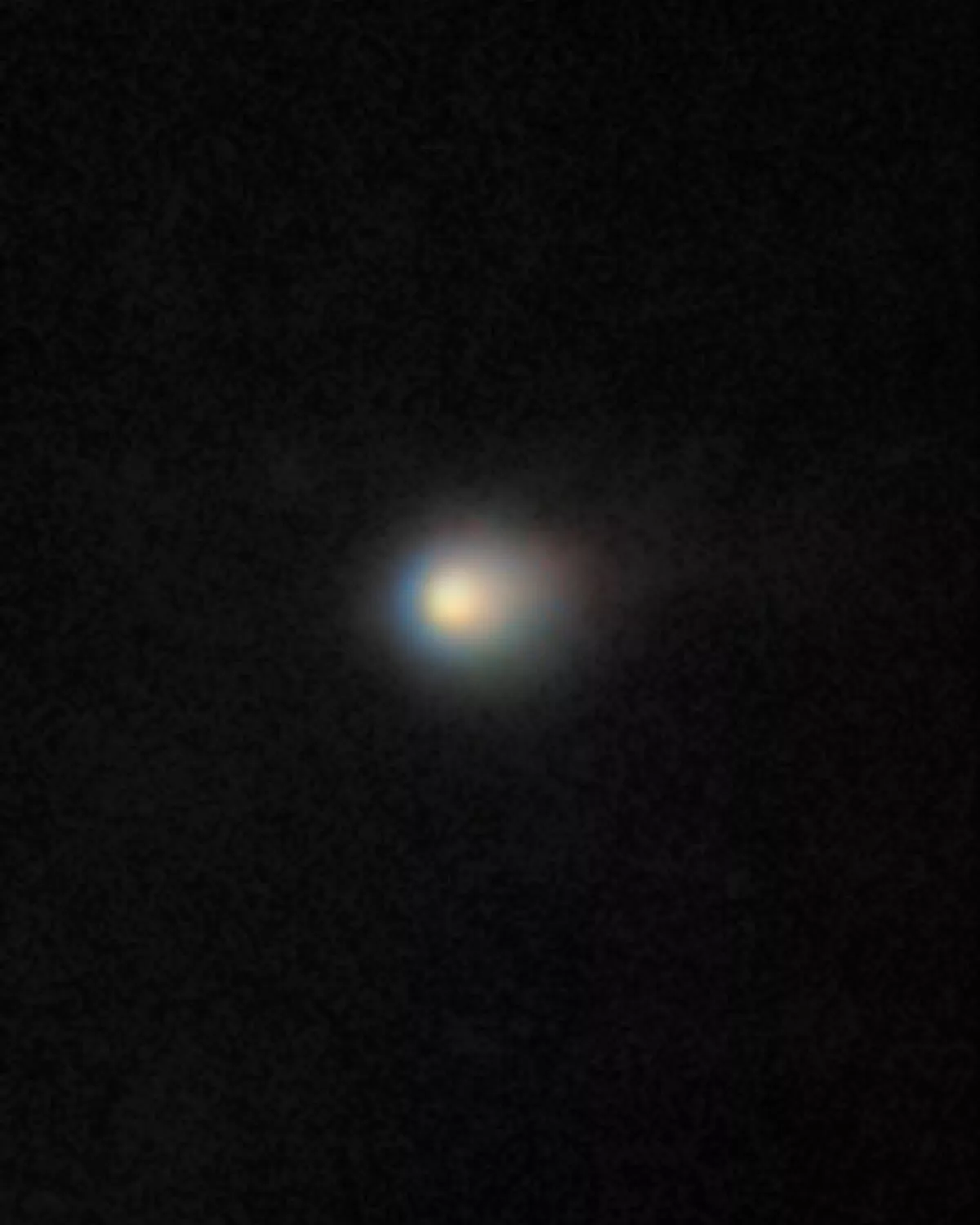 The catalyst for the sudden global focus is the object’s erratic behaviour(Image: NSF NOIRLab/Int.Gemini Ob et al. / SWNS)
Technologies that usually trigger geopolitical concern, including surveillance satellites and deep-space infrared monitors, are now being deployed with minimal resistance from rival nations.
ESA’s €22.1 billion expansion was approved with unusual speed, and US procurement documents show accelerated contracting for advanced tracking platforms.
The International Asteroid Warning Network has also inserted language permitting temporary integration of classified sensor data for the analysis of “non-standard hyperbolic bodies.”
3I/ATLAS continues to defy expectations. It slows and accelerates irregularly, brightens unpredictably and rotates in ways inconsistent with known natural objects.
As its December 19 approach nears, governments appear to be treating the anomaly as an opportunity to advance global planetary defence capacity years ahead of schedule.
For the latest breaking news and stories from across the globe from the Daily Star, sign up for our newsletters .