
US companies are becoming increasingly hooked on artificial intelligence spending, and questions are growing whether this investment boom is hiding a weaker economic picture.
Despite a contraction in the first quarter, following President Donald Trump’s sweeping tariff announcement, the US economy has defied slowdown expectations this year, with estimations of 2025 GDP growth ranging between 1.7 per cent and 3 per cent.
While moderate increases in tariffs have partially contributed to these revisions, there is another engine behind US growth this year: AI.
Analysis from global investment firm KKR found that AI-related capex for the four largest hyper-scalers was more than $350 billion this year. UBS said it forecasts global AI capex spending to hit $423 billion in 2025 (up from its previous $375 billion estimate), before eclipsing $500 billion next year.
Tim Bajarin, a technology analyst who has served as a consultant for Apple, IBM, Xerox and Microsoft, said that there’s “cause for concern” as to whether the economic growth is substantive, but dismissed comparisons to the 1990s-era dotcom bubble.
“The fundamentals are strong compared to other hype cycles,” Mr Bajarin said, noting how AI tools such as Gemini and ChatGPT have hundreds of millions of users.
“The AI technology is richer, deeper and more focused.” He added that the billions of dollars being poured into data centres have “lasting value”.
AI in the data
New projections released by the US Federal Reserve showed America’s economy will expand at a 2.3 per cent pace next year, an increase of half a percentage point from its September forecast.
Part of this has been resilient consumer spending, Fed chairman Jerome Powell told reporters last week.
“And, to another degree it is … that AI spending on data centres and related to AI that has been holding up business investment,” he said.
The AI boom has led to strong growth in business equipment investment this year. Investment in equipment and software related to AI is forecast to grow by 9.9 per cent this year, according to the Equipment Leasing and Finance Foundation.
And while tariffs have weighed down exports and imports, Matthew Martin, senior US economist at Oxford Economics, estimated that imports for computers and semiconductors are up between 40 per cent and 50 per cent year-on-year.
“So the fact that imports are still growing there, despite increased tariffs, obviously shows that there’s quite a bit of strength there,” he said.
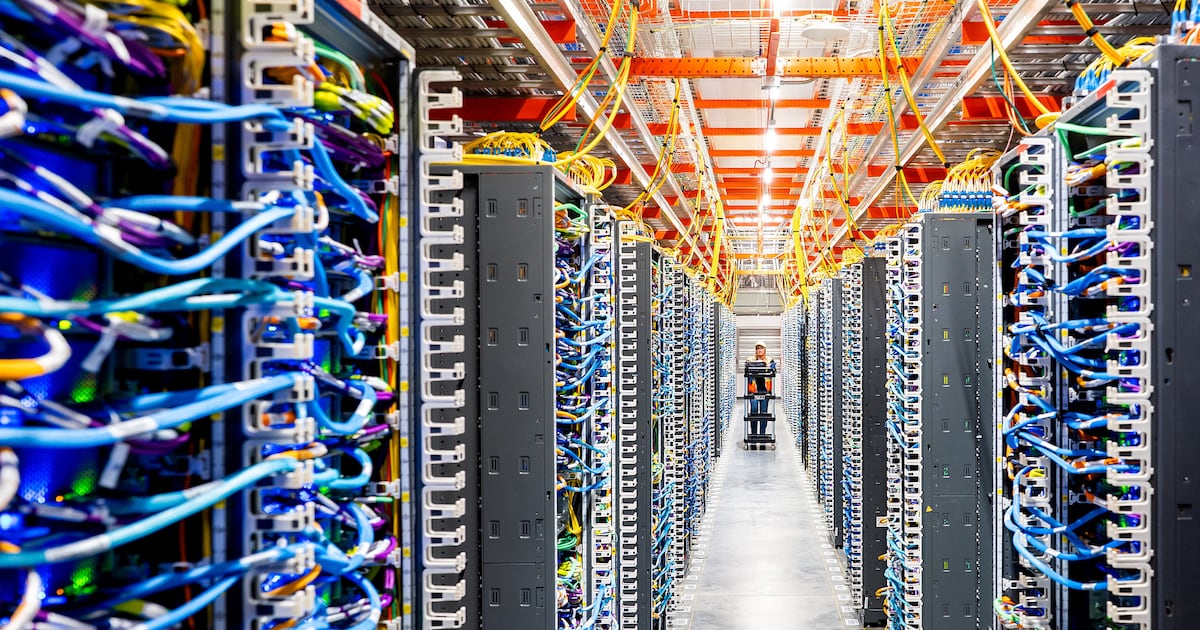
With demand for data centres increasing, concerns are mounting over the rising energy costs for these large-scale infrastructure projects that require huge amounts of energy to function.
The International Energy Agency projects global electricity demand from data centres to more than double over the next five years, with the effects to be most felt in the US and Japan. Those rising energy costs, in turn, ultimately would be passed on to consumers in the form of higher electricity bills, potentially blunting economic growth and constraining spending.
“I think energy is a major constraint to the building of these,” said Sean McDevitt, a partner at global consulting firm Arthur D Little.
“We’re not talking about megawatt data centres any more. These are gigawatt data centres. We’re not talking about buildings … These things look like industrial zones now.”
Natalie Hwang, founding managing partner at Apeira Capital, said she believes energy costs define the AI story rather than weaken it.
“And the next phase of AI will be led by the companies and the regions that can deliver intelligence with the lowest energy footprint,” pointing in particular to the Middle East’s energy abundance.
Record valuations
Concerns around rising energy costs have led to recent market turbulence, as has the future profit of companies relying on AI, testing market resilience that has ridden the investment boom this year.
AI spending has helped US markets overcome April’s tariff blip to continue a remarkable bull run, with all three Wall Street indices closing at record highs on several occasions this year.
The top five companies in the S&P 500 – Nvidia, Apple, Microsoft, Amazon and Alphabet – make up roughly 30 per cent of the tech-heavy index.
The Fed, International Monetary Fund and other financial institutions have characterised these AI valuations as “stretched”, leading to new debate over the potential of a bubble and a possible market correction if productivity gains are not fully realised.
But economists and analysts also argue that, unlike the dot-com bubble three decades ago, the companies at the nexus of the AI investment frenzy are posting profits and have business models.
“If we see a correction next year, I believe it will clarify the investment opportunity in AI infrastructure, rather than weaken it. Because a market reset typically shifts capital from speculation to fundamentals,” Ms Hwang said.
Boom to continue
Hyper-scalers show no signs of slowing down their AI spending.
Alphabet, Amazon, Meta, Microsoft and Oracle have all raised their AI capex guidance, according to their most recent earnings reports. Private companies like Anthropic and OpenAI are also making large investment commitments.
And the increase in demand is expected to have compounding effects on the US economy with spending on construction, technology and energy required to bring those types of facilities online.
“AI is an industrial infrastructure story,” Mr McDevitt said.
The AI spending comes as the US exhibits some stagflationary behaviour, with the world’s largest economy faced with higher inflation and lower job gains.
A US AI pulse survey released by accounting firm EY earlier this month found companies investing in AI are seeing AI-driven productivity gains. And, while some companies are making AI-related layoffs, the survey found most productivity gains are being reinvested to upskill talent and boost resilience.
Mr Martin said productivity gains could potentially weigh on hiring, as companies can now do more with fewer employees, but stronger economic growth could lead to higher job creation elsewhere. At the same time, it could be positive for the inflation outlook because companies can increase employees’ wages without having to raise prices by a large amount.
“I think there’s a lot of uncertainty, but ultimately, the increased productivity would be a very positive for the economy overall,” Mr Martin said.
MATCH INFO
AC Milan v Inter, Sunday, 6pm (UAE), match live on BeIN Sports
Dubai World Cup factbox
Most wins by a trainer: Godolphin’s Saeed bin Suroor(9)
Most wins by a jockey: Jerry Bailey(4)
Most wins by an owner: Godolphin(9)
Most wins by a horse: Godolphin’s Thunder Snow(2)
COMPANY%20PROFILE%20
%3Cp%3EName%3A%20DarDoc%3Cbr%3EBased%3A%20Abu%20Dhabi%3Cbr%3EFounders%3A%20Samer%20Masri%2C%20Keswin%20Suresh%3Cbr%3ESector%3A%20HealthTech%3Cbr%3ETotal%20funding%3A%20%24800%2C000%3Cbr%3EInvestors%3A%20Flat6Labs%2C%20angel%20investors%20%2B%20Incubated%20by%20Hub71%2C%20Abu%20Dhabi’s%20Department%20of%20Health%3Cbr%3ENumber%20of%20employees%3A%2010%3C%2Fp%3E%0A
Red Sparrow
Dir: Francis Lawrence
Starring: Jennifer Lawrence, Joel Egerton, Charlotte Rampling, Jeremy Irons
Three stars
How much do leading UAE’s UK curriculum schools charge for Year 6?
Nord Anglia International School (Dubai) – Dh85,032
Kings School Al Barsha (Dubai) – Dh71,905
Brighton College Abu Dhabi – Dh68,560
Jumeirah English Speaking School (Dubai) – Dh59,728
Gems Wellington International School – Dubai Branch – Dh58,488
The British School Al Khubairat (Abu Dhabi) – Dh54,170
Dubai English Speaking School – Dh51,269
*Annual tuition fees covering the 2024/2025 academic year
RESULT
Bournemouth 0 Southampton 3 (Djenepo (37′, Redmond 45′ 1, 59′)
Man of the match Nathan Redmond (Southampton)
Full Party in the Park line-up
2pm – Andreah
3pm – Supernovas
4.30pm – The Boxtones
5.30pm – Lighthouse Family
7pm – Step On DJs
8pm – Richard Ashcroft
9.30pm – Chris Wright
10pm – Fatboy Slim
11pm – Hollaphonic
Gender pay parity on track in the UAE
The UAE has a good record on gender pay parity, according to Mercer’s Total Remuneration Study.
“In some of the lower levels of jobs women tend to be paid more than men, primarily because men are employed in blue collar jobs and women tend to be employed in white collar jobs which pay better,” said Ted Raffoul, career products leader, Mena at Mercer. “I am yet to see a company in the UAE – particularly when you are looking at a blue chip multinationals or some of the bigger local companies – that actively discriminates when it comes to gender on pay.”
Mr Raffoul said most gender issues are actually due to the cultural class, as the population is dominated by Asian and Arab cultures where men are generally expected to work and earn whereas women are meant to start a family.
“For that reason, we see a different gender gap. There are less women in senior roles because women tend to focus less on this but that’s not due to any companies having a policy penalising women for any reasons – it’s a cultural thing,” he said.
As a result, Mr Raffoul said many companies in the UAE are coming up with benefit package programmes to help working mothers and the career development of women in general.
The specs
Engine: 3.8-litre V6
Power: 295hp at 6,000rpm
Torque: 355Nm at 5,200rpm
Transmission: 8-speed auto
Fuel consumption: 10.7L/100km
Price: Dh179,999-plus
On sale: now
The specs
A4 35 TFSI
Engine: 2.0-litre, four-cylinder
Transmission: seven-speed S-tronic automatic
Power: 150bhp
Torque: 270Nm
Price: Dh150,000 (estimate)
On sale: First Q 2020
A4 S4 TDI
Engine: 3.0-litre V6 turbo diesel
Transmission: eight-speed PDK automatic
Power: 350bhp
Torque: 700Nm
Price: Dh165,000 (estimate)
On sale: First Q 2020
UAE currency: the story behind the money in your pocketsHow to join and use Abu Dhabi’s public libraries
• There are six libraries in Abu Dhabi emirate run by the Department of Culture and Tourism, including one in Al Ain and Al Dhafra.
• Libraries are free to visit and visitors can consult books, use online resources and study there. Most are open from 8am to 8pm on weekdays, closed on Fridays and have variable hours on Saturdays, except for Qasr Al Watan which is open from 10am to 8pm every day.
• In order to borrow books, visitors must join the service by providing a passport photograph, Emirates ID and a refundable deposit of Dh400. Members can borrow five books for three weeks, all of which are renewable up to two times online.
• If users do not wish to pay the fee, they can still use the library’s electronic resources for free by simply registering on the website. Once registered, a username and password is provided, allowing remote access.
• For more information visit the library network’s website.
Read more about the coronavirusCOMPANY%20PROFILE
%3Cp%3E%3Cstrong%3ECompany%3A%20%3C%2Fstrong%3EGrowdash%0D%3Cbr%3E%3Cstrong%3EStarted%3A%20%3C%2Fstrong%3EJuly%202022%0D%3Cbr%3E%3Cstrong%3EFounders%3A%20%3C%2Fstrong%3ESean%20Trevaskis%20and%20Enver%20Sorkun%0D%3Cbr%3E%3Cstrong%3EBased%3A%20%3C%2Fstrong%3EDubai%2C%20UAE%0D%3Cbr%3E%3Cstrong%3EIndustry%3A%20%3C%2Fstrong%3ERestaurant%20technology%0D%3Cbr%3E%3Cstrong%3EFunding%20so%20far%3A%3C%2Fstrong%3E%20%24750%2C000%0D%3Cbr%3E%3Cstrong%3EInvestors%3A%20%3C%2Fstrong%3EFlat6Labs%2C%20Plus%20VC%2C%20Judah%20VC%2C%20TPN%20Investments%20and%20angel%20investors%2C%20including%20former%20Talabat%20chief%20executive%20Abdulhamid%20Alomar%2C%20and%20entrepreneur%20Zeid%20Husban%3C%2Fp%3E%0A
Notable salonnières of the Middle East through history
Al Khasan (Okaz, Saudi Arabia)
Tamadir bint Amr Al Harith, known simply as Al Khasan, was a poet from Najd famed for elegies, earning great renown for the eulogy of her brothers Mu’awiyah and Sakhr, both killed in tribal wars. Although not a salonnière, this prestigious 7th century poet fostered a culture of literary criticism and could be found standing in the souq of Okaz and reciting her poetry, publicly pronouncing her views and inviting others to join in the debate on scholarship. She later converted to Islam.
Maryana Marrash (Aleppo)
A poet and writer, Marrash helped revive the tradition of the salon and was an active part of the Nadha movement, or Arab Renaissance. Born to an established family in Aleppo in Ottoman Syria in 1848, Marrash was educated at missionary schools in Aleppo and Beirut at a time when many women did not receive an education. After touring Europe, she began to host salons where writers played chess and cards, competed in the art of poetry, and discussed literature and politics. An accomplished singer and canon player, music and dancing were a part of these evenings.
Princess Nazil Fadil (Cairo)
Princess Nazil Fadil gathered religious, literary and political elite together at her Cairo palace, although she stopped short of inviting women. The princess, a niece of Khedive Ismail, believed that Egypt’s situation could only be solved through education and she donated her own property to help fund the first modern Egyptian University in Cairo.
Mayy Ziyadah (Cairo)
Ziyadah was the first to entertain both men and women at her Cairo salon, founded in 1913. The writer, poet, public speaker and critic, her writing explored language, religious identity, language, nationalism and hierarchy. Born in Nazareth, Palestine, to a Lebanese father and Palestinian mother, her salon was open to different social classes and earned comparisons with souq of where Al Khansa herself once recited.
Courses%20at%20Istituto%20Marangoni%2C%20Dubai
%3Cp%3E%3Cstrong%3EUndergraduate%20courses%3C%2Fstrong%3E%3Cbr%3EInterior%20Design%3B%20Product%20Design%3B%20Visual%20Design%3B%20Fashion%20Design%20%26amp%3B%20Accessories%3B%20Fashion%20Styling%20%26amp%3B%20Creative%20Direction%3B%20Fashion%20Business%3B%20Foundation%20in%20Fashion%3B%20Foundation%20in%20Design%3Cbr%3E%3Cstrong%3EProfessional%20courses%3C%2Fstrong%3E%3Cbr%3EFashion%20e-Commerce%20%26amp%3B%20Digital%20Marketing%3B%20Fashion%20Entrepreneurship%3B%20Fashion%20Luxury%20Retail%20and%20Visual%20Merchandising%3Cbr%3E%3Cstrong%3EShort%20courses%3C%2Fstrong%3E%3Cbr%3EFashion%20design%3B%20Fashion%20Image%20%26amp%3B%20Styling%3B%20Fashion%20Trend%20Forecasting%3B%20Interior%20Design%3B%20Digital%20Art%20in%20Fashion%3Cbr%3EMore%20information%20is%20at%20%3Ca%20href%3D%22https%3A%2F%2Fwww.istitutomarangoni.com%2Fen%3Futm_source%3DLocal%26utm_medium%3Dorganic%26utm_campaign%3Dgmb%26utm_content%3Ddubai%22%20target%3D%22_self%22%3Ewww.istitutomarangoni.com%3C%2Fa%3E%3C%2Fp%3E%0A
Schedule:
Sept 15: Bangladesh v Sri Lanka (Dubai)
Sept 16: Pakistan v Qualifier (Dubai)
Sept 17: Sri Lanka v Afghanistan (Abu Dhabi)
Sept 18: India v Qualifier (Dubai)
Sept 19: India v Pakistan (Dubai)
Sept 20: Bangladesh v Afghanistan (Abu Dhabi) Super Four
Sept 21: Group A Winner v Group B Runner-up (Dubai)
Sept 21: Group B Winner v Group A Runner-up (Abu Dhabi)
Sept 23: Group A Winner v Group A Runner-up (Dubai)
Sept 23: Group B Winner v Group B Runner-up (Abu Dhabi)
Sept 25: Group A Winner v Group B Winner (Dubai)
Sept 26: Group A Runner-up v Group B Runner-up (Abu Dhabi)
Sept 28: Final (Dubai)
2024%20Dubai%20Marathon%20Results
%3Cp%3E%3Cstrong%3EWomen%E2%80%99s%20race%3A%3C%2Fstrong%3E%0D%3Cbr%3E1.%20Tigist%20Ketema%20(ETH)%202hrs%2016min%207sec%0D%3Cbr%3E2.%20Ruti%20Aga%20(ETH)%202%3A18%3A09%0D%3Cbr%3E3.%20Dera%20Dida%20(ETH)%202%3A19%3A29%0D%3Cbr%3EMen’s%20race%3A%0D%3Cbr%3E1.%20Addisu%20Gobena%20(ETH)%202%3A05%3A01%0D%3Cbr%3E2.%20Lemi%20Dumicha%20(ETH)%202%3A05%3A20%0D%3Cbr%3E3.%20DejeneMegersa%20(ETH)%202%3A05%3A42%3C%2Fp%3E%0A