
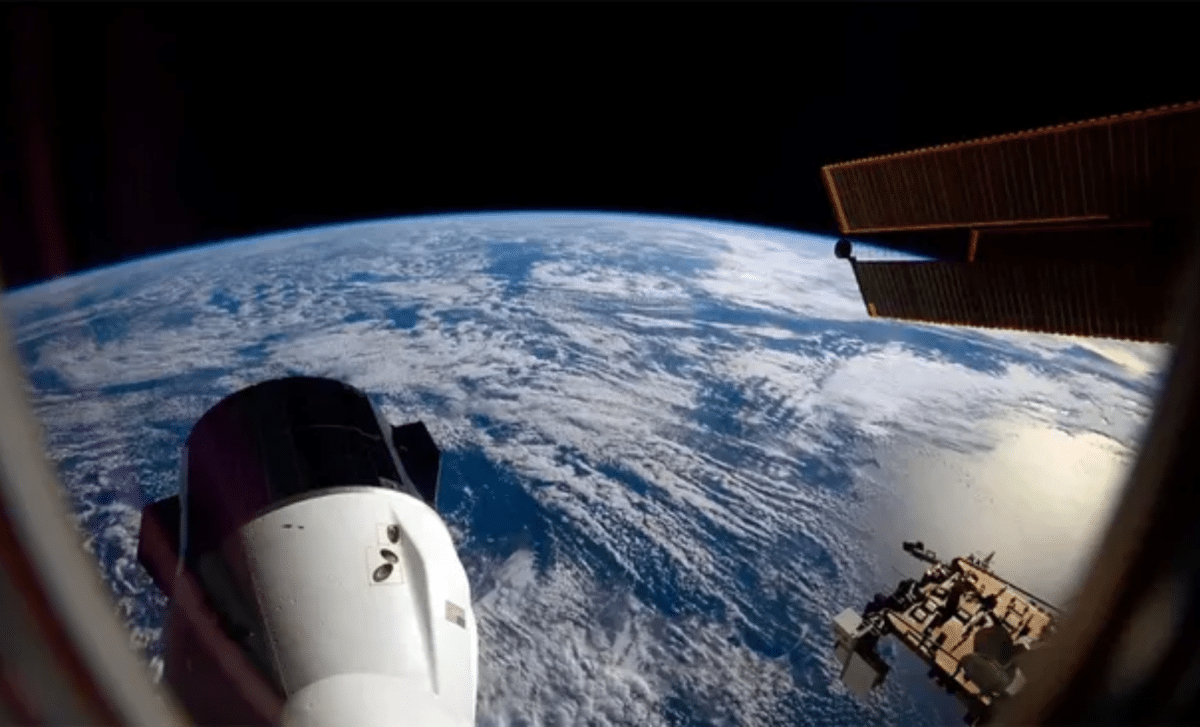
Astronauts aboard the International Space Station (ISS) never fail to be amazed by the breathtaking views of Earth from their unique vantage point in space. A recent post shared by JAXA astronaut Kimiya Yui, a member of Expedition 74, offers a glimpse into the beauty of our planet, captured against a backdrop of blue skies and fluffy white clouds. These captivating images and the ongoing research conducted aboard the ISS were featured in a report by Space.com covering the activities of the crew from December 8 to December 12, 2025.
A Glimpse into the Beauty of Earth from Space
As astronauts continue to carry out groundbreaking experiments and maintain the ISS, they also enjoy a once-in-a-lifetime view of Earth. As reported by Space.com, this view is captured with surprising ease, as shared by Kimiya Yui, who posted on social media, reflecting on the serenity of the moment:
“Thinking, ‘I’m sure everyone would want to see a photo of Earth,’ I took a few shots right before going to bed. I think the amazing thing about the ISS is that you can see views like this without even trying.”
In the midst of daily tasks and scientific exploration, astronauts like Yui find themselves captivated by the planet’s beauty. This sense of awe is amplified by the knowledge that these images are more than just pictures; they represent a perspective that only a handful of people on Earth will ever experience firsthand.
改めて、おはようございます!
「時間がなかった」は、言い訳だよなぁ。「きっと皆さんは地球の写真を見たいだろうなぁ」と思い直し、就寝前に少しだけ写真を撮りました。
特に何も考えなくても、この様な景色を見る事ができるのが、ISSの凄いところだと思います。
それでは、私はおやすみなさい! pic.twitter.com/EwzG7Y23SA
— 油井 亀美也 Kimiya.Yui (@Astro_Kimiya) December 11, 2025
The Research Work on the ISS
While capturing breathtaking images of Earth is one of the perks of life on the ISS, the astronauts’ mission goes far beyond simply observing the planet. The crew aboard Expedition 74 engaged in a variety of scientific experiments throughout the week of December 8-12, 2025, aimed at advancing human knowledge and preparing for future missions to the Moon and Mars.
One notable experiment involved the study of stem cells in microgravity. NASA astronaut Zena Cardman was tasked with observing how stem cells behave in the absence of gravity. This experiment is part of ongoing research into how space conditions could one day be used to repair damaged tissues and organs on Earth. By studying the way stem cells develop and behave in space, scientists hope to unlock new possibilities for regenerative medicine that could change the future of healthcare.
Another key experiment conducted by the crew involved studying the vestibular system in microgravity, which is vital for maintaining balance. Russian cosmonauts Sergey Kud-Sverchkov and Sergei Mikaev worked with virtual reality (VR) goggles to track how their vision and perception adapt in space. This research could provide insights into how astronauts might better adjust to the physical challenges of extended missions, including potential trips to Mars.
Maintaining the ISS: A Space Station of Constant Innovation
Beyond conducting scientific research, a significant portion of the crew’s time is spent maintaining the ISS itself. Ensuring that the space station remains operational and habitable for astronauts is no small feat. This week, much of the crew’s attention was focused on the space station’s various systems.
One of the major tasks involved preparing the HTV-X1 cargo ship, which is slated to depart in January. NASA astronauts Chris Williams and Mike Fincke, alongside their teammates, worked diligently to load the cargo ship with refuse and outdated equipment, while also preparing a science rack for transfer from the station to the ship. This ongoing preparation is crucial for maintaining the station’s operational capabilities and ensuring that supplies continue to flow to astronauts aboard the ISS.
In addition to the cargo mission, Fincke also took time to service one of the station’s restrooms. Replacing orbital plumbing components in the Tranquility node may seem like a mundane task, but in the harsh environment of space, maintaining life-supporting infrastructure is a complex and vital responsibility.