
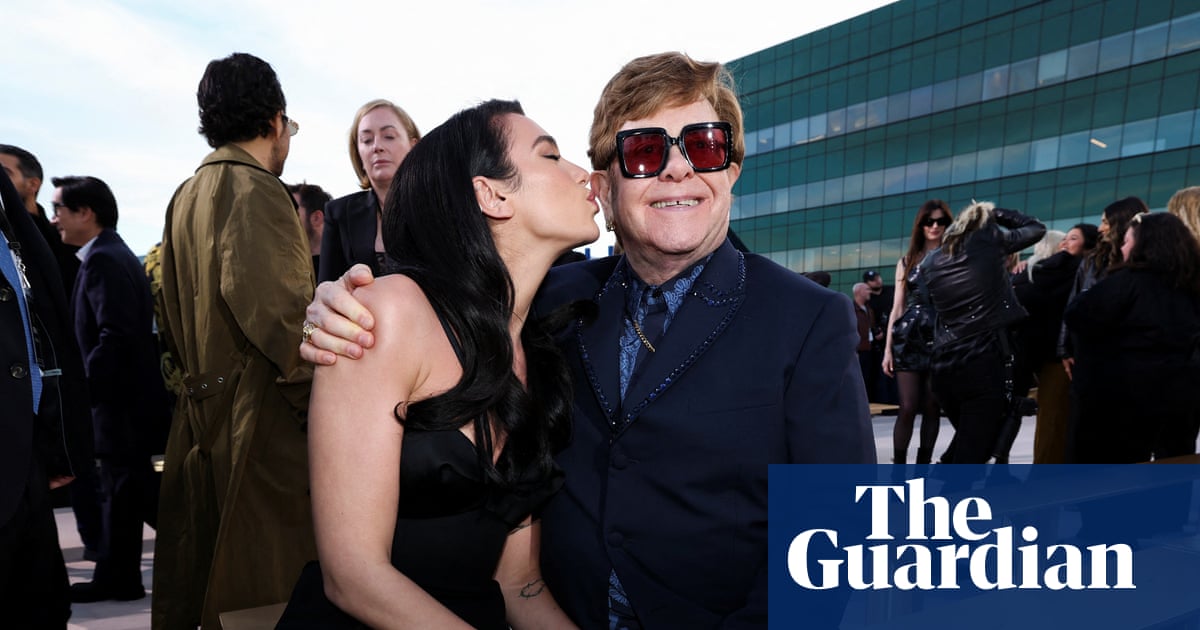
A campaign fronted by popstars including Elton John and Dua Lipa to protect artists’ works from being mined to train AI models without consent has received a boost after almost every respondent to a government consultation backed their case.
Ninety-five per cent of the more than 10,000 people who had their say over how music, novels, films and other works should be protected from copyright infringements by tech companies called for copyright to be strengthened and a requirement for licensing in all cases or no change to copyright law.
By contrast, only 3% of people backed the government’s initial preferred tech company-friendly option, which was to require artists and copyright holders to actively opt out of having their material fed into data-hungry AI systems.
Ministers subsequently dropped that preference in the face of a backlash. Artists who have opposed any dilution of their copyright include Sam Fender, Kate Bush and the Pet Shop Boys. Campaigners to protect artists’ copyright have voiced fears that ministers have paid too much attention to US tech companies’ interests.
The US president, Donald Trump, has said: “We have to allow AI to use that [copyrighted] pool of knowledge without going through the complexity of contract negotiations,” and warned international governments not to “make rules and regulations that … make it impossible” for AI companies to do business.
Last month Paul McCartney stepped up the campaign to protect copyright by releasing a new recording, which was almost entirely silent save for some ambient clattering in the studio as a protest against copyright theft by AI companies.
Liz Kendall, the secretary of state for science, innovation and technology, told parliament on Monday there was “no clear consensus” on the issue and the government would “take the time to get this right”, and promised to make policy proposals by 18 March 2026.
“Our approach to copyright and AI must support prosperity for all UK citizens, and drive innovation and growth for sectors across the economy, including the creative industries,” she said. “This means keeping the UK at the cutting edge of science and technology so UK citizens can benefit from major breakthroughs, transformative innovation and greater prosperity.
“It also means continuing to support our creative industries, which make a huge economic contribution, shape our national identity and give us a unique position on the world stage.”
But campaigners for copyright holders said the consultation response set a clear course for the government to take.
“This is an overwhelming show of support for the commonsense position that AI companies should pay for the resources they use, and a total rejection of the government’s ‘preferred option’ of handing AI companies the work of the UK’s creatives for free,” said Ed Newton-Rex, a composer and campaigner for copyright fairness.
“Liz Kendall should listen to the people and rule out changing copyright law to benefit AI companies.”
Owen Meredith, the chief executive of the New Media Association, urged Kendall to rule out any new copyright exception and end the uncertainty created by “this prolonged process”.
“This will send a clear message to AI developers that they must enter into licensing agreements with the UK’s media and creative copyright owners, unlocking investment and strengthening the market for the high-quality content that is the most valuable ingredient in producing safe, trustworthy AI models,” he said.
Last month, Kendall indicated she was sympathetic to artists’ demands not to have their copyrighted works scraped by AI companies without payment and wanted to “reset” the debate. “People rightly want to get paid for the work that they do,” she said, and “we have to find a way that both sectors can grow and thrive in future”.