
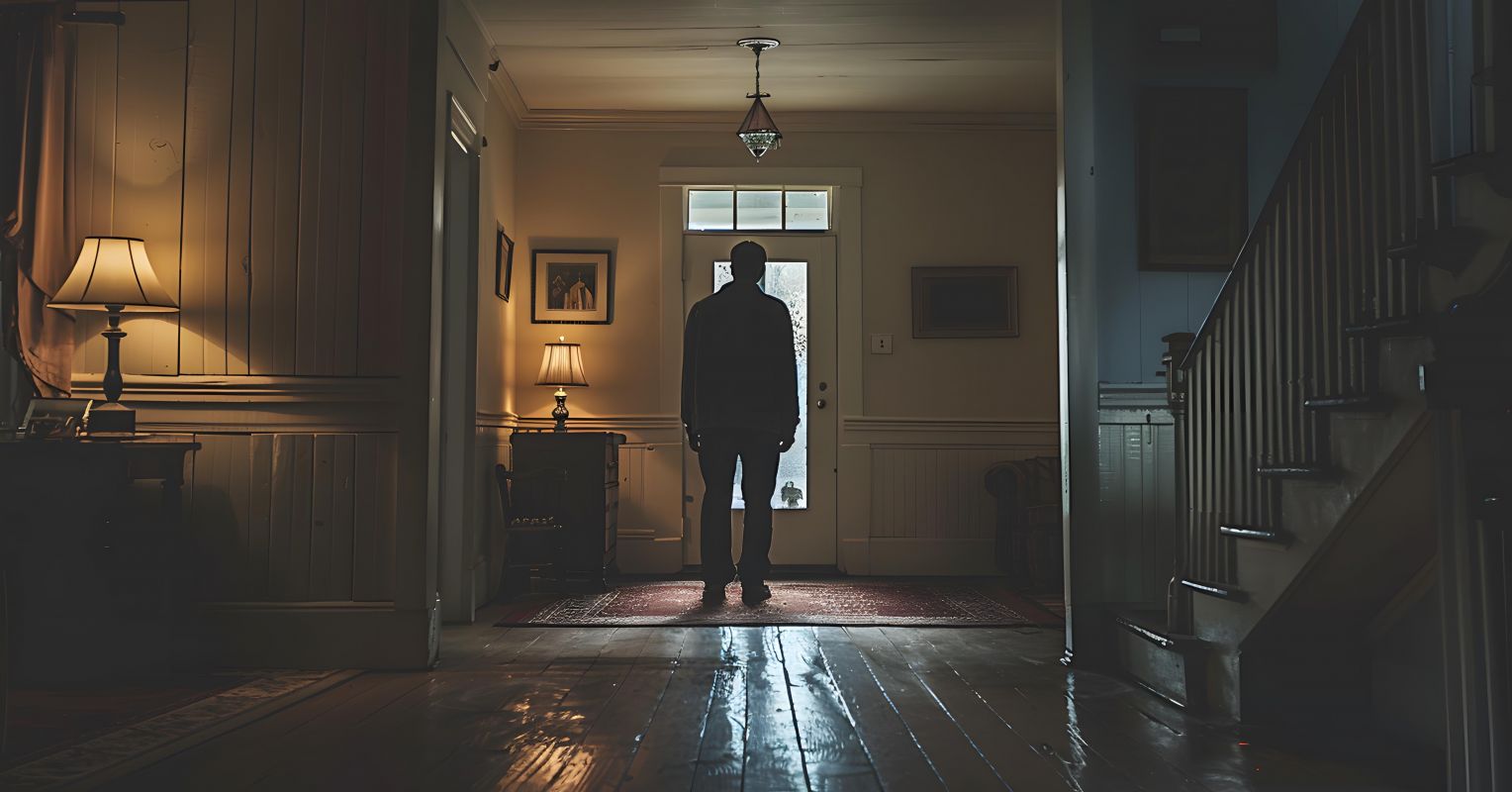
When people hear the words domestic violence they usually think of intimate partner violence, but there is another form of domestic violence that’s just as real and often just as dangerous, although few want to talk about it: Parents who are abused and sometimes killed by their own children.
This is called filial domestic violence. In my work, it’s not rare and it’s not mild. It’s common, extreme, and almost never named for what it really is.
I specialize in bipolar and psychotic disorder management. For over 20 years, I’ve coached parents and partners of people with bipolar disorder, schizoaffective disorder, and schizophrenia. I live with bipolar disorder and a psychotic disorder myself and I wrote the first bipolar management book and the first book for a partner of someone with a serious mental illness.
In that world, filial domestic violence is not an outlier. It’s a daily reality.
“He Would Never Hurt Us. He’s Ill!”
These days, I work almost exclusively with parents. The majority of parents who contact me have already experienced coercive control, serious threats, or physical abuse from a deeply loved child who also lives with a serious mental illness. Very often there is heavy cannabis use.
I’ve been doing this work online since 2002. Over those years, I’ve heard the same themes from thousands of parents, especially mothers. The details change, but the cognitive dissonance-created denial does not. This is how it sounds in their own words:
“Julie, we know he threatened to kill us, but he’s our child and he would never hurt us. He needs help, not punishment.”
“I know he had a knife, but he would never use it on us.”
“He loves his mom too much to ever hurt her. It was only a push.”
“He was scaring his 13-year-old sister, so we put a lock on her door that only she can control.”
“We make sure she’s never alone with our grandkids.”
“I know he threatened us, but where will he go, Julie? He’ll be homeless!”
This is the everyday language of parents trying to survive a reality their minds simply can’t accept.
One mother came to our coaching session with a cast on her hand. I asked what happened.
“Julie, I was talking to him on the couch,” she said. “I tried to put my arms around him. He stood up and I got up with him and my hand must have gotten caught on his chest bone and it broke my hand.”
I said, “Tell me what really happened.”
“Julie, you know how agitated he gets. I was trying to hug him after we stood up and he put his arms around me and just hugged me too tight.”
I said, “It’s ok to tell me the truth. This is how we get him help.”
“Julie, I went to hug him and he got upset. He put his arms around me. I told him he was hurting me. He kept squeezing. My hand was between us and he squeezed so hard he broke my hand. I told the doctor that I fell.”
That is filial domestic violence. It took three attempts for her to say it out loud. Her child broke her hand.
Guns, Knives, and the Violence We Don’t Discuss
Published forensic research consistently shows that individuals experiencing active psychotic symptoms have elevated risk for serious violence compared to general population baselines, particularly when those symptoms are combined with substance use.
In my experience, the real rates of family violence connected to unmanaged serious mental illness are significantly higher than official statistics because so much of it is never reported, prosecuted, or counted.
Parents attempt to manage risk by keeping their child at home while underestimating the level of ongoing danger. One mother called with an update and said, “Julie, you will be happy to know I got the bullets away from the shotgun in the garage. I did the right thing and now the gun is hanging on the rack with no bullets.”
I said, “What? The gun is still in the house?”
Her response is one I will never forget: “Julie, he would never use the shotgun. This is a lot different from the time I had to get the AK-47 out of his room.”
When an adult child is threatening parents, siblings, partners, or pets, this is not simply conflict or acting out. The pattern aligns with recognized definitions of family violence.
Domestic Violence Essential Reads
Advice for Parents
Because I couldn’t find resources that spoke directly to this experience, I adapted the work on intimate partner violence into a framework for parents. These are the first principles I teach my parent clients when we begin working together.
1. You can passionately love your child and still tell the truth. You can remember your sweet baby, your funny seven-year-old, your brilliant teenager. None of that disappears. But to survive what is happening now and to get your child the help they need, you must look at their current behavior without flinching. The reality in front of you matters more than the memories behind you.
2. Abuse is abuse, even when serious mental illness is involved. Untreated or poorly treated bipolar disorder and psychotic disorders can create aggressive and dangerous symptoms. High-potency THC often intensifies them. Serious mental illness can help explain abusive behavior. It does not excuse it. It does not erase harm.
3. The relationship doesn’t protect you from harm. Being a loving, attentive parent does not immunize you against abuse. A well-raised child with no obvious childhood adversity can still become dangerous when serious mental illness and substance use are present. People often direct their most frightening behavior toward those they are closest to.
If you’re a parent and you recognize yourself in these stories, this is not about blame. Your brain is doing exactly what it evolved to do: It’s trying to protect your child.
My invitation to parents is simple and at the same time extremely difficult: Tell the truth. Use language that matches what is happening. Abuse. Domestic violence. Filial domestic violence. Family violence. Write down what your child has done in clear, concrete terms and share it with a well-trained professional who understands the risk. Tell the truth to the courts.
If you’re a clinician, treatment provider, or law enforcement officer, assume parents are minimizing the violence. Ask them specific, behavioral questions about the child. Talk to the parent rather than relying on the child’s presentation alone.
Filial domestic violence is real. I’ve worked with families in this situation for more than 20 years. We can’t change what we refuse to name, and we can’t keep parents, partners, siblings, and children safe if we continue to pretend this is not happening in our homes.
To find a therapist, visit the Psychology Today Therapy Directory.