
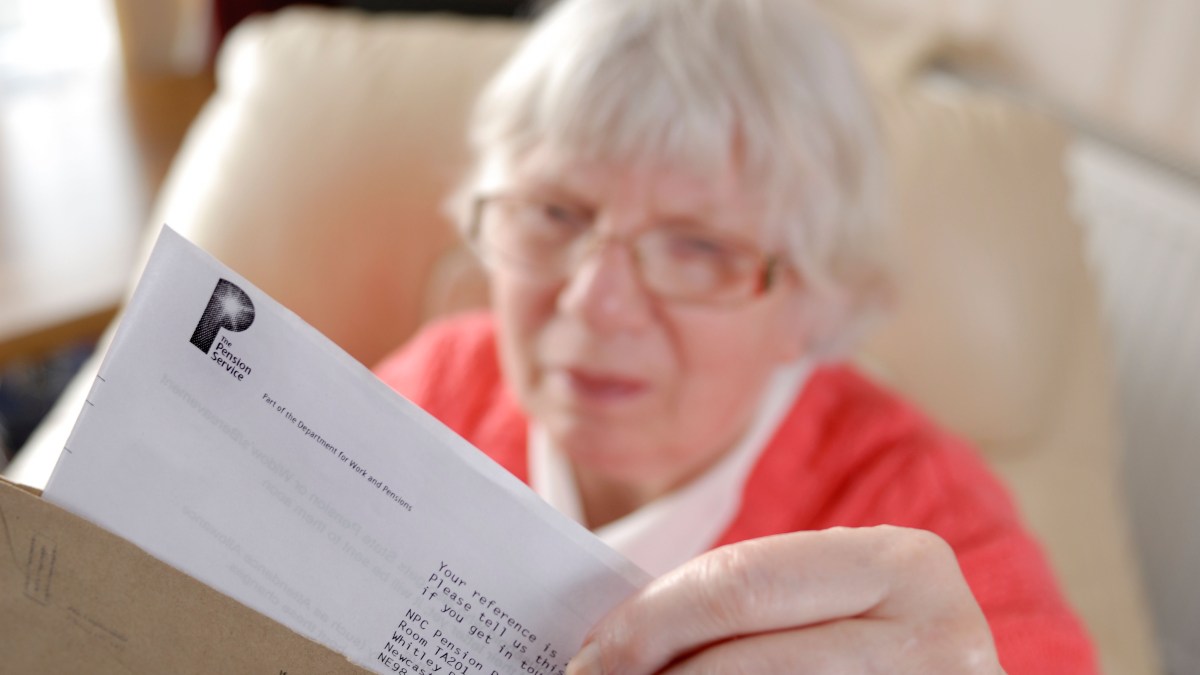
For many of us the state pension will be a welcome boost to the retirement savings we have made for ourselves. Those who have worked most of their lives will be entitled to claim it but will not be wholly reliant on it. At the same time, it will provide for those who would be in retirement poverty without it.
But as the state pension becomes increasingly costly for the government, there’s a perverse problem coming down the track. Which is that some face having their entire private pension savings wiped out by the state pension. If there was ever a sign that the price of welfare had got out of hand, this is it.
• What is the point of saving for retirement?
In the wake of the budget the chancellor was quizzed about the prospect of income tax being due on the state pension when the triple lock inevitably pushes it above the tax-free annual allowance in 2027. Rachel Reeves’s response was that those who rely solely on the state pension would not have to pay tax on it.
It was an easy promise to make but it was an answer that had not been thought through properly. For starters, it will create a two-tier tax regime whereby those who have their own savings have to pay tax on the state pension while those who rely only on the state do not have to pay a penny. That’s a tax on prudence and a step towards means-testing the state pension.
The full new state pension will be worth £12,548 from April, just shy of the £12,570 personal allowance. Thanks to the triple lock the state pension will rise to at least £12,862 the next year — leaving £292 exposed to the taxman and triggering a £58 bill for those who have another source of income. By the end of the decade the state pension will be leading to annual tax bills of £256.
The tax will not be collected from the state pension, rather it will be deducted from your private pension income. It means that those with relatively little retirement income of their own face losing it all to the taxman.
The former pensions minister Steve Webb says that if the state pension was £500 above the tax threshold, someone with a small private pension paying £120 a year would get a £24 income tax bill on that pension but would lose the rest to £100 tax owed on the state pension.
Webb, now a partner at the consultancy LCP, points out that savers will see their own annual retirement income reduced every year that the triple lock drives up the state pension and increases their tax liability. This means anyone who has signed their savings away to buy an annuity is at a disadvantage. Those with fixed-rate annuities will see not only the value of their payouts eroded every year by inflation but their income chipped away by the state pension tax.
It is obvious that as a nation we need to rely on the state pension less. It accounts for nearly half of all spending on benefits and has been forecast to cost close to £170 billion a year by 2030 — a 141.5 per cent rise since 2010. It’s quite simply unsustainable, there’s no other word for it.
• How much will the salary sacrifice pensions raid cost you? Use our calculator
Our own savings need to do the leg work when it comes to preparing us for retirement, while the state pension acts as a back-up plan or a nice-to-have. But Reeves’s tax solution does nothing to incentivise retirement saving. In fact, it does the opposite. Her raid on salary sacrifice contributions makes things worse.
This retirement tax is the first step towards means-testing the state pension. Indeed, under this regime those who have a retirement income of about £75,000 will effectively lose the equivalent of their entire state pension to tax.
It was perhaps inevitable that our state pension would become means-tested one day, but I suspect no one thought it would start so soon and for the method to be so sly.
• Visit Times Money for personal finance news, guides and expert columnists
The government’s budget included yet more money on welfare and tax raises for workers, savers and investors to pay for it all. The state pension problem is now neatly captured in this perverse new predicament. Our taxes are being increased to pay for a state pension that is, at the same time, making us pay more tax.