
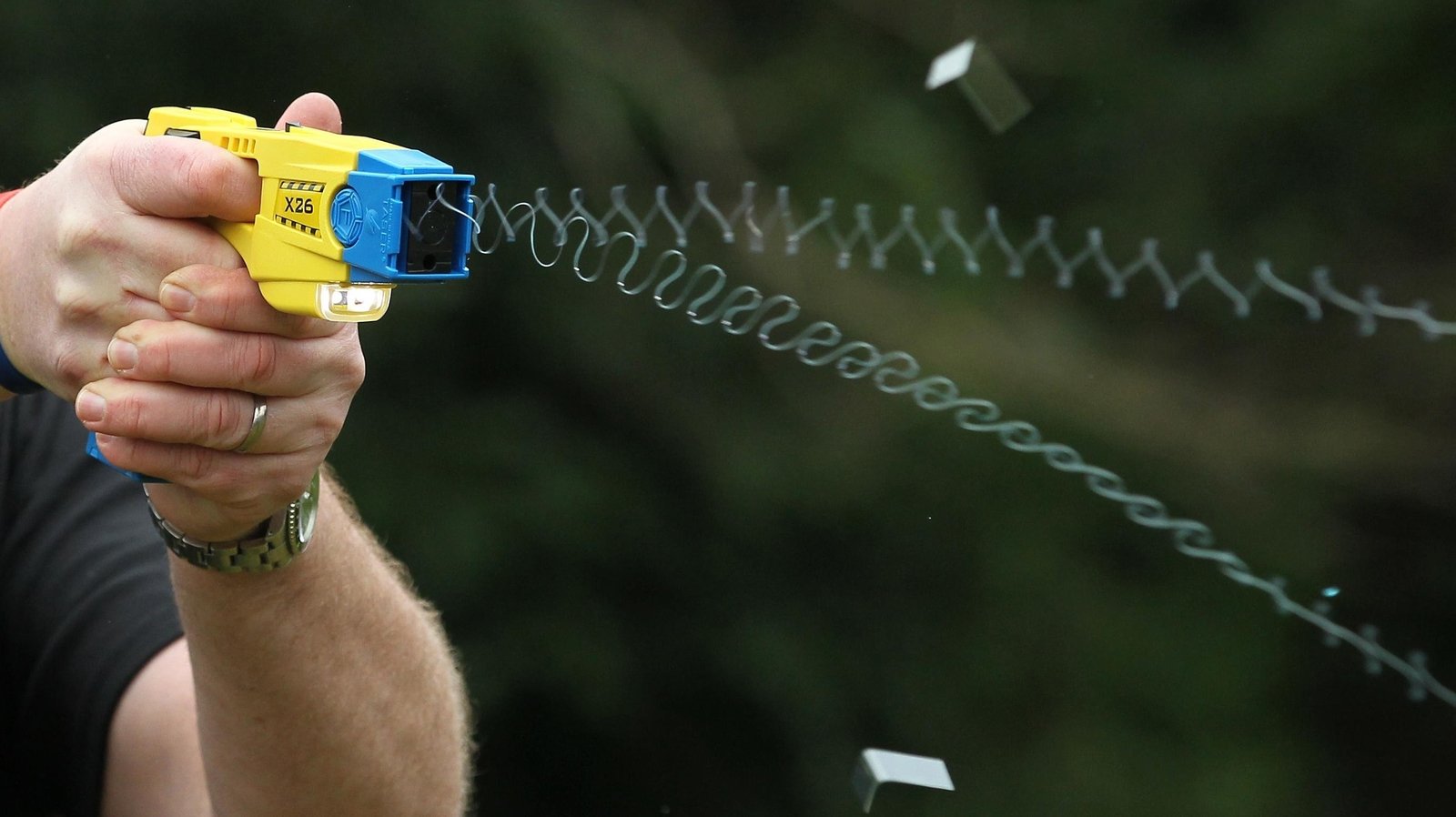
Over 120 uniform gardaí have been issued with tasers to respond to an increase in violent attacks, particularly on gardaí.
An average of 300 gardaí have been attacked each year for the past ten years.
The tasers are being issued as part of a pilot programme in four designated stations in Dublin and Waterford.
Acting Deputy Garda Commissioner Paul Cleary said the programme is not about “changing the culture of Irish policing or arming gardaí,” but about “preventing harm.”
Tasers are less lethal force option weapons, which shoot an electrical current that temporarily incapacitates a person by disrupting their muscle control, making them unable to move or attack.
Armed gardaí in regional and national units, like the Emergency Response Unit, have been issued with them since 2007. On average they have been deployed twice a month over the past five years.
However, from 2014 to 2024, an average of 299 gardaí were assaulted each year and while the increase stabilised last year, there was a significant increase after the Covid-19 pandemic, with a record 470 assaults in 2023.
Gardaí say they have to respond to fast-moving and unpredictable incidents and although almost all are resolved calmly, some can turn volatile very quickly, particularly in situations where somebody is armed, distressed, intoxicated, or experiencing a severe mental-health crisis.
In some of those scenarios, gardaí say they have to make instant decisions to protect the public, protect the person in crisis, and to protect themselves.
Tasers are being issued to 128 gardaí in Kevin Street, Store Street and Pearse Street in Dublin city centre and Waterford Garda Station.
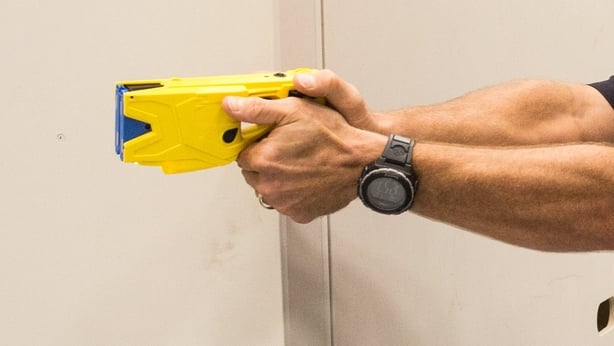
Fiosrú will be notified every time a taser is used
Gardaí say they will only be carried by these selected uniform gardaí with body worn cameras in marked patrol cars who have completed a three-day training course grounded in Irish Constitution and European Convention on Human Rights principles.
They also say the deployment of tasers will be fully Human Rights compliant, and will be subject of rigorous evaluation prior to any decision for wider rollout of tasers within An Garda Síochána.
Fiosrú, the Office of the Police Ombudsman, will also be notified every time a taser is used and every incident where it is used will be recorded.
The Irish Council for Civil Liberties has strongly criticised the introduction of tasers saying it will “completely change policing in Ireland and the relationship between Gardai and local communities.”
The council claims they are not an effective de-escalation tool in all situations and that international evidence has shown that they can escalate a situation, particularly when people are experiencing mental health crises.
ICCL Executive Director Joe O’Brien said Ireland has “a proud tradition of over 100 years of unarmed gardaí serving and supporting local communities,” and that “giving tasers to frontline gardaí is a complete step change from that tradition, and is being done at speed and without presenting the evidence which the Minister [for Justice] and Garda Commissioner feel warrants their introduction.”
However, Mr Cleary rejected these assertions.
The Acting Deputy Garda Commissioner said that the taser pilot is about giving specially trained gardaí, a controlled, less-lethal option when every other approach has failed or isn’t safe.